
Last updated October 30, 2026
 Wrought iron
 Wood & steel frame
 Farm & ranch
 Sliding driveway gates
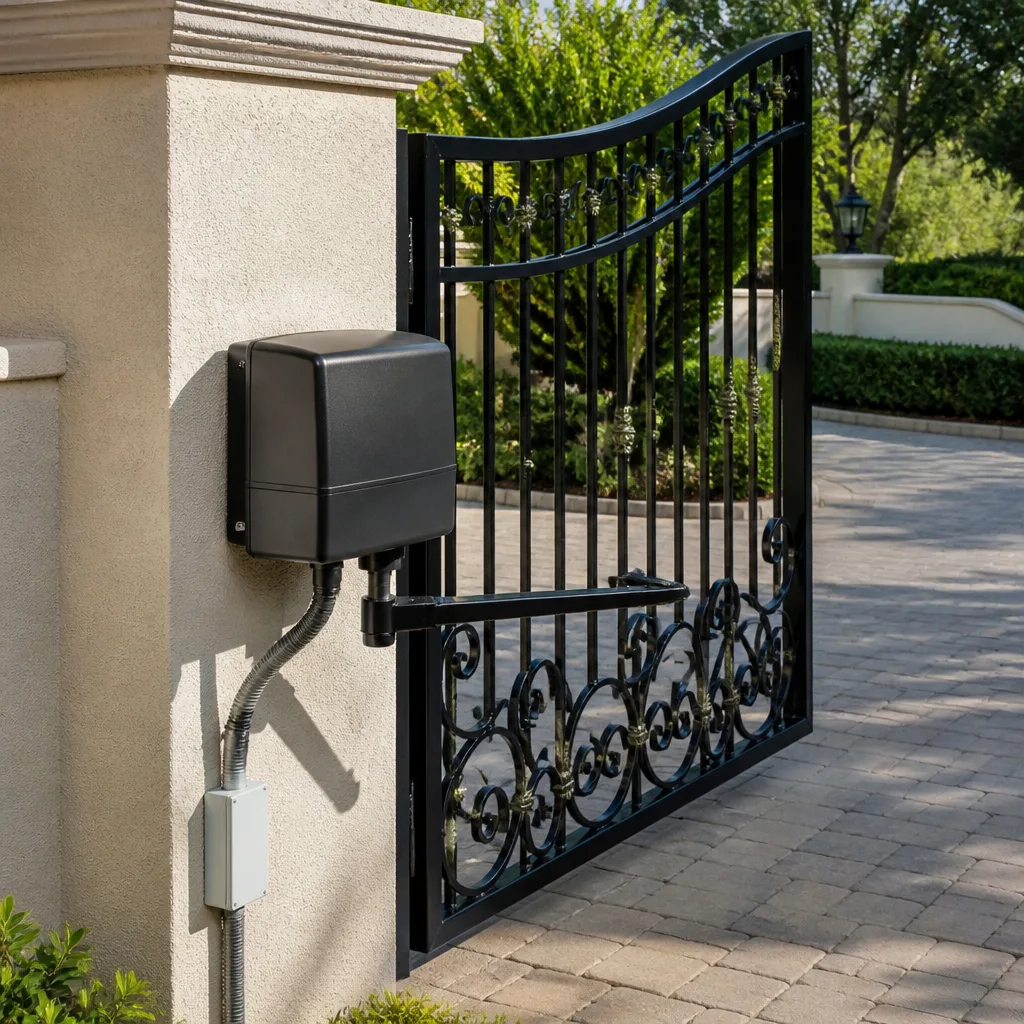 LiftMaster operators
Free on-site gate assessment - hinges, posts, and your LiftMaster or Nice gate operator checked before anything is quoted
The assessment is free and the quote is the invoice.
Get your free estimateGate Repair Permits, Codes & Inspections in CA: What You Need to Know
Here’s a number most California homeowners never hear until it’s too late: insurance claim denials tied to unpermitted gate work have become common enough that adjusters now check permit history before paying out on property damage claims involving automated gates. In Chino, where thousands of homes sit behind automated iron gates, the difference between a simple repair and a permit-triggering alteration comes down to a handful of specific code lines most people have never read. This guide covers the actual California permit thresholds for gate work, what Chino’s Building and Safety Division enforces, what UL 325 compliance means for your insurance, and how HOAs fit into the picture. If you own an automated gate in San Bernardino County, read this before you call anyone with a wrench.
Styles & brands we work with
Quick Answer
Most mechanical gate repairs in California don’t require a permit, including hinge replacements, opener board swaps, and re-welding broken pickets. A permit is required in Chino when you replace structural posts, install a new automated operator, run new electrical wiring to the gate, or pour new concrete footings. If your gate operator uses electricity and moves a gate weighing more than a single person can push, it must meet UL 325 safety standards regardless of whether a permit was pulled.
Table of Contents
- The Permit Threshold: Repair vs. Alteration vs. New Installation
- What Chino’s Building and Safety Division Actually Requires
- UL 325 Compliance: What It Is and Why Your Insurance Company Cares
- HOA Overlay: When Architectural Guidelines Meet City Code
- What an Inspection Actually Checks: Would Your Existing Gate Pass?
- Safety Sensors, Photo Eyes, and Entrapment Protection: The Non-Negotiable Parts
- Permit Costs and Timeline in Chino: What to Budget
- Common Mistakes to Avoid
- When to Call a Professional
- Frequently Asked Questions
- The Bottom Line
The Permit Threshold: Repair vs. Alteration vs. New Installation
California building code draws a line between maintenance work and construction work, and where your gate project falls on that line determines whether you need a permit. The California Building Code (CBC) Chapter 1, Section 105 exempts ordinary repairs from permit requirements. The operative word is “ordinary.” Replacing a worn hinge, swapping a failed circuit board, re-welding a cracked picket, or adjusting a sagging gate leaf counts as ordinary repair. You don’t need a permit for any of it.
The project crosses into permit territory the moment you change the gate’s structural or electrical footprint. Here’s the breakdown as we apply it on service calls every week:
- No permit needed: hinge and roller replacement, opener circuit board replacement, remote programming, sensor realignment, weld repairs on existing metal, repainting, replacing a broken wheel, adjusting opener limits.
- Permit required: installing a new automated operator on a gate that was previously manual, running new electrical conduit or wire to the gate, replacing a structural post set in concrete, pouring new footings, widening the gate opening, or installing an entirely new gate.
- Gray zone handled case by case: replacing an existing operator with a different brand or model. Chino inspectors generally treat a direct operator swap as repair if the electrical connection and mounting pad are unchanged. If the new operator requires a different voltage or new conduit, it’s an alteration.
The practical consequence matters more than the code language. Unpermitted work that requires a permit creates two problems: a stop-work order if an inspector notices during a drive-by, and an insurance denial if the gate later causes injury or property damage. Neither is theoretical in Chino. We’ve been called after both scenarios. The Wrought Gate Repair home page goes deeper on our service scope, but the short version is this: we tell every Chino customer upfront whether their job is permit-eligible or not, and we handle the paperwork on jobs that need it.
What Chino’s Building and Safety Division Actually Requires
Chino operates its own Building and Safety Division under the jurisdiction of the city, meaning permit applications go through Chino City Hall, not San Bernardino County. The division enforces the current California Building Code with local amendments, and they review gate projects under the same electrical and structural provisions that apply to any other accessory structure.
For automated gate operator installations in Chino, the application packet typically includes:
- A site plan showing the gate location, property lines, and setback distances from the street and sidewalk.
- Manufacturer specifications and installation instructions for the operator, including the UL 325 compliance label.
- An electrical plan showing the circuit, conduit path, and disconnect location, prepared by or reviewed by a licensed electrician.
- Structural details for any new posts, footings, or mounting pads.
Chino requires plan review before permit issuance for new automated gate installations. Simple mechanical repairs and like-for-like operator swaps don’t need any of this. The city also enforces a 20-foot vehicular setback from the public right-of-way for gates that swing outward toward the street, a rule that has forced more than a few Chino Hills and College Park homeowners to redesign their gate placement. If you’re in an older Chino neighborhood like the avenues south of Walnut, pre-1980s gates often predate current setback rules, and upgrading them can trigger a compliance review you didn’t see coming.
If you’re doing gate installation in Chino, expect the permit process to take one to two weeks for plan review on standard residential gates. Commercial properties with access control systems take longer, often four to six weeks, because the fire marshal’s office reviews the emergency vehicle access provisions separately.
UL 325 Compliance: What It Is and Why Your Insurance Company Cares
UL 325 is the UL safety standard that governs automatic gates and gate openers in the United States. In California, compliance is mandatory for every automated gate installation, whether residential or commercial, and the requirement exists independently of the permit process. A gate can pass a city inspection and still create massive liability exposure if it lacks proper UL 325 entrapment protection, because the standard isn’t just a building code issue. It’s the industry benchmark that insurance companies and injury attorneys reference when something goes wrong.
UL 325 requires every automated gate to include two types of entrapment protection:
- Primary protection: the opener’s built-in obstruction detection, which reverses the gate when the motor senses resistance. In practice, this means the opener’s current sensing or speed monitoring must be calibrated to react before the gate exerts enough force to injure a person.
- Secondary protection: an external device that monitors the gate’s path independently of the opener. This is usually photo eyes mounted on the gate posts or a contact edge strip running along the gate’s leading edge. The secondary system must trigger if the first system fails.
Both systems must be present and functional. Removing the photo eyes because they get dirty or false-trigger is the single most common UL 325 violation we find, and it’s the one that turns a minor gate repair into an insurance catastrophe. The homeowner at the top of this guide didn’t have a permit problem at its root. The real issue was that the installer bypassed the photo eyes to stop nuisance reversals. Six months later, the gate closed on a vehicle. The insurance adjuster’s report cited both the unpermitted installation and the missing entrapment protection.
UL 325 compliance matters for more than insurance. California Civil Code sections on premises liability create a foreseeable harm standard for automatic gates. A property owner who knows or should know their gate lacks required safety sensors can be found negligent even if the gate was installed decades ago. This applies to HOAs in Chino as much as to single-family homeowners. An HOA with automated gates at a residential community entrance carries the same liability exposure as a commercial property.
HOA Overlay: When Architectural Guidelines Meet City Code
Chino’s planned communities, including The Preserve, College Park, and numerous tract developments east of the 71, all have architectural guidelines that govern gate appearance. Most require committee approval before gate replacement or alteration, and many specify materials, colors, and height limits that go beyond city code. What confuses owners is that HOA approval and city permit approval are two separate processes, and neither one substitutes for the other.
The legal relationship is straightforward once you understand the layers:
- City code is the floor, not the ceiling. Chino’s Building and Safety Division enforces safety, structural, and electrical standards. An HOA cannot make a rule allowing you to skip a city permit.
- HOA guidelines are a private contract. They govern aesthetics and community consistency. The city doesn’t enforce HOA rules, and a city inspector won’t care whether your gate matches the HOA’s approved color palette.
- Order of operations matters. We recommend HOA architectural approval first for any gate that faces the street, then city permit, then work. Getting it backwards means redoing work if one authority objects.
- HOA common-area gates carry commercial-grade requirements. If the gate serves a community entrance or pool area, the HOA’s maintenance obligations under California Civil Code Section 4775 make them responsible for keeping it code-compliant. Many Chino HOAs are unknowingly out of compliance on their entrance gates.
If you’re doing gate repair in Chino on a home inside an HOA, the repair itself usually doesn’t trigger architectural review. Replacing an operator in the same position, re-welding metal, replacing hinges, all of that is invisible to the HOA. The moment the gate’s appearance changes, whether it’s a new gate leaf, different metal work, or a new color, the architectural committee gets a say.
What an Inspection Actually Checks: Would Your Existing Gate Pass?
Chino inspectors run through a defined checklist when they inspect automated gate work. If you’re wondering whether your current gate would pass if it suddenly came under review, here’s what the inspector looks at. We see roughly one in four existing automated gates in Chino fail at least one item on this list.
- UL 325 entrapment protection: both primary (opener reversal) and secondary (photo eyes or contact edges) systems present and functioning. The inspector tests both by blocking the gate and checking that it reverses before making contact, or immediately after contact with minimal force.
- Electrical disconnect: a dedicated disconnect switch within sight of the operator. The inspector checks that power can be killed at the gate without going back to the main panel.
- Wiring and conduit: all low-voltage and line-voltage wiring in conduit rated for outdoor use, with proper burial depth for underground runs. Exposed wire is a fail.
- Grounding and bonding: the operator chassis, the gate frame, and any steel posts bonded to the electrical ground. This protects the opener electronics from lightning strikes and shorts.
- Post integrity: gate posts plumb and set in concrete with adequate depth for the gate’s weight and size. A leaning post with six inches of concrete showing is a fail.
- Gate travel and level: the gate leaf moves through its full range without binding, scraping, or lifting the opener. Gates that hang on their openers fail.
- Setback compliance: for swing gates, proper distance from the public right-of-way as required by Chino’s local amendment to the CBC.
Number one is where most failures happen. Chino’s weather contributes to it. The high winds we get through the Santa Ana corridor push gates around, which knocks photo eyes out of alignment. When they false-trigger constantly, homeowners and handymen bypass them. The gate still opens and closes fine, so everyone thinks the problem is solved. The inspection would fail, and the liability exposure would be real. If you have an electric gate repair in Chino need, the question isn’t just whether the gate opens. It’s whether it would pass an inspection if one happened.
Safety Sensors, Photo Eyes, and Entrapment Protection: The Non-Negotiable Parts
California’s gate safety requirements aren’t a suggestion that gets waived for older gates or simpler installations. The UL 325 standard applies to every automated gate system, regardless of age, and the entrapment protection components are the parts most likely to be missing or bypassed on systems we inspect in Chino. The standard exists because automatic gates can kill. A 600-pound slide gate moving at a foot per second delivers force that a person cannot push back against. Entrapment protection is the system that stops the gate before that happens.
When we do electric gate repair in Chino, we check entrapment protection on every call, even if the customer called about something else. Here’s what’s required on every automated gate in California:
- Photo eyes (photo cells): mounted on the gate posts, typically 6-14 inches off the ground. They project an infrared beam across the gate opening. If anything breaks the beam while the gate is closing, the gate stops and reverses. Both the sender and receiver must be aligned and functional.
- Contact edges (edge sensors): pressure-sensitive strips mounted along the leading edge of the gate. When the gate contacts something, the strip compresses and sends a stop-and-reverse signal. These are required on many slide gates and recommended on swing gates.
- Opener obstruction detection: built into the operator itself. The motor monitors current draw or speed, and reverses when it senses the gate hitting resistance. This is primary entrapment protection and must be calibrated to the specific gate’s weight and travel.
- Warning signs: UL 325 requires permanent warning signs posted on both sides of the gate, visible to any pedestrian or vehicle operator. Missing signs are a compliance failure.
Here’s the pattern we see in Chino and the surrounding Inland Empire: a gate has photo eyes, but they’re misaligned or buried in overgrown landscaping. The homeowner or a previous handyman bypasses them because the gate keeps reversing for no reason. Now the system has only the opener’s built-in obstruction detection, which is calibrated when the gate is moving smoothly but loses effectiveness as the gate settles, the chain stretches, and the rollers wear. A year or two later, the gate doesn’t reverse reliably at all. The homeowner has no idea because the gate still opens and closes. That’s the gate that injures someone.
Operators from FAAC, BFT, and Viking include the monitoring circuits for photo eyes and edge sensors. Linear and Viking systems add diagnostic LEDs that indicate when the safety circuit is open. If you’re unsure whether your gate’s safety systems are functional, the test is simple: put something soft in the gate’s path and close it. If the gate doesn’t reverse before making contact, you have a problem. Don’t test with a person. Don’t test with a vehicle. Use a garbage can, a cardboard box, something that won’t get damaged and won’t damage the gate.
Permit Costs and Timeline in Chino: What to Budget
Chino’s permit fees for automated gate work are modest compared to the cost of the gate itself, but they’re not zero, and the timeline adds planning time you should factor in. Based on current Chino Building and Safety Division fee schedules, here’s what a typical residential automated gate installation permit costs:
- Building permit application fee: $150 – $300 depending on the project valuation.
- Electrical permit fee: $100 – $225 when new wiring or a new circuit is part of the installation.
- Plan review fee: $100 – $250 for automated gate operator installations requiring review.
- Inspection fees: included in most permit types for the first inspection; reinspection fees run $85 – $150 if the first inspection fails.
The total permit cost for a typical residential automated gate installation in Chino runs roughly $400 to $750. Simple mechanical repairs with no permit needed cost nothing in city fees. The timeline is the bigger variable. Plan review for standard residential jobs takes one to two weeks, inspections are scheduled within a few business days of the request, and the entire process adds two to four weeks to a project that might otherwise take a single day of installation.
What surprises most customers isn’t the fee. It’s the inspection scheduling. Chino inspects gate work during normal business hours, and the property owner or a designated representative must be present. If you’re coordinating an HOA approval, a permit, and an inspection around your work schedule, the logistics matter as much as the money. This is one of the reasons customers call us for gate installation in Chino instead of coordinating contractors themselves. We handle the permit application, the scheduling, the on-site inspection presence, and the reinspection if something fails. The customer shows up for the final walk-through.
Common Mistakes to Avoid
- Bypassing the photo eyes to stop nuisance reversals. This fixes the symptom and deletes the safety system. In Chino’s wind and dust conditions, photo eyes need cleaning and realignment, not bypassing. If an injury happens, the missing sensors are the first thing a plaintiff’s attorney documents.
- Treating an operator swap as a repair when it isn’t. Replacing a LiftMaster with a different model or brand that requires new mounting or new electrical is an alteration, not a repair. Pull the permit before the inspector notices the work during a neighborhood drive-by.
- Assuming HOA approval covers the city permit. It doesn’t. These are separate processes with separate authorities. We’ve seen Chino homeowners complete an entire HOA-approved gate replacement without a city permit, then face a stop-work order during the final week of installation.
- Pouring new footings without a permit. This is the most visible unpermitted work you can do on a gate. Neighbors notice, inspectors notice, and the concrete doesn’t hide. Footings require a permit in Chino, full stop.
- Skipping the electrical permit on a new circuit. Running new wiring to a gate operator counts as electrical work under California’s electric code, and Chino enforces it. If a handyman offers to run the power without pulling an electrical permit, that’s a red flag about everything else they’re doing.
- Installing an operator that doesn’t carry UL 325 listing. Not every gate opener sold online carries the UL 325 mark, and some that do are counterfeit. If the operator’s manual doesn’t show the UL listing, don’t install it. Your insurance company will check.
- Replacing a manual gate with an automated one and calling it a repair. Adding an operator to a gate that was previously manual is a new installation under California code, and Chino requires a permit. This isn’t a gray area. Manual to automated always needs a permit.
When to Call a Professional
Permit work, electrical work, and structural work on gates all share one quality: the consequences of doing them wrong are invisible for months and expensive when they appear. A bad weld on a gate post looks fine until the gate sags and the opener burns out. A misaligned photo eye system passes a casual glance and fails the first time a child runs through the opening after a soccer ball. The scenarios where you should call a specialist rather than a generalist are easy to list: any work involving new electrical connections, any structural post replacement, any operator installation that triggers a permit, any gate that fails an entrapment protection test, any HOA common-area gate where the association carries liability exposure, and any repair where you’re not certain whether the work is code-compliant.
Wrought Gate Repair offers free estimates in Chino, call (833) 545-6817. We work exclusively on gates, so the person who shows up to assess your project isn’t splitting their day between your gate and a garage door job across town. They’re looking at FAAC, BFT, Linear, and Viking operators every single day, and they know what a Chino inspector will look for because they’ve stood through those inspections.
Frequently Asked Questions
Replacing a gate opener with the same or a directly equivalent model does not require a permit in Chino or elsewhere in California, provided the electrical connection and mounting are unchanged. If the new opener is a different voltage, a different brand requiring new mounting, or a new installation on a gate that was previously manual, you need a permit. Call (833) 545-6817 and we’ll tell you which category yours falls into before you pull any paperwork.
Expect to budget roughly $400 to $750 in city fees for a typical residential automated gate installation permit in Chino, including building, electrical, and plan review fees. Simple mechanical repairs that don’t require a permit have no city fees at all. Call (833) 545-6817 for a free estimate that includes a line item for permit costs, so you know the full price before any work starts.
Unpermitted gate work in Chino can trigger a stop-work order if discovered during construction, a correction notice requiring you to obtain the permit retroactively, potential fines, and a requirement to expose completed work for inspection. If the gate later causes injury or property damage, unpermitted installation creates a basis for insurance claim denial. The liability exposure from a missing permit often exceeds the cost of the permit by orders of magnitude.
Yes, UL 325 applies to every automated gate operator in California, residential and commercial, regardless of the gate’s age or when it was installed. The standard requires primary entrapment protection in the opener, secondary protection via photo eyes or contact edges, warning signage, and proper electrical grounding. A gate without compliant entrapment protection violates both code and the liability standards that insurance companies apply.
No, HOA architectural guidelines cannot override or replace Chino’s building codes. HOA rules govern appearance, materials, and community standards, and they may impose additional requirements beyond city code, but they cannot waive a city permit requirement. In Chino’s planned communities, both approvals are required for any gate work that changes the gate’s appearance or involves new electrical or structural changes.
California law allows homeowners to perform work on their own property without a contractor’s license, but you must still pull the required permits, pass the required inspections, and meet UL 325 compliance with proper entrapment protection. The owner-builder route saves contractor markup but transfers all liability and all code-compliance responsibility to you. Most Chino homeowners who go this route call us after the inspection fails.
The Bottom Line
California gate repair permits are simpler than most people fear and more consequential than most people assume. Most repairs need no permit at all. Hinge replacements, weld repairs, circuit board swaps, sensor realignment, all of that is ordinary maintenance and no one at Chino City Hall will ever care. What triggers a permit is structural work, new electrical, and new automation. The moment you add an operator, run new conduit, pour new footings, or swap out a structural post, you’re in permit territory. Pull the permit, pass the inspection, and keep your UL 325 entrapment protection functional. The permit fee is a few hundred dollars. The insurance denial, the stop-work order, or the injury claim that follows unpermitted, non-compliant gate work costs far more.
Call Wrought Gate Repair at (833) 545-6817 for a free estimate on any gate project in Chino. We’ll tell you whether your job needs a permit, handle the paperwork if it does, and make sure the finished gate meets every code requirement a Chino inspector will check.
Written by the team at Wrought Gate Repair, serving Chino since 2012.
See the difference
 Before
 After
 Before
 After
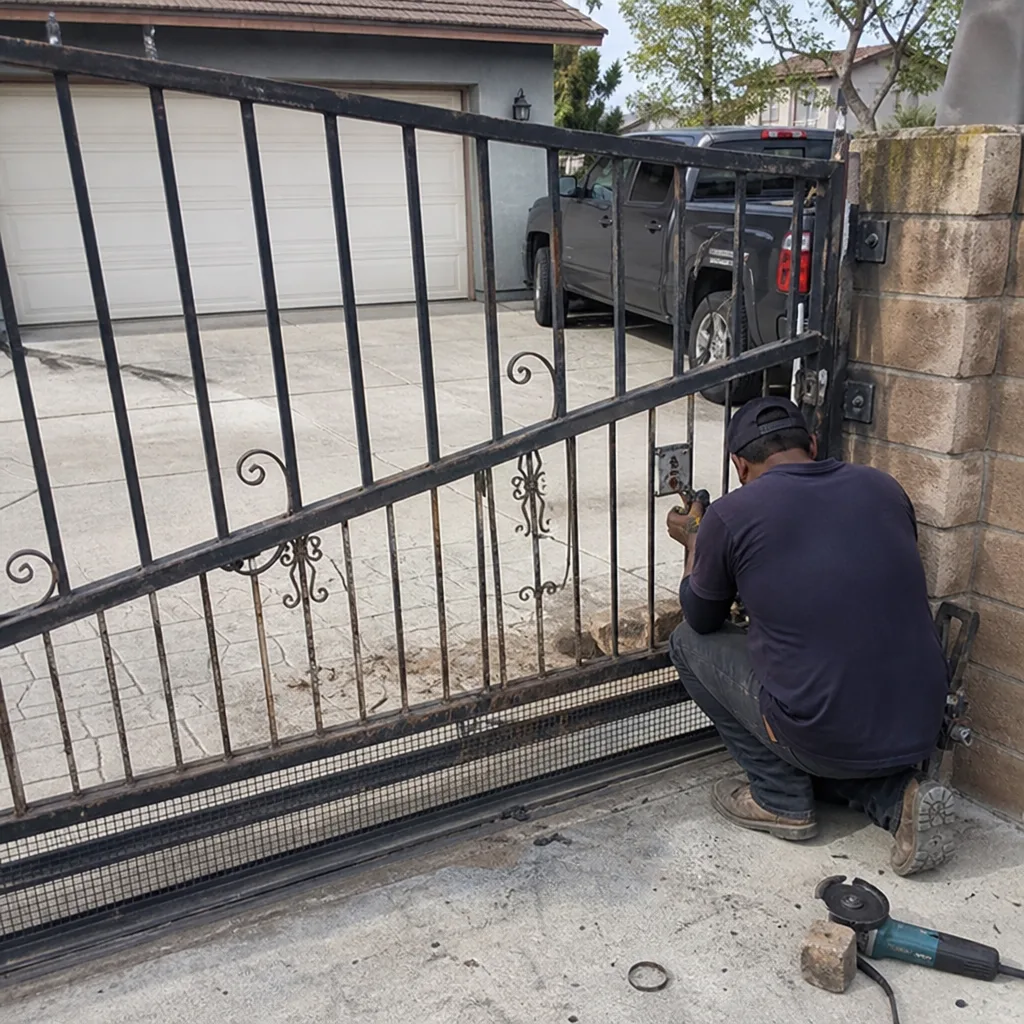 Before
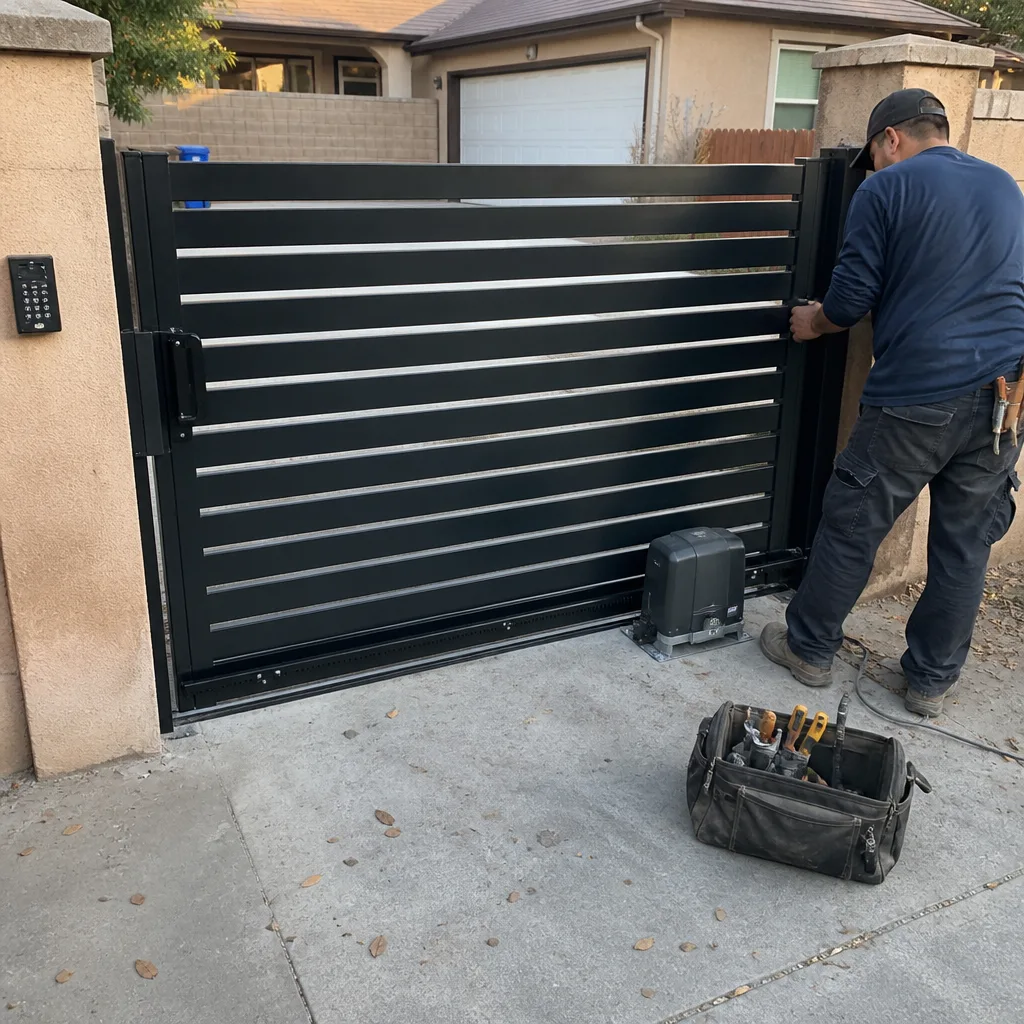 After