
Last updated October 30, 2026
 Wrought iron
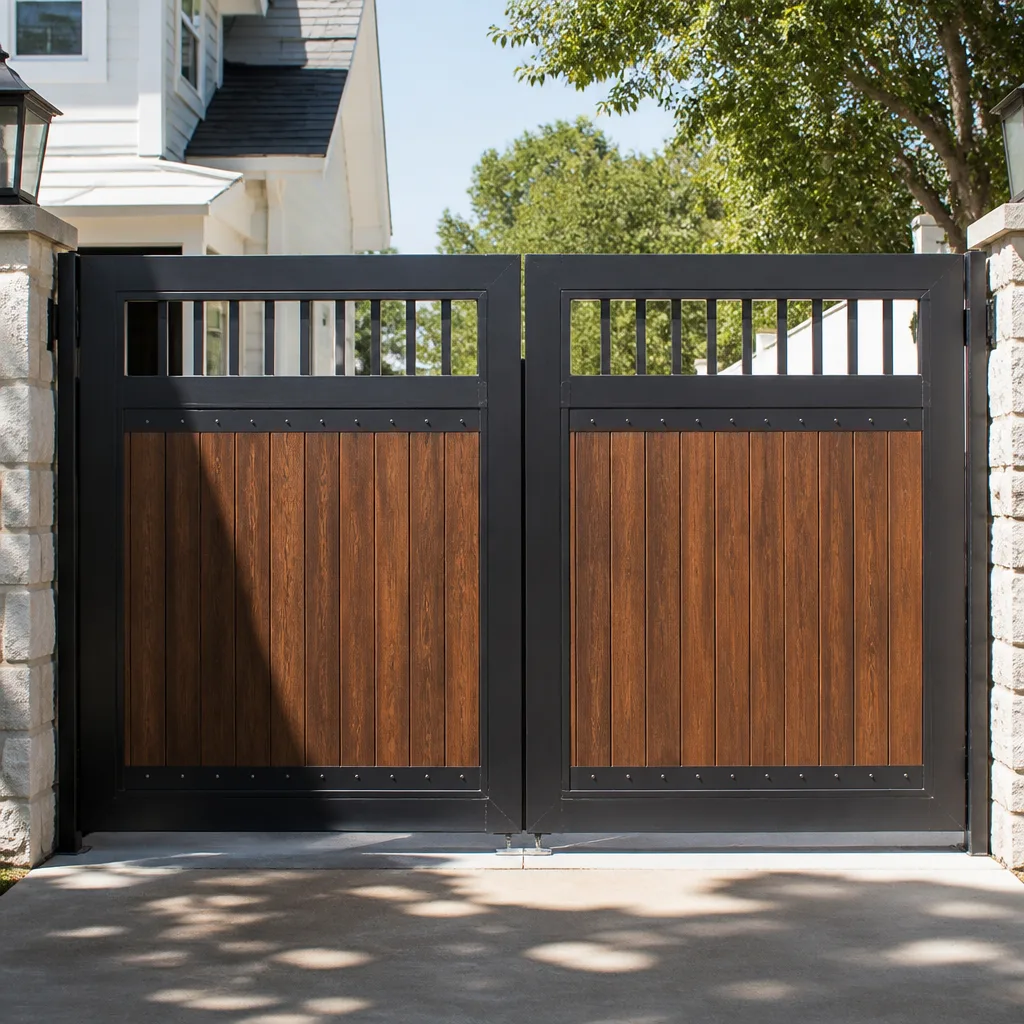 Wood & steel frame
 Farm & ranch
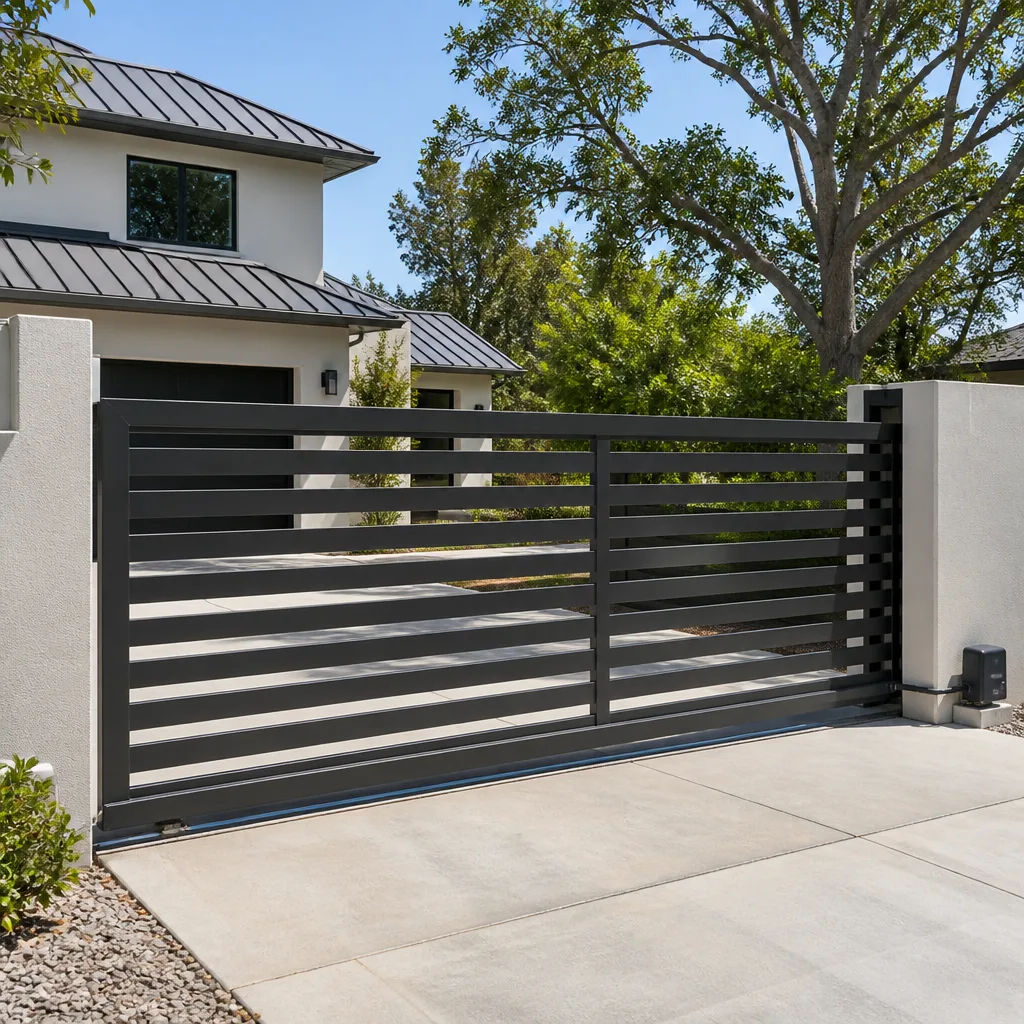 Sliding driveway gates
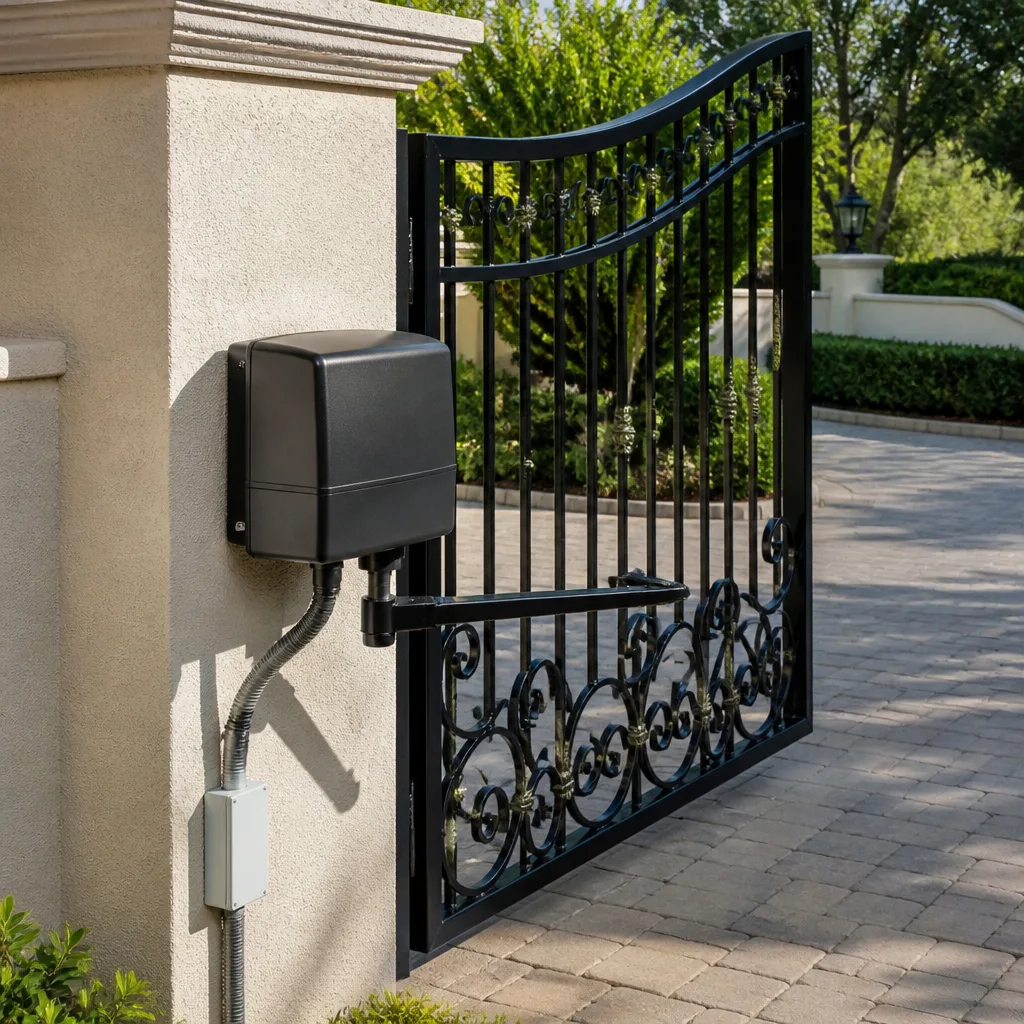 LiftMaster operators
Free on-site gate assessment - hinges, posts, and your LiftMaster or Nice gate operator checked before anything is quoted
The assessment is free and the quote is the invoice.
Get your free estimateGate Repair Warning Signs: A Chino Homeowner’s Reference Guide
A gate that hesitates before moving isn’t a “slow gate.” It’s an operator working against mechanical resistance it was never designed to overcome, and in Chino’s summer heat that resistance compounds until the motor burns out. Most gate failures we see in Chino start quietly: a slight pause, a new sound, a remote that needs two presses instead of one. This guide maps every warning sign to the component that’s actually failing, so you know whether you have weeks to schedule a repair or hours before the gate stops working entirely.
Quick Answer
Gate repair warning signs in Chino fall into five categories: hesitation before movement, new grinding or scraping sounds, unexpected reversing or stopping, latching failures, and declining remote range. Each symptom points to a specific component, and catching it early typically means a $150 to $400 repair instead of a $900 to $2,500 operator or structural replacement. If your gate hesitates, grinds, or reverses mid-cycle, schedule a diagnostic within the week; if it won’t close fully or starts moving on its own, call for Gate Repair services immediately.
Styles & brands we work with
Table of Contents
- The Symptom-to-Component Diagnostic Map
- Operator Problem vs. Structural Problem: How to Tell
- Swing Gate Hydraulic vs. Electromechanical Operators: Different Failures
- Chino-Specific Warning Signs: Rust, UV, and Heat
- The Escalation Timeline: Which Signs Give You Time
- Signs That Require Immediate Attention
- Common Mistakes to Avoid
- When to Call a Professional
- Frequently Asked Questions
The Symptom-to-Component Diagnostic Map
Every gate behavior is a language. Once you know what to listen for, the gate tells you exactly which component is stressed. Here’s what we’ve learned from years of working exclusively on gates across Chino, from the older wrought iron gates in the historic neighborhoods to the newer automated systems in the Preserve and College Park communities.
Hesitation Before Movement (1 to 3 Seconds)
A gate that pauses before responding to the remote or keypad is almost never a remote problem. The delay means the operator’s control board is receiving the signal but hesitating to engage the motor. In electromechanical systems like Linear and Ghost Controls operators, this typically points to a failing start capacitor or a limit switch that’s lost its calibration. In hydraulic systems like Viking operators, hesitation usually means low hydraulic fluid or a pump struggling to build pressure.
The fix at this stage is usually straightforward: capacitor replacement, limit switch adjustment, or fluid top-off. Costs in Chino run $150 to $350 depending on the operator model. Ignore it, and the hesitation becomes a full stall within six to twelve weeks.
Grinding or Scraping During Travel
Grinding is mechanical, not electronic. The sound means metal is contacting metal where it shouldn’t be. Common culprits include:
- Worn roller bearings inside the gate wheel or track assembly
- A bent or misaligned track on sliding gates, often from a vehicle bumping the rail
- Hinge pin wear on swing gates, especially the bottom hinge which carries the most weight
- Debris packed into the track, which happens more than you’d expect in Chino’s windier months
Grinding is one of the signs that gives you a little time, but not much. Each cycle grinds the damaged surface further, and a gate wheel worn flat can gall the track beyond repair. If you catch it while it’s still a light scrape, the repair is often a $200 to $450 component replacement. Let it go a month, and the track may need sectioning at $800 to $1,800.
Unexpected Reversing or Stopping Mid-Cycle
A gate that reverses direction before reaching its limit, or stops partway and sits there, is signaling one of three things:
- Safety sensor obstruction: Photo eyes or safety edges are detecting something that isn’t there, usually because they’re misaligned or have accumulated dust. This is the cheapest fix, sometimes as simple as sensor realignment.
- Current sensing overload: The operator’s built-in overload protection is tripping because the gate is mechanically binding. The motor is working harder than it should, and the safety circuit is doing its job. This is a mechanical issue masquerading as an electronic one.
- Limit switch failure: The switch that tells the operator where “open” and “closed” are has failed or drifted. The operator doesn’t know where the gate is, so it stops defensively. On DoorKing and LiftMaster operators, this is one of the most common failure points.
Not Latching or Latching Incompletely
A gate that drifts closed but doesn’t seat into the latch, or one that bounces back after contact, points to structural alignment issues. The post has shifted, the hinge plate has sagged, or the gate itself has dropped from years of weight and use. In Chino’s clay-heavy soil, post movement is more common than homeowners expect; the ground expands and contracts with moisture, and over a decade this micro-movement adds up.
Latching problems are deceptively serious. A gate that doesn’t fully close is a security gap, and it also forces the operator to cycle repeatedly if an automated system is trying to close against resistance. That repeated cycling is what burns out motors prematurely.
Remote Range Dropping Over Time
If you used to open the gate from the end of the street and now you have to be inside the driveway, the problem is usually the receiver antenna or the remote’s battery, not the operator. However, declining range can also indicate a failing control board that’s no longer amplifying signal properly. We see this more in older DoorKing systems where the receiver module is a separate board that degrades with heat exposure. A new antenna or receiver module runs $100 to $300; a new control board runs $400 to $900.
Operator Problem vs. Structural Problem: How to Tell
This is the distinction that saves Chino homeowners the most money. Replacing an operator on a gate with a structural problem doesn’t fix the gate; it just destroys the new operator, because the new motor inherits the same mechanical resistance that killed the old one. Here’s how to tell the difference.
Operator problem indicators:
- Gate moves freely when disengaged and pushed by hand, but struggles when the operator is engaged
- Sounds come from the operator housing itself: humming, clicking, buzzing
- The problem is intermittent, with no pattern tied to gate position
- The remote or keypad doesn’t respond at all
Structural problem indicators:
- Gate is difficult to push by hand even with the operator disengaged
- Visible sag at the latch end, or dragging on the ground at the far post
- Sounds come from the hinges, the track, or the post area, not the operator
- The problem is consistent and worsens at specific points in the travel arc
- Fresh rust stains on hinge plates or anchor bolts, indicating movement under load
The test we recommend to every homeowner: disengage the operator and open the gate by hand. If the gate feels heavy, sticky, or uneven at any point, that’s a structural issue that needs addressing before any operator work. We’ve seen too many cases in Chino where a homeowner replaced a $1,200 operator, only to have it fail in six months because the hinge post had settled half an inch and no one checked.
Swing Gate Hydraulic vs. Electromechanical Operators: Different Failures
If you have an automated swing gate, the type of operator you have changes which warning signs matter. Hydraulic operators and electromechanical operators fail differently and signal distress differently. Recognizing which system you have is the first step in interpreting what your gate is saying.
Hydraulic Operators (Common in Viking and BFT Systems)
Hydraulic operators use pressurized fluid to drive a piston that swings the gate. They’re powerful and durable, but they have specific failure modes:
- Fluid leaks: Look for oil staining at the base of the operator or on the ground beneath it. A puddle means the system is losing pressure, which means reduced opening force and slower operation. Leaks usually start at seals and fittings, and they don’t self-heal.
- Pump whine: A high-pitched whine during operation that gets louder over time indicates the pump is cavitating or struggling against low fluid. In Chino’s summer heat, hydraulic fluid thins and older pumps work harder, accelerating wear.
- Jerky movement: Smooth hydraulic motion should be fluid. Jerking or stuttering suggests air in the lines or contaminated fluid. Bleeding and fluid replacement fixes this, but the underlying seal leak that let air in still needs addressing.
Electromechanical Operators (Common in Linear, Ghost Controls, and DoorKing Systems)
Electromechanical operators use a motor and gearbox directly, no fluid involved. They’re more common in residential installations and have their own failure signature:
- Gearbox noise: A rhythmic clicking or knocking during travel usually means a gear tooth has failed or the gearbox is wearing. Once a tooth chips, every cycle hammers the adjacent teeth. This is the gateway to full gearbox failure, which on some models is a $600 to $1,000 replacement.
- Motor hum without movement: A hum with no gate motion means the capacitor has failed (motor can’t start) or the gearbox has locked. A new capacitor is a $50 to $150 fix. A locked gearbox is not.
- Position drift: The gate opens fine but gradually loses its closed position, needing occasional manual adjustment. This is limit switch drift, and it’s an early warning on DoorKing operators in particular. Adjusting it now is cheap; replacing the operator because a stuck switch overheated the motor is not.
Here’s the key difference: hydraulic operators degrade gradually and give you audible and visual warning (leaks, whine, sluggish operation). Electromechanical operators tend to fail more suddenly, because gear teeth and capacitors go from “working” to “not working” quickly. If you have an electromechanical system and you notice any new noise, don’t wait; the window between first sound and full failure can be as short as two weeks.
Chino-Specific Warning Signs: Rust, UV, and Heat
Chino’s climate does specific things to gate hardware that homeowners in coastal cities don’t experience. We see the same patterns year after year, and knowing them helps you catch problems before they become failures. Anyone in Chino with an older gate should walk the property line with these warning signs in mind, and check our Seasonal Gate Repair Care for Chino: Year-Round Homeowner’s Guide for timing.
Rust Patterns on Hinge Plates That Mean Soil Contact
Chino sits on clay-heavy soil that retains moisture. When a gate post is set even a few inches too shallow, or when the base of a hinge plate sits close to the ground, capillary action draws moisture up against the metal. The result is a distinctive rust pattern: dark, flaky corrosion at the bottom hinge plate that spreads upward, while the top hinge remains clean.
This isn’t just cosmetic. The bottom hinge carries most of the gate’s weight, and rusting there means the hinge is slowly losing structural integrity. A hinge that looks “fine” on the surface may have lost 40% of its metal beneath the rust scale. If you see this pattern on your gate in Chino, have the hinge plates checked before the next rainy season.
UV Cracking on Wiring Looms
Inland Empire sun is unrelenting, and the UV exposure in Chino averages among the highest in the Los Angeles basin. The wiring that runs from your operator to the photo eyes, keypad, and safety edges is typically protected by PVC conduit or a flexible loom. After five to eight years of direct sun, that loom becomes brittle and cracks.
The warning sign: visible cracks or splits in the plastic loom, especially on south-facing sections. Once the loom cracks, the wire insulation is next. Bare wire against metal means shorts, intermittent sensor failures, and false safety trips. It also means a potential shock hazard. If your gate’s wiring is exposed and cracked, the repair is straightforward now: re-wrap and seal, or re-run the loom. The repair after a short damages the control board is much more expensive.
Heat-Swollen Control Board Enclosures
Control boards generate their own heat, and when ambient temperatures in Chino push past 100 degrees in July and August, enclosures that aren’t ventilated properly can trap enough heat to warp the plastic housing. The warning signs: a control board cover that no longer seats flush, a warped or discolored housing, or a cover that pops open on its own.
Heat is an accelerator. It doesn’t directly kill boards in most cases; it shortens their lifespan by degrading capacitors and solder joints. A board that might last twelve years in a coastal climate can fail in six in Chino if the enclosure isn’t shaded or ventilated. If your operator box is in direct afternoon sun, adding a shade structure or relocating the enclosure can buy years of extra life.
The Escalation Timeline: Which Signs Give You Time
Not all warning signs are emergencies. Understanding the timeline helps you plan: which issues can wait for a scheduled appointment, and which need a same-day call. Here’s the framework we use when advising homeowners in Chino.
Signs That Give You Weeks to Schedule
- New but faint grinding sound on a gate that still opens fully: You have a wearable component deteriorating, but the gate is still functional. Schedule service within two to three weeks.
- Hesitation of one to two seconds before movement: The capacitor or limit switch is aging. Schedule service within three to four weeks.
- Remote range that has dropped noticeably: Either a battery or a receiver issue. Try the battery first (a $3 fix), and if the range is still short, schedule a diagnostic within two weeks.
- Light rust on hinge plates without visible sag: The hinge is aging but not failing. Have it inspected at your next service visit, and apply a rust-inhibiting treatment in the meantime.
- UV cracking on wiring loom with no bare wire visible: You have time, but only through one more summer. Have the loom replaced before peak UV season.
Signs That Mean You Have Days, Not Weeks
- Noticeable grinding accompanied by visible metal shavings: The component is actively failing. Every cycle does real damage. Call within 48 hours.
- Hydraulic fluid leaking: The system is losing pressure. It might work today and not tomorrow. Call within 48 hours.
- Gate struggles at the same point in the travel arc every time: A mechanical bind is acting on the motor. The motor is working against increasing resistance. Call within a week.
- Intermittent sensor trips but no visible obstruction: A wiring short is likely developing. Call within a week before the short touches the board.
Signs That Require Immediate Attention
These are the “stop using the gate” scenarios. Three signs that require immediate service from a professional, rather than a DIY attempt, because the stakes involve security, safety, or both. For help choosing the right pro, see How to Hire a Gate Repair Contractor in Chino: A Step-by-Step Guide.
- The gate won’t close fully and stays partially open: This is a security failure. Every hour the gate sits open is an hour your property is exposed. In Chino, with the mix of residential streets and commercial properties, an unsecured access point is an invitation.
- The gate starts moving on its own or doesn’t respond to stop commands: This is a safety hazard. An automated gate that moves unpredictably can injure a person or damage a vehicle. Disconnect power to the operator and keep the gate in manual mode until it’s serviced.
- Any electrical burning smell, visible smoke, or sparking from the operator: Cut power immediately. This is a fire risk, and the problem is beyond any homeowner-level fix. Call for emergency service.
For any of these, a professional evaluation is the right move. A gate specialist who works exclusively on gates, rather than splitting focus across other trades, is what the situation calls for. Electric gate repair and Gate Repair in Chino require an understanding of both the mechanical and electrical systems together, which is exactly the diagnosis these urgent scenarios need.
Common Mistakes to Avoid
- Treating the symptom instead of the cause: Replacing the remote batteries because the gate hesitates doesn’t fix the failing capacitor. The hesitation will return, and by then the damage may be more extensive. The gate is telling you something specific; listen to what it’s saying, not just what’s convenient.
- Lubricating a grinding gate: If metal is grinding, lubrication masks the sound for a few days while the underlying wear continues. Now the gate is quieter, but the damaged bearing is still failing. You haven’t bought time; you’ve bought silence.
- Replacing the operator without checking the structure: This is the expensive one. A new operator on a sagging gate or shifted post inherits the same load the old one couldn’t handle. The new motor fails within months, and the homeowner has paid for two operators and still has a structural problem.
- Ignoring a gate that doesn’t latch fully: A partially open gate isn’t a minor annoyance; it’s a security gap your property didn’t have before. In Chino’s residential neighborhoods, a visibly unsecured gate is exactly the kind of signal that attracts unwanted attention.
- Waiting until the gate stops completely before calling: The cheapest repair is always the one done while the component is still identifiable as failing. Once the gate is fully down, the diagnostic picture is murkier, and the repair path often includes replacing components that could have been saved.
- Assuming all gate technicians are equivalent: A general contractor who “also does gates” doesn’t have the brand-specific knowledge to diagnose a DoorKing limit switch issue or a Viking hydraulic leak efficiently. That inefficiency shows up in the bill, not the estimate. A specialist who works exclusively on gates sees these patterns daily.
- Deferring maintenance because the gate “still works”: Gates don’t fail all at once, they fail in stages. Every functioning day on a failing component is a day of accumulated damage. The $150 adjustment ignored in March becomes the $900 operator replacement in July.
When to Call a Professional
Call a professional for any warning sign you’ve identified in the sections above, and call immediately for the urgent signs. But here’s the practical rule: if you’ve noticed the same symptom on two consecutive days, it’s not going to resolve itself, and waiting doesn’t lower the cost. Gates are load-bearing mechanical systems that wear predictably; they don’t heal. We work exclusively on gates, which means our diagnostic process is built on gate-specific patterns, not general contracting guesses. Whether your Chino property has a LiftMaster, a Linear, or a older Viking system, Electric Gate Repair in Chino starts with understanding what the gate is telling us. Wrought Gate Repair offers free estimates in Chino. Call (833) 545-6817.
Frequently Asked Questions
Gate repair in Chino typically costs $150 to $450 for minor component replacements (capacitors, limit switches, sensors, remote receivers), $400 to $1,200 for major component work (gearboxes, hydraulic pumps, control boards), and $900 to $2,500 for operator replacement or structural repair. The price is quoted and agreed before any work starts, so you know the exact cost before we begin. Call (833) 545-6817 for a free estimate.
Hesitation before opening usually means a failing start capacitor, a limit switch that’s drifted out of calibration, or low hydraulic fluid in hydraulic systems. The remote is sending the signal; the operator is just struggling to engage. It’s a repair that costs a fraction of what a burned-out motor costs, and it’s worth scheduling before the hesitation becomes a stall. Call (833) 545-6817 for a diagnostic.
Yes, a gate that won’t fully close is usually a latching or alignment issue (shifted post, sagging gate, misaligned latch) rather than an operator failure. In Chino’s clay soil, post movement over time is common, and the fix requires re-aligning the gate and reinforcing the post. We handle this as part of our Gate Installation in Chino and repair work. Call (833) 545-6817 to schedule an assessment.
Hydraulic operators use pressurized fluid to move the gate and typically give gradual warning signs (leaks, whine, sluggish movement). Electromechanical operators use a direct motor and gearbox and tend to fail more suddenly (gear teeth, capacitors). Knowing which type you have changes which warning signs matter most, and it also changes which technician you should call; some technicians know one type well and the other poorly.
A well-maintained wrought iron or steel gate in Chino can last 20 to 30 years on the gate itself, but operator components (control boards, gearboxes, hydraulic pumps) typically last 8 to 15 years depending on sun exposure and usage cycles. Chino’s heat and UV accelerate component aging, especially for operators mounted in direct afternoon sun. Regular inspection catches component wear before it cascades into structural damage. Call (833) 545-6817 for a maintenance assessment.
We service nine major gate automation brands: LiftMaster, FAAC, BFT, Linear, Viking, Ghost Controls, DoorKing, and Elite. If you have a Mighty Mule opener, we handle that as well. Most Chino properties are covered by one of these brands, but if you’re unsure, call (833) 545-6817 and describe your system. If it’s a gate, we can help.
The Bottom Line
Gate warning signs are a language, and learning to read them is the difference between a $150 adjustment and a $900 operator replacement. In Chino, where heat, UV, and clay soil add environmental stress that coastal homes don’t experience, that literacy matters even more. Hesitation means capacitor or limit switch. Grinding means mechanical wear. Reversing means sensor or overload. Failure to latch means structural alignment. Each sign points to a component, and each component has a repair window. Catch it early, and the gate serves another decade. Ignore it, and the gate fails in the worst possible moment: a hot Chino afternoon, a security gap, and an invoice that’s far larger than it needed to be. For help identifying what your gate is telling you, call Wrought Gate Repair home at (833) 545-6817. We work exclusively on gates, which means the diagnostic starts with knowledge, not guesswork.
Written by the team at Wrought Gate Repair, serving Chino since 2012. Explore more guides & resources from our team.
See the difference
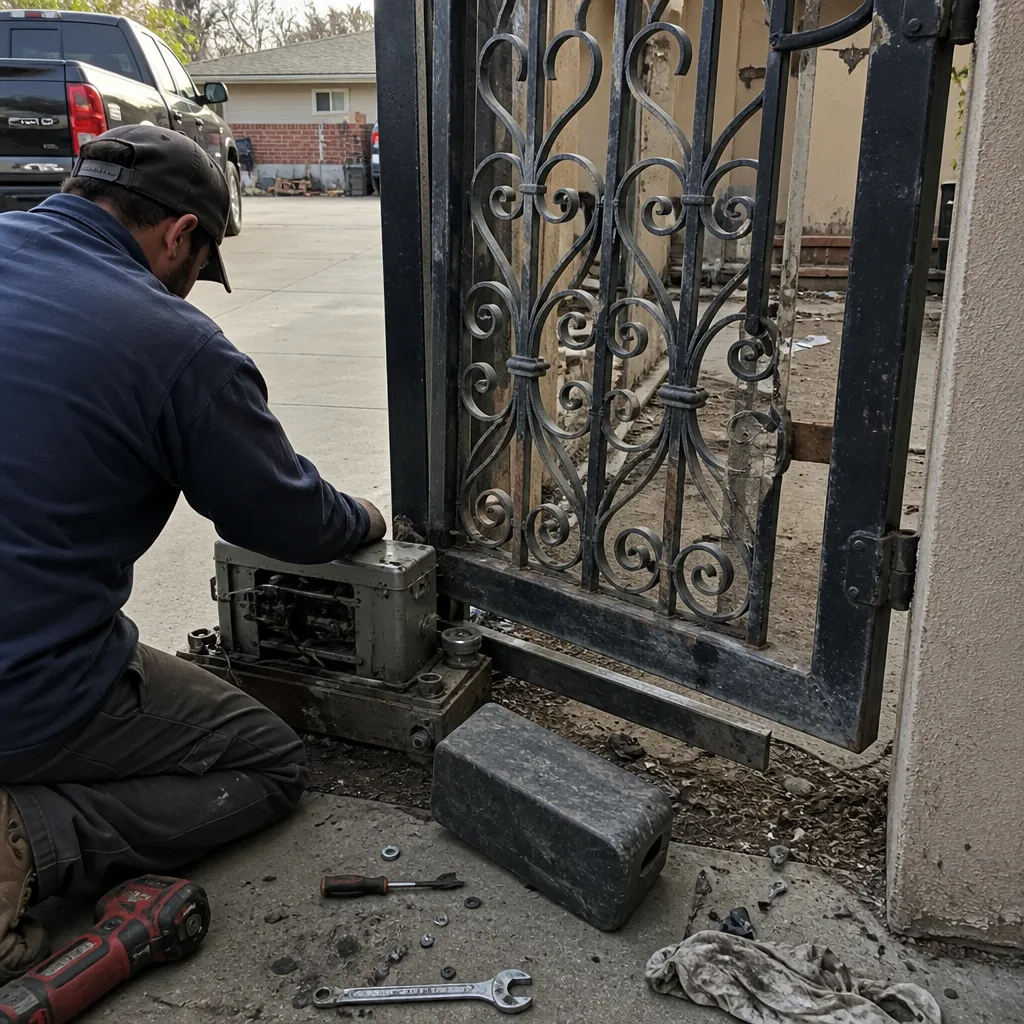 Before
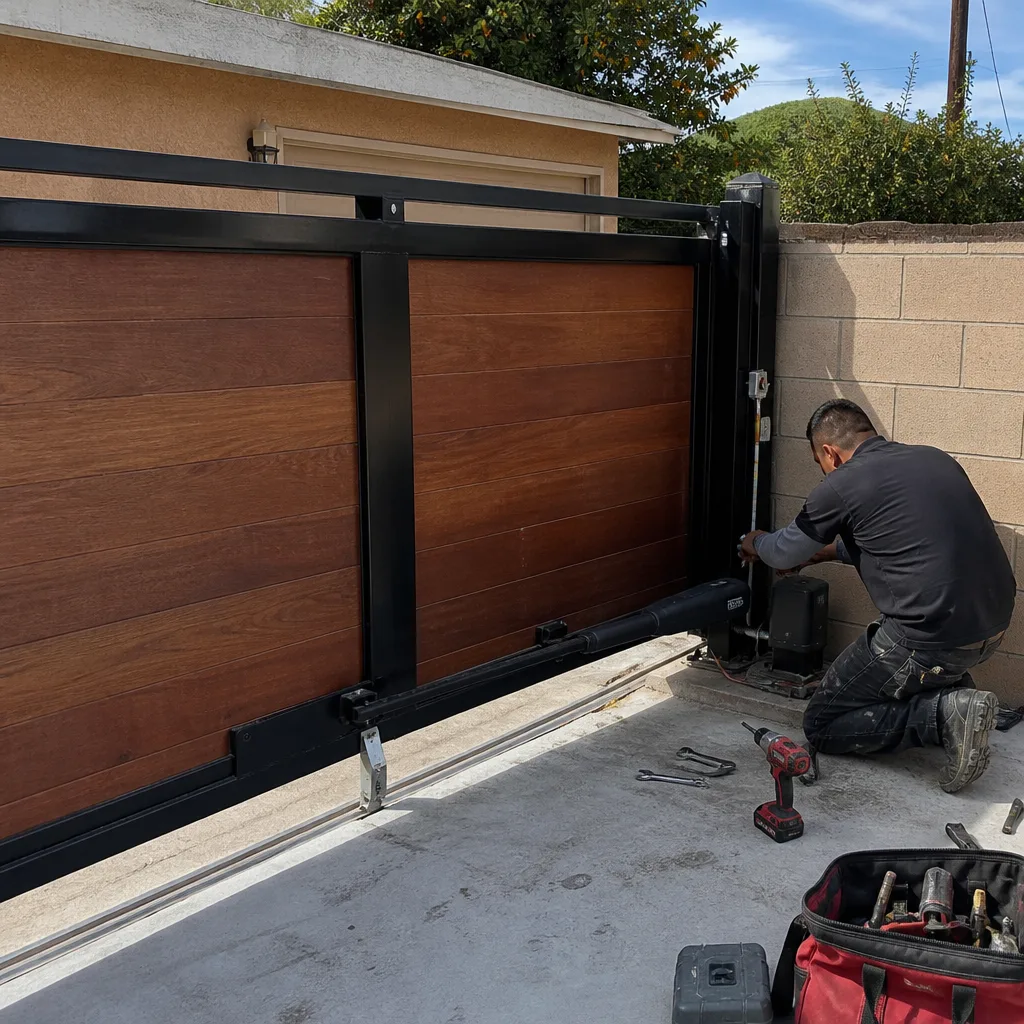 After
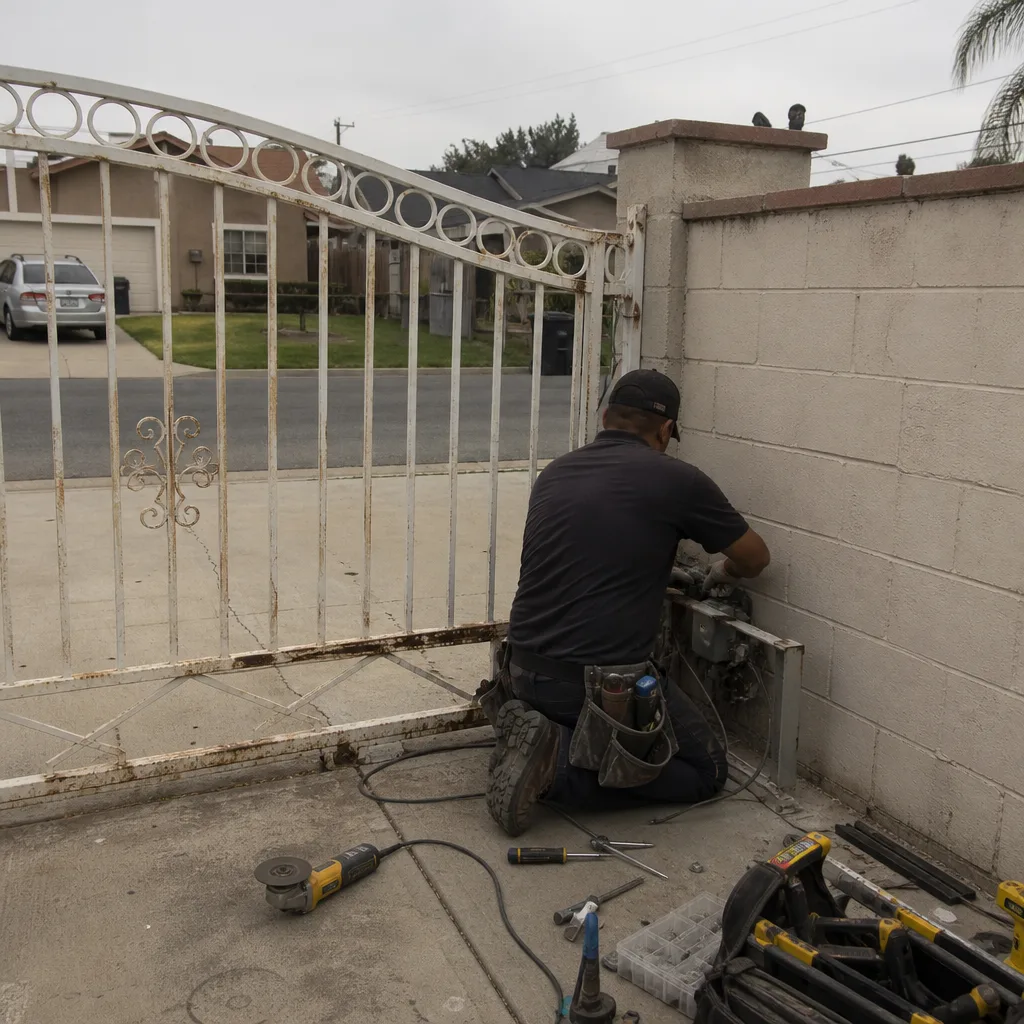 Before
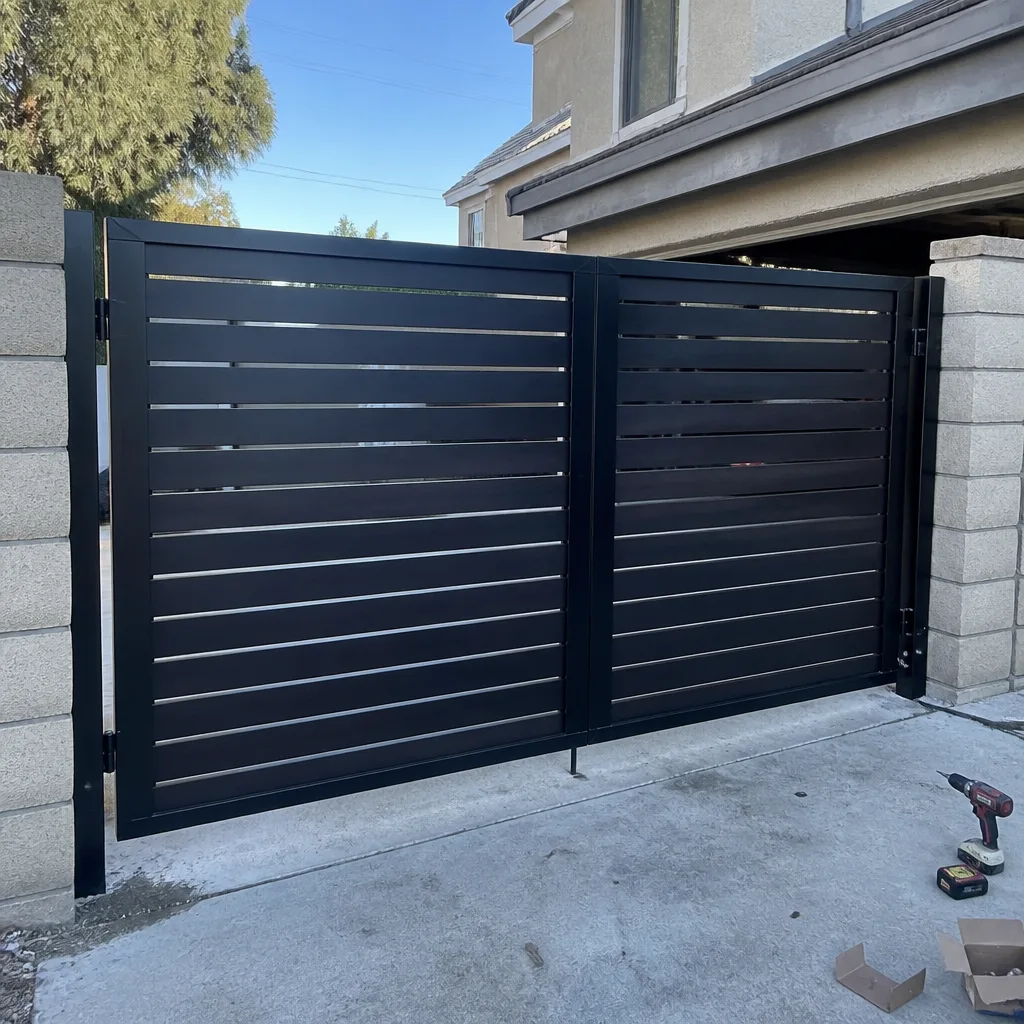 After
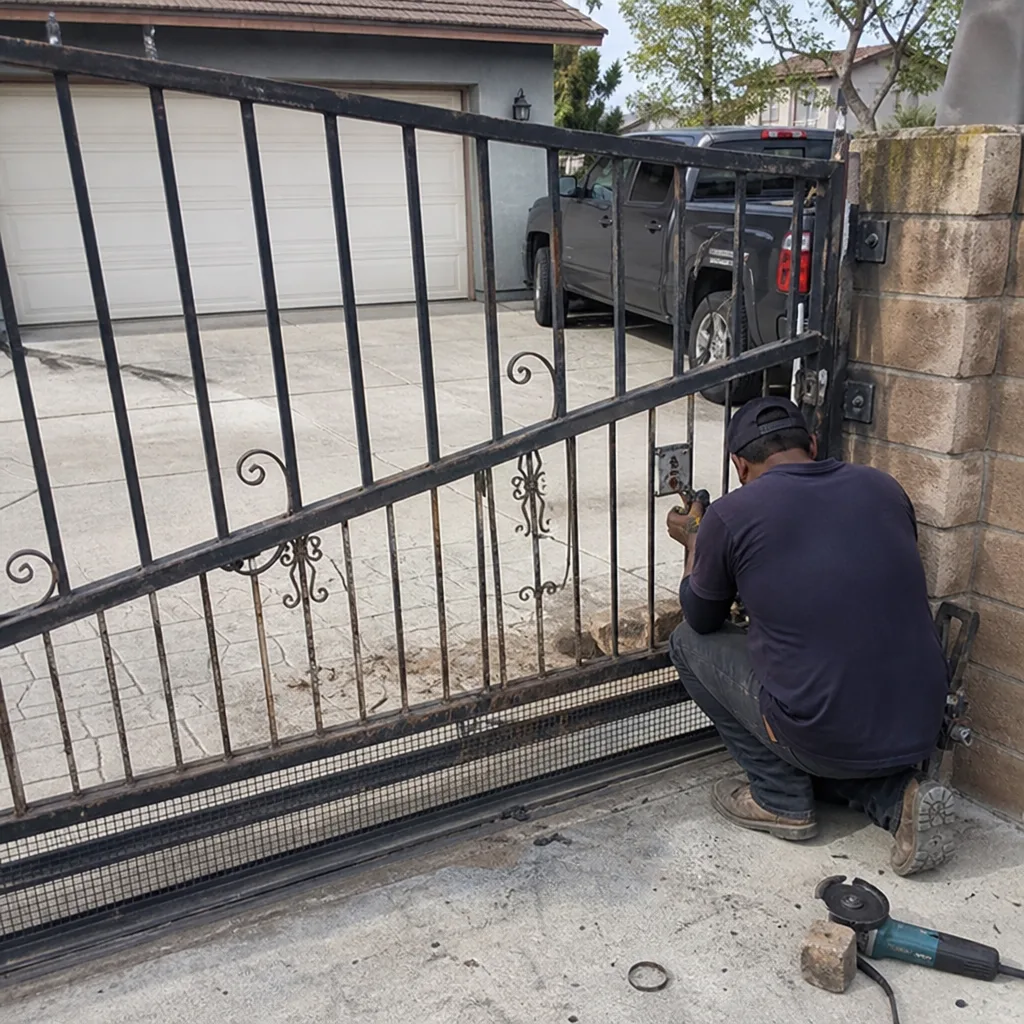 Before
 After