
Last updated October 30, 2026
 Wrought iron
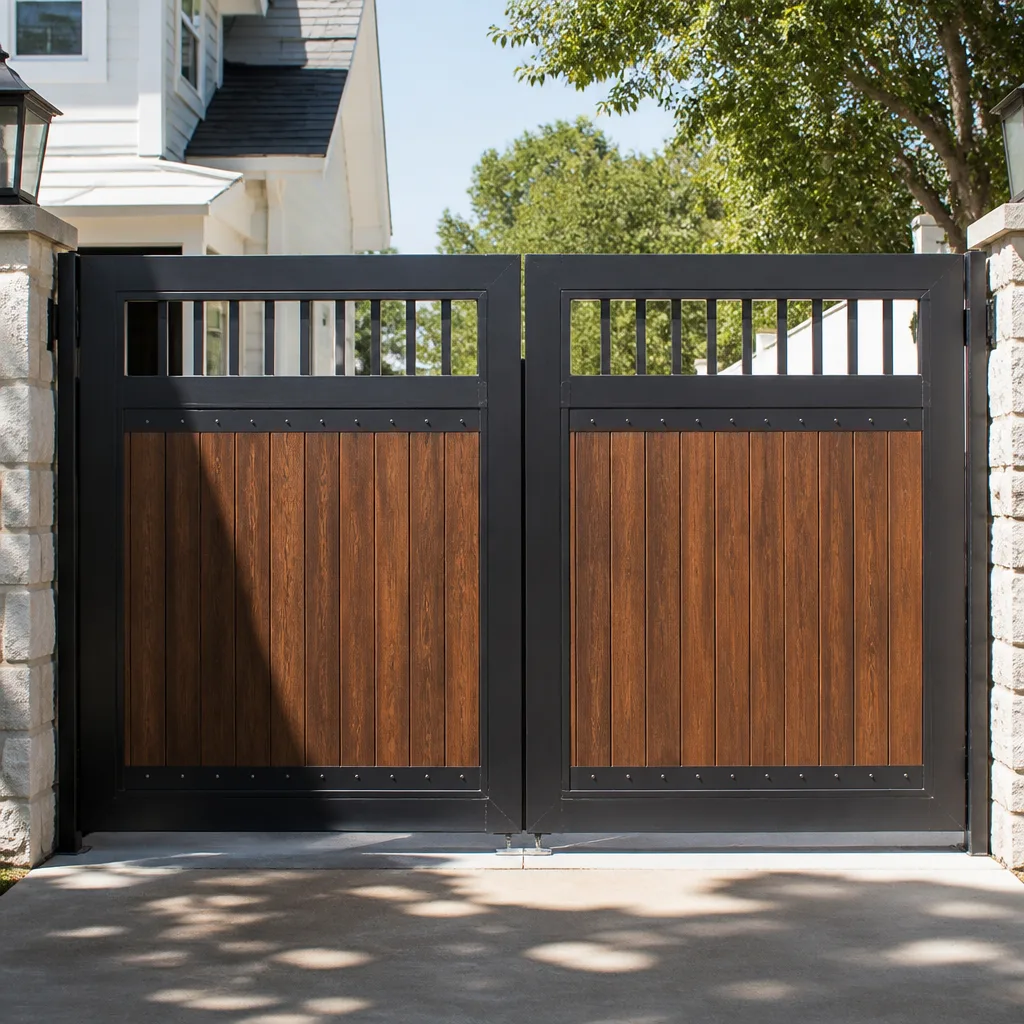 Wood & steel frame
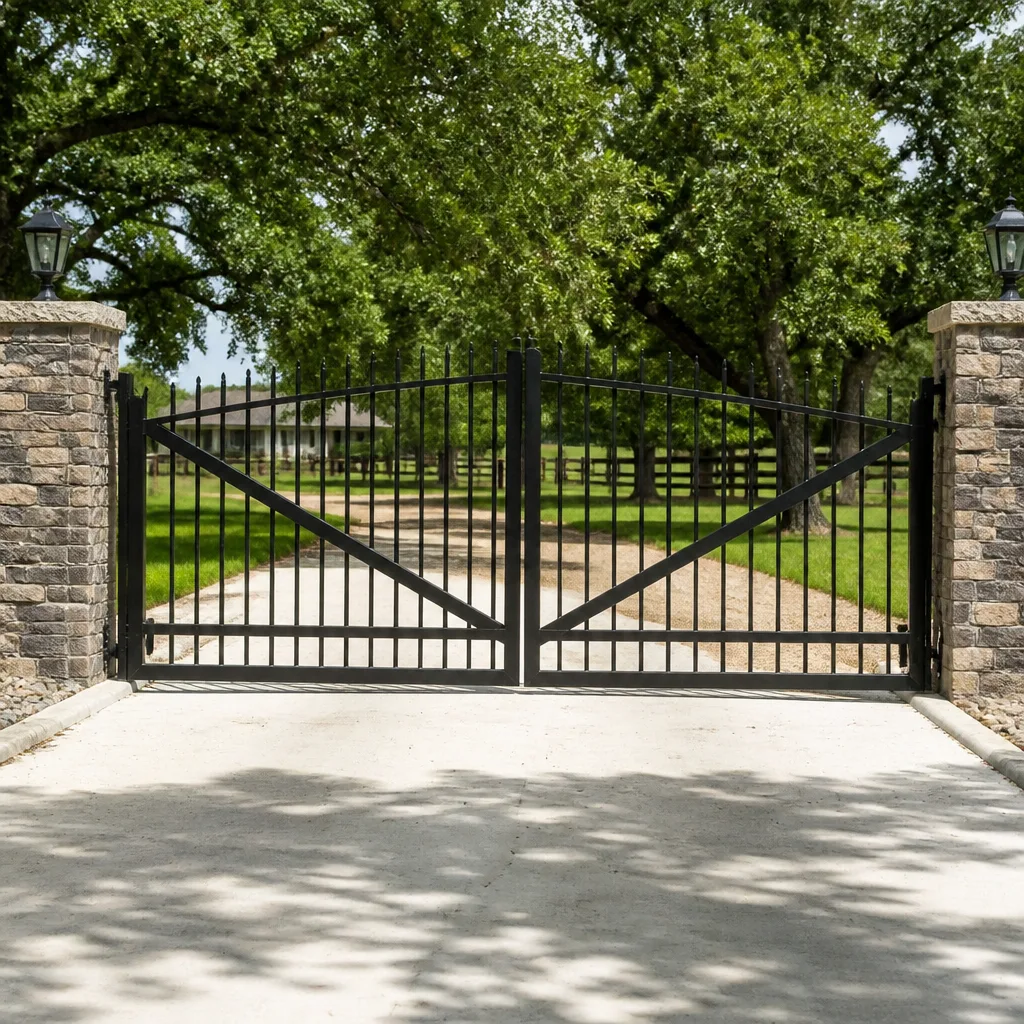 Farm & ranch
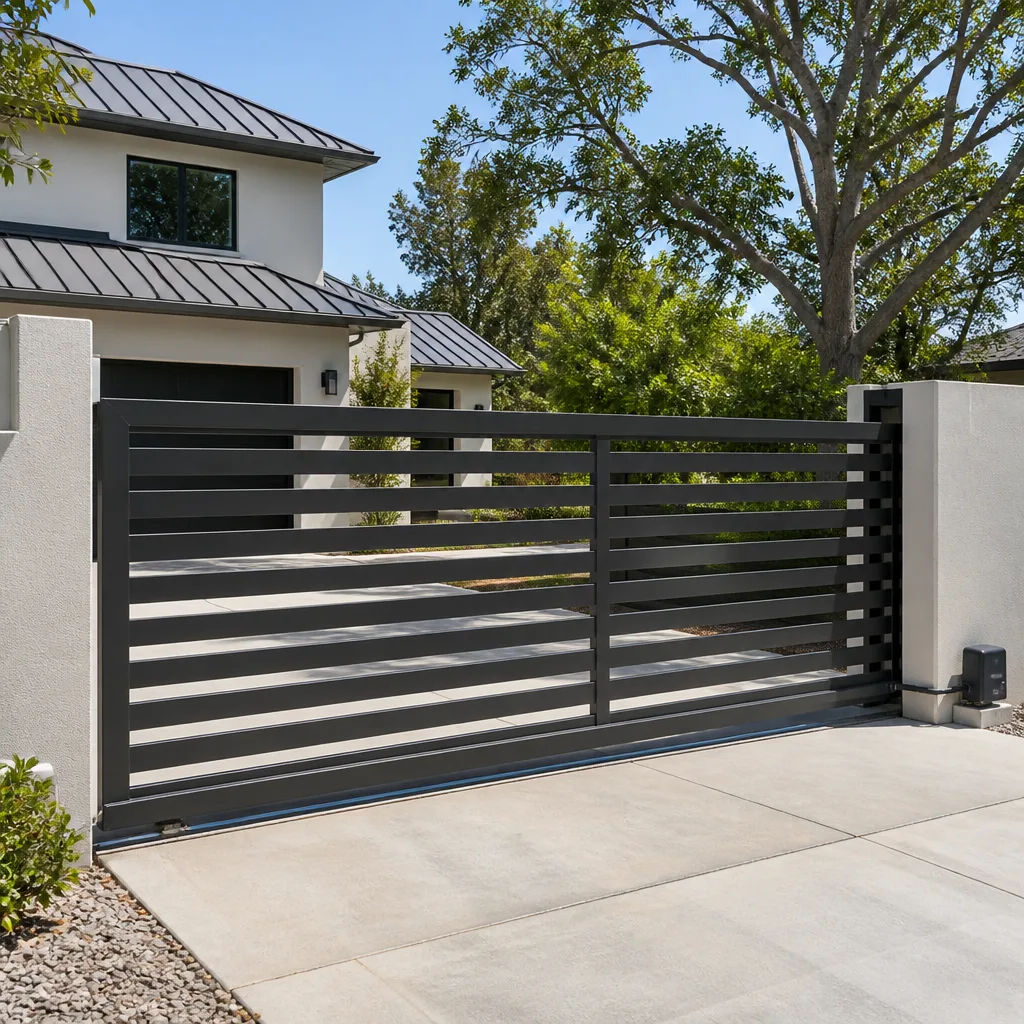 Sliding driveway gates
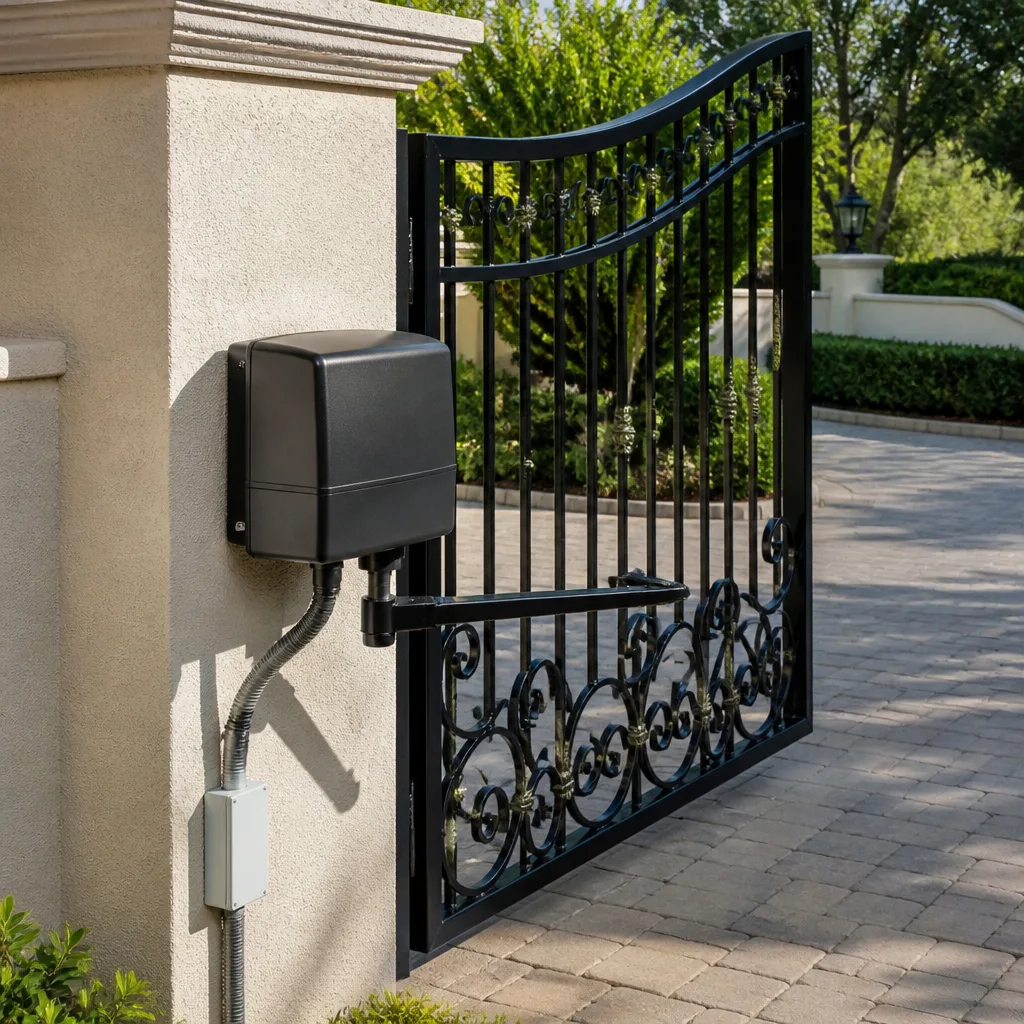 LiftMaster operators
Free on-site gate assessment - hinges, posts, and your LiftMaster or Nice gate operator checked before anything is quoted
The assessment is free and the quote is the invoice.
Get your free estimateSeasonal Gate Repair Care for Chino: Year-Round Homeowner’s Guide
Santa Ana wind events, not summer heat, are the leading cause of swing gate hinge failure in Chino. Most homeowners brace for triple-digit temperatures and never think about what a 40 mph northeast gust does to a gate leaf that’s hanging from two hinges and a weld line. This guide maps Chino’s actual seasonal stressors to specific maintenance actions, so you can catch a $200 gate repair before it becomes a $2,400 gate replacement. We’ll cover what to inspect each season, what fails and why, and when to stop checking and start calling.
Quick Answer
Seasonal gate care in Chino means tracking four distinct stress periods: summer heat above 95°F (control boards and hydraulic fluid), fall Santa Ana winds (lateral hinge and weld loading), winter cold snaps (battery and hydraulic performance), and spring soil movement (post alignment and limit switches). Most automated gate failures in Chino are seasonal, not random. A 30-minute seasonal inspection catches the majority of them before they strand you outside your own driveway. For more guides & resources, explore our blog.
Styles & brands we work with
Table of Contents
- Summer: Heat, Control Boards, and Hydraulic Fluid
- Santa Ana Season: Lateral Wind Loading and Hinge Failure
- Winter: Cold Snap Effects on Batteries and Hydraulics
- Spring: Soil Movement, Limit Switches, and Post Integrity
- Chino’s Microclimate vs. Coastal LA: Why Generic Advice Fails
- Common Mistakes to Avoid
- When to Call a Professional
- Frequently Asked Questions
Summer: Heat, Control Boards, and Hydraulic Fluid
Chino summers routinely push past 95°F for weeks at a time, and sustained heat does two specific things to automated gate systems: it degrades control board capacitors faster and it thins hydraulic fluid in FAAC, BFT, and other hydraulic operators. Neither problem announces itself loudly. The gate just gets slower, or the board resets intermittently, or the opener trips its thermal overload at 3 p.m. when the enclosure is baking in direct sun.
Control boards inside metal enclosures can reach 140°F on a 100°F day. Capacitors rated for 105°F degrade noticeably faster when they sit above that threshold for hours every afternoon. We’ve opened enclosures in Chino in August and measured board temperatures high enough to soften wire insulation. The fix is not complicated: make sure the enclosure has shade or at least ventilation, and check that the cooling fan, if the operator has one, actually spins.
What to Check in Summer
- Enclosure temperature: touch the operator housing at 2 – 3 p.m. If it’s too hot to hold your palm against for five seconds, the board inside is cooking.
- Hydraulic fluid viscosity: hydraulic operators run noticeably faster in mid-summer. That’s not a bonus. Thin fluid reduces damping and can cause the gate to slam at end of travel.
- Sensor alignment: metal mounting brackets expand in heat. A photo eye that was perfectly aligned in April can drift a few degrees by July and start false-triggering reverses.
- Drive belt or chain tension: heat stretches both. A sloppy chain slaps and wears sprockets; a loose belt slips and mimics a failing motor.
If you have a hydraulic operator such as FAAC or BFT, summer is when you want the fluid level and condition checked. Contaminated or low fluid in 100°F heat causes erratic operation that many homeowners misdiagnose as a motor failure. In our experience, most “dead” hydraulic units in Chino during August are actually low on fluid or running degraded fluid that should have been changed two seasons earlier.
Summer Maintenance Sequence
- Shade or ventilate the control enclosure; check fan operation.
- Inspect hydraulic fluid level and clarity on FAAC/BFT operators.
- Test photo eye alignment at the hottest part of the day.
- Check chain or belt tension; adjust per manufacturer spec.
- Listen for end-of-travel slamming and adjust limit switches if present.
This is also the season when gate opener batteries in backup systems get stressed. Heat accelerates lead-acid battery water loss, and a battery that’s been in a hot enclosure for three summers is usually marginal. We’ll cover that more under winter, but the damage often happens now.
Santa Ana Season: Lateral Wind Loading and Hinge Failure
Santa Ana winds hit Chino from the northeast, funneling through the Cajon Pass and slamming into gates that were designed for routine opening and closing, not sustained lateral pressure. A swing gate leaf that weighs 400 pounds presents a lot of surface area. A 40 mph gust against that surface generates hundreds of pounds of side load on hinges and weld joints. Do that for two or three wind events per year, year after year, and the metal fatigues.
This is why we see hinge failures in Chino that have nothing to do with how often the gate cycles. The gate could open twice a day for five years and still crack at the hinge barrel or pull a weld at the frame joint because the real stress came from wind, not operation. Homeowners miss this because the failure happens slowly. The gate starts to sag slightly. Then the latch doesn’t line up. Then one day the hinge pin shears and the whole leaf drops. See The Complete Gate Repair Guide for Chino Homeowners for a full breakdown of these warning signs.
Post-Santa Ana Inspection Checklist
- Open the gate fully and look at each hinge from below. Check for cracks at the barrel, elongation at the pin hole, and any gap between hinge leaf and gate frame.
- Close the gate and push laterally on the free edge with 20 – 30 pounds of force. More than half an inch of movement means a worn or loose hinge.
- Inspect all welded joints on the frame. Hairline cracks usually start at the corners and run parallel to the weld bead.
- Check that the gate still latches cleanly. A latch that bound up after the last wind event is telling you the frame twisted.
- For automated gates: watch for the opener straining or the gate reversing mid-cycle. Wind damage to hinges shows up as extra friction the motor has to fight.
If you find hinge play in a swing gate, address it before the next wind season. Hinge repairs on a sagging gate are significantly cheaper than replacing a gate leaf that tore free and twisted the frame. We see this sequence play out in Chino every November.
Winter: Cold Snap Effects on Batteries and Hydraulics
Chino winters don’t freeze, but nights in the high 30s and low 40s are enough to change how gate systems behave. Two things happen: battery backup capacity drops and hydraulic fluid thickens. The combination means most automated gate slowdowns and failures in Chino happen between December and February, not during the summer heat everyone blames.
Lead-acid and even some lithium batteries lose available cranking amps in cold temperatures. A backup battery that tests fine in October may fail to open the gate on a 38°F January morning, especially if the battery is two years old or older. The operator calls for current, the battery can’t deliver it, and the gate stalls halfway. Homeowners report it as “the gate died,” but it’s a cold-weather battery issue in most cases.
Hydraulic systems have the opposite problem from summer. Cold fluid is thicker. The pump has to work harder, the gate moves slower, and the pressure relief valve opens sooner. A FAAC or BFT hydraulic gate that’s snappy in July can be sluggish in January. That’s not a failure. That’s physics. But it highlights an underperforming system that might already be low on fluid or running degraded oil.
Winter Checks
- Test the battery backup at night or early morning, not in the afternoon sun. A battery that works at 2 p.m. may not work at 6 a.m.
- Listen to the operator during a cold-start cycle. Slower than normal but smooth is acceptable. Slower with hesitation or a groaning pump is not.
- Check the gate closes and latches fully. Cold metal contracts, and a latch that was marginal all summer may stop engaging in winter.
- Inspect weatherstripping and rubber bumpers. They harden in cold and crack, which transmits impact into the frame.
If your gate stalls or reverses in winter, don’t assume the motor is failing. Check the battery first, then the hydraulic fluid, then the latch alignment. That sequence resolves the majority of winter calls we see in Chino.
Spring: Soil Movement, Limit Switches, and Post Integrity
Chino sits on alluvial soils that expand and contract with moisture. Winter rains saturate the ground, and spring heat dries it out. Gate posts sit in that cycle, and they move. A post that shifted a quarter inch over winter changes the geometry of the entire gate system. Hinges bind, latches misalign, and limit switches that were calibrated last fall no longer match the gate’s actual travel.
Spring is the right time for annual lubrication and limit switch calibration because the soil has finished most of its seasonal movement by April. Doing this work in fall, before the rain, means redoing it after the ground shifts. Do it in spring and the settings hold through summer.
Spring Maintenance Sequence
- Plumb-check both gate posts with a level. Any change from vertical means the post moved and the gate is now fighting its own geometry.
- Lubricate all hinge pins, rollers, chains, and the operator’s drive mechanism. Use a lubricant appropriate for the specific metal and loading, not a generic spray.
- Calibrate limit switches on automated gates. If the gate doesn’t fully close or over-travels, the limit setting is wrong. Adjust per the operator manual.
- Test safety edges and photo eyes. Spring is when we see the most misaligned sensors due to post movement.
- Inspect weld joints on the frame and hinges. Winter moisture accelerates rust at any point where the galvanizing or paint has chipped away.
For gates with operators from Viking, Ghost Controls, DoorKing, or Elite, spring calibration is mostly about the limit settings and force adjustments. Each brand has a slightly different procedure, but the principle is the same: the operator should stop the gate at exactly the right spot without straining against the physical stops. If you hear the motor laboring at end of travel, the limit switch or force setting is off.
Manual gates don’t escape spring work. Hinges that soaked up winter moisture need lubrication or they’ll wear pins at an accelerated rate through summer. A dry hinge on a heavy wrought iron gate converts every opening cycle into metal-on-metal grinding.
Chino’s Microclimate vs. Coastal LA: Why Generic Advice Fails
Most gate maintenance advice online is written for coastal climates or generic “Southern California” conditions. Chino is neither. For local expertise, read Choosing the Right Gate Repair Brand: A Buyer’s Guide for Chino. We’re an inland heat sink with low humidity, wide diurnal temperature swings, and seasonal Santa Ana winds that coastal neighborhoods barely experience. Advice written for Santa Monica or Irvine doesn’t map cleanly here.
- Temperature swing: coastal areas may see a 15-degree day-night spread. Chino commonly sees 30 degrees. That daily expansion and contraction cycle is what fatigues welds and loosens mounting hardware.
- Humidity: low humidity means less corrosion but more dust. Dust in Chino settles into chain drives, operator tracks, and sensor lenses. A photo eye blinded by dust acts like a misaligned one.
- Wind: Santa Ana events are a Chino-specific stressor. Coastal articles about gate care rarely mention wind loading because it’s not their problem. It is ours.
- Soil: Chino’s alluvial soil moves more through wet-dry cycles than the more stable soils near the coast. Posts here need more frequent checking.
The practical result: if you follow a generic “inspect your gate twice a year” checklist, you will miss the Santa Ana hinge check in October and the January battery test. You’ll inspect in March and September and wonder why the gate failed in November. Seasonal Chino care has to track the actual stressors, not an arbitrary calendar.
Common Mistakes to Avoid
- Lubricating hinges with WD-40. WD-40 is a solvent, not a durable lubricant. It washes out existing grease and leaves the hinge drier than before. Use a proper metal-on-metal lubricant for hinge pins and a separate product for chains.
- Ignoring a gate that’s slightly slower than last month. Slow operation in Chino is a diagnostic signal, not a personality quirk. It usually means low hydraulic fluid, a weak battery, a hot control board, or a failing capacitor. All of those get more expensive when ignored.
- Adjusting limit switches without checking post movement first. If the post moved, recalibrating the limit switch masks the real problem. The gate will drift out of adjustment again in weeks.
- Testing battery backups in the afternoon. Warm afternoons are when batteries perform best. Test in the early morning during winter to get an honest read on capacity.
- Waiting until the gate fails to call anyone. A $200 hinge repair becomes a $2,400 replacement when the hinge finally lets go and the leaf twists. Seasonal inspection is cheaper than emergency replacement every time.
- Assuming a noisy gate just needs grease. Noise can come from worn hinge pins, a loose chain, a failing capacitor in the operator, or a cracked weld flexing under load. Lubrication won’t fix four of those five.
- Following coastal LA maintenance schedules. Chino’s inland heat sink, dust, and Santa Ana winds create a distinct stress profile. Use a schedule built for our climate, not one written for the beach.
When to Call a Professional
Some seasonal gate work is safe and sensible for a homeowner: visual inspections, cleaning photo eye lenses, clearing debris from the gate track. Other things are not. Welded joint cracks need an experienced eye to determine whether the fix is a grind-and-reweld or a frame replacement. High-tension springs, hydraulic pressure lines, and control board wiring carry genuine injury risk. On any automated gate, the operator, limit switches, and force settings involve stored energy and electronic calibration that’s easy to get wrong and expensive to fix. If your seasonal inspection turns up hinge play, post movement, hydraulic leaks, or an operator that trips its overload, that’s the point to call someone who works on gates exclusively. Wrought Gate Repair offers free estimates in Chino. Call (833) 545-6817 and we’ll tell you what’s wrong and what it costs before any work starts.
Frequently Asked Questions
Once a year for a full inspection and calibration, and once after every major Santa Ana wind event for a hinge and weld check. The single annual service should happen in spring, after soil movement from winter rains has settled, so limit switch settings and post alignment hold through summer. If you have a hydraulic operator, add a fluid level check in mid-summer when the fluid runs hottest. Call (833) 545-6817 for a free estimate on a seasonal service visit.
Cold temperatures thicken hydraulic fluid and reduce battery output, both of which make the gate move slower even though nothing is broken. If the slowdown is smooth and the gate still latches, it’s likely just cold-fluid behavior. If it hesitates, groans, or stalls, you may have a marginal battery or degraded hydraulic fluid that the cold is exposing. We recommend testing the battery in the early morning during winter before assuming the motor is failing.
Santa Ana wind damage to swing gate hinges and welded joints, by a wide margin. Wind loads the gate laterally in ways that normal opening and closing never does, and the cumulative fatigue shows up as sagging, latching problems, and eventually hinge failure. Inspect hinges and weld joints after every major wind event. For help diagnosing what you find, call (833) 545-6817.
Yes, with the right product. Use a metal-on-metal lubricant designed for load-bearing pins, not a general-purpose spray like WD-40. Apply it to each hinge pin, work the gate open and closed several times to distribute it, and wipe away excess. Chains and rollers need different lubrication than hinge pins, so check your operator manual for the recommended product. If the hinges are already loose or squeaking after lubrication, that points to wear that lubricant won’t fix.
Seasonal inspection and basic maintenance on a manual gate typically runs $100 – $250 depending on the gate size and number of hinges. Automated gate service, including limit switch calibration and battery testing, usually runs $150 – $350 depending on the operator brand and accessibility. Hydraulic fluid changes add $80 – $150 depending on the system. Every quote from Wrought Gate Repair is agreed upon before any work starts. Call (833) 545-6817 for an exact price on your gate.
We work on LiftMaster, FAAC, BFT, Linear, Viking, Ghost Controls, DoorKing, Elite, and Mighty Mule systems. If your operator is one of those nine brands, we can diagnose, repair, and maintain it. We work exclusively on gates, manual or motorized, so we’re not splitting our attention between fencing, garage doors, and gate systems. See our electric gate repair page for Chino for more detail on what we cover.
The Bottom Line
Seasonal gate care in Chino is about tracking four distinct stress periods, not following a generic twice-a-year checklist. Summer heat cooks control boards and thins hydraulic fluid. Santa Ana winds destroy hinges and welds. Winter cold exposes weak batteries and reveals hydraulic problems. Spring soil movement shifts posts and throws off limit switches. If you inspect for the right failure at the right time, you’ll catch small problems before they become gate replacements. And if you find something you don’t like, one call to (833) 545-6817 gets you a free estimate from a team that works exclusively on gates, covers nine major operator brands, and services everything from a manual wrought iron swing gate to a full gate installation in Chino. Start with our Wrought Gate Repair home page or jump straight to gate repair in Chino to schedule an inspection.
Written by the team at Wrought Gate Repair, serving Chino since 2012.
See the difference
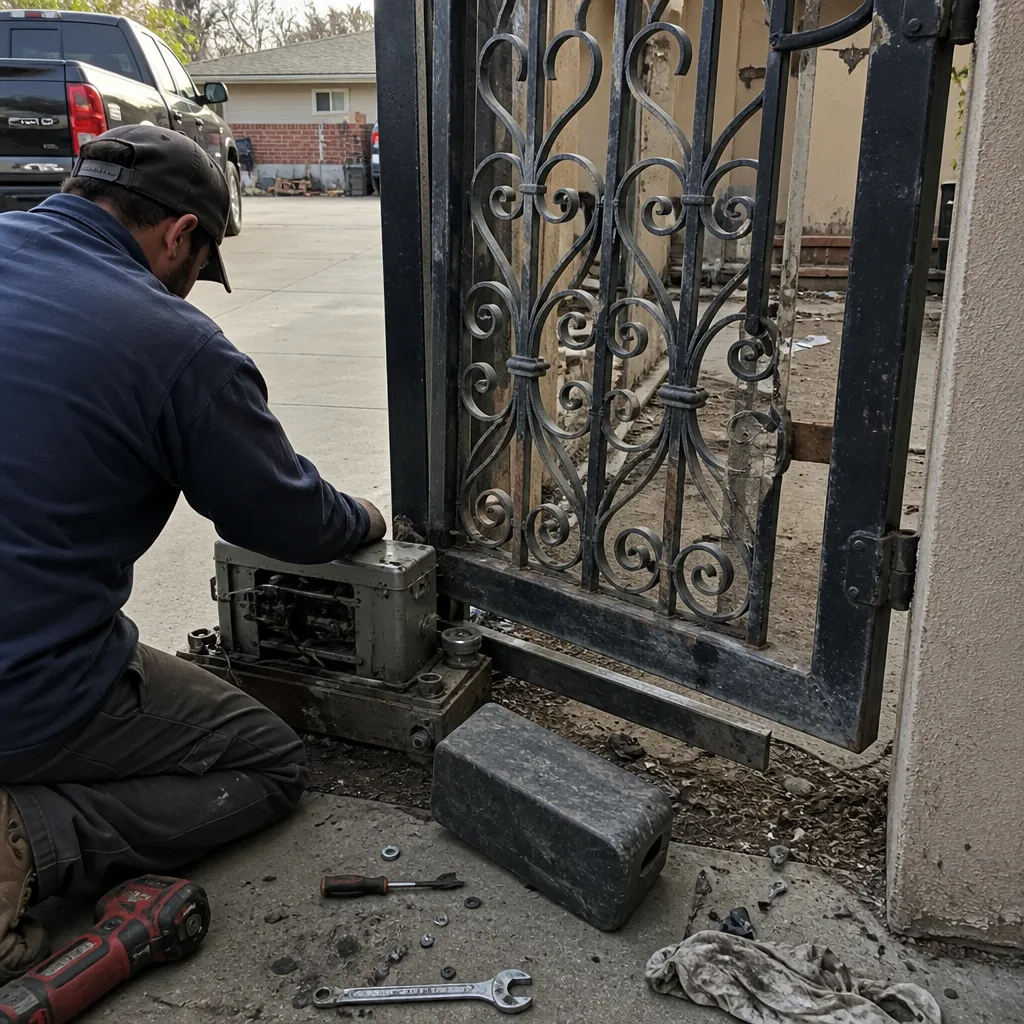 Before
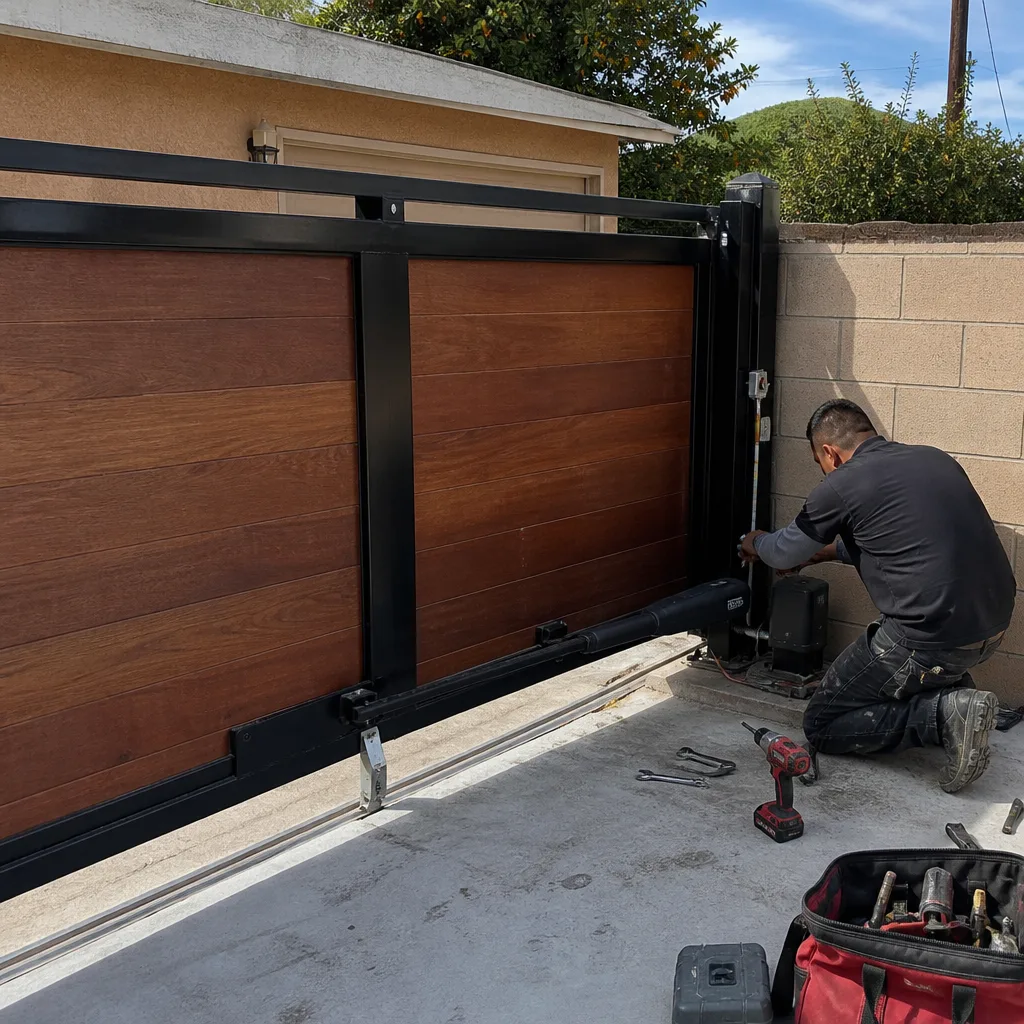 After
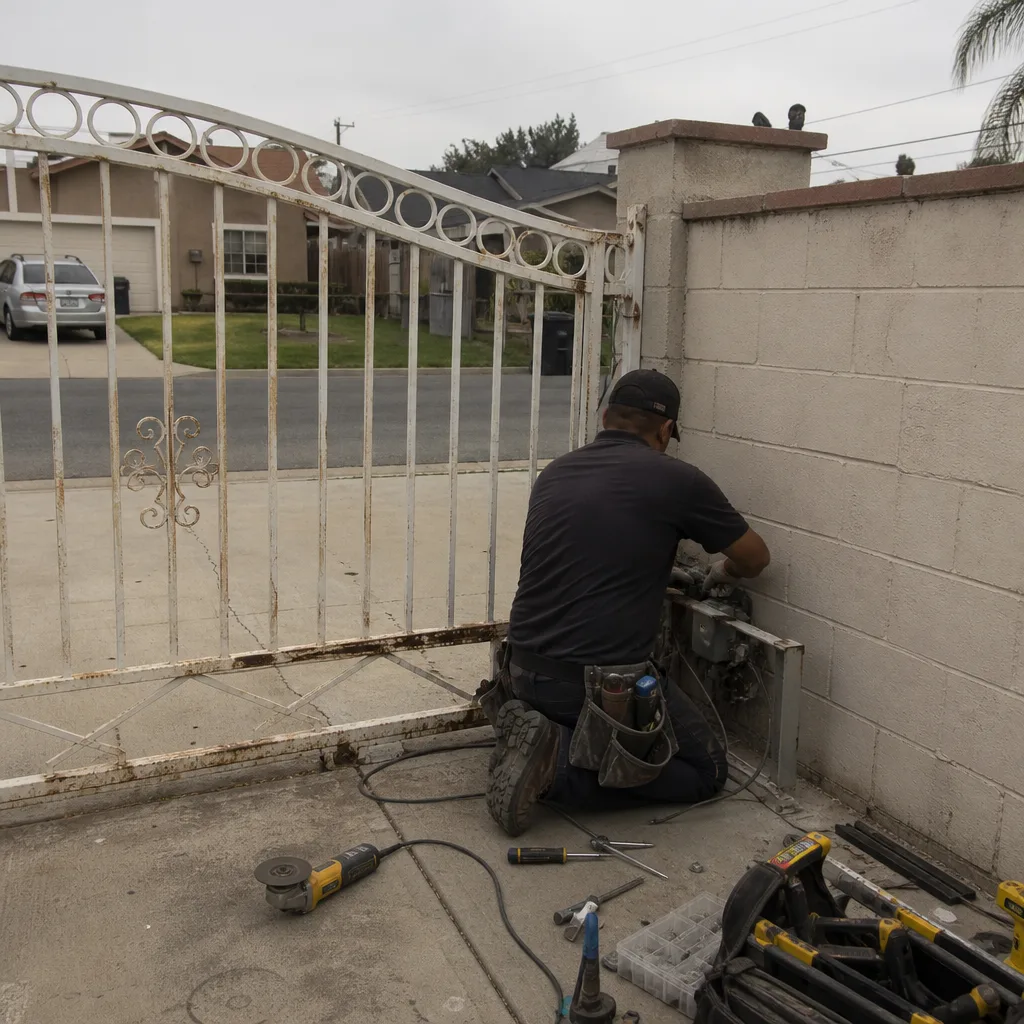 Before
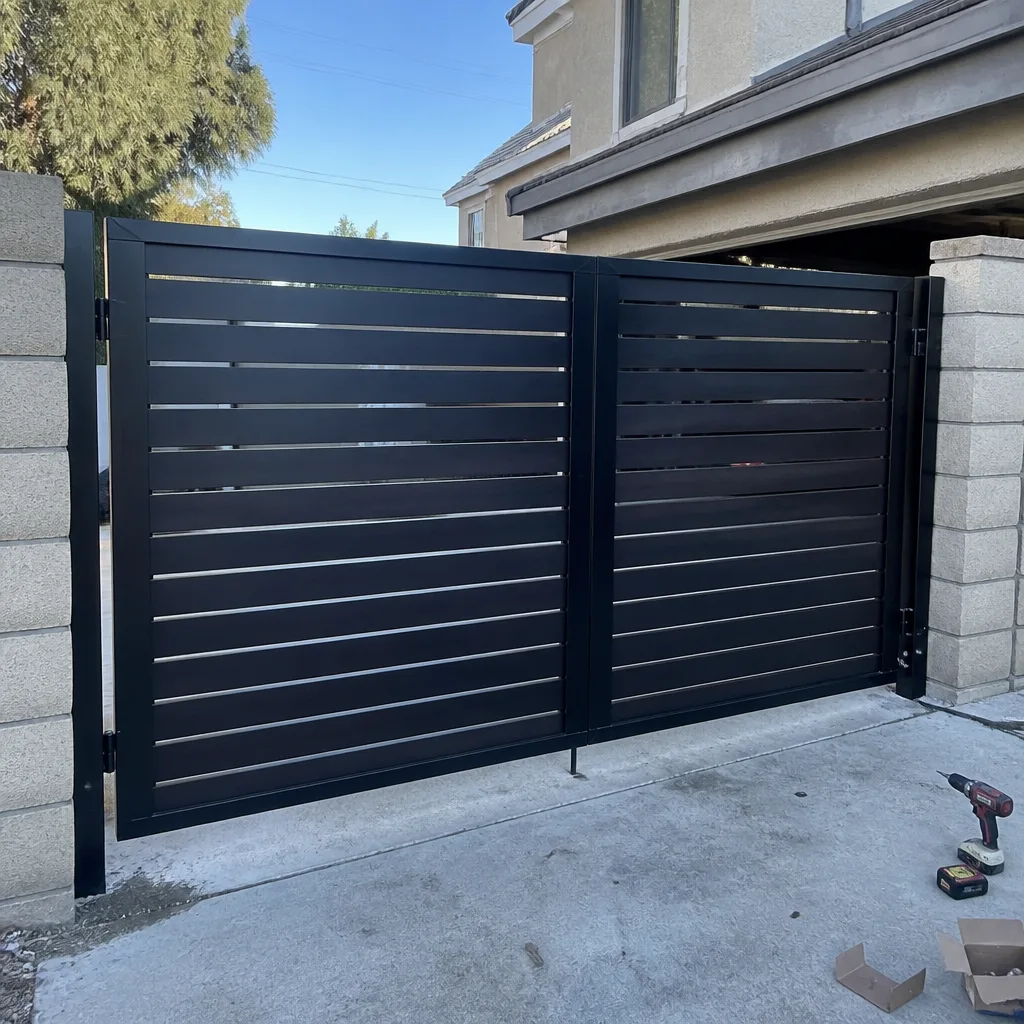 After
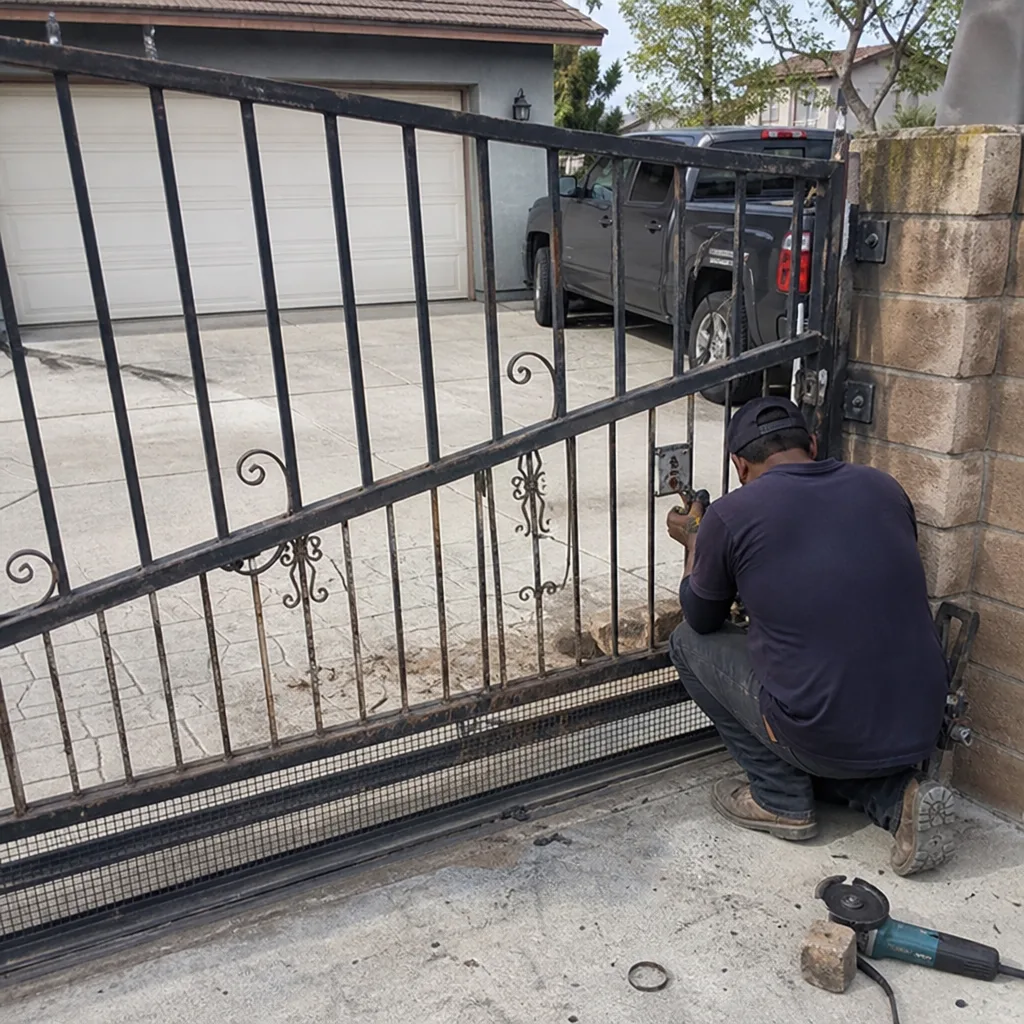 Before
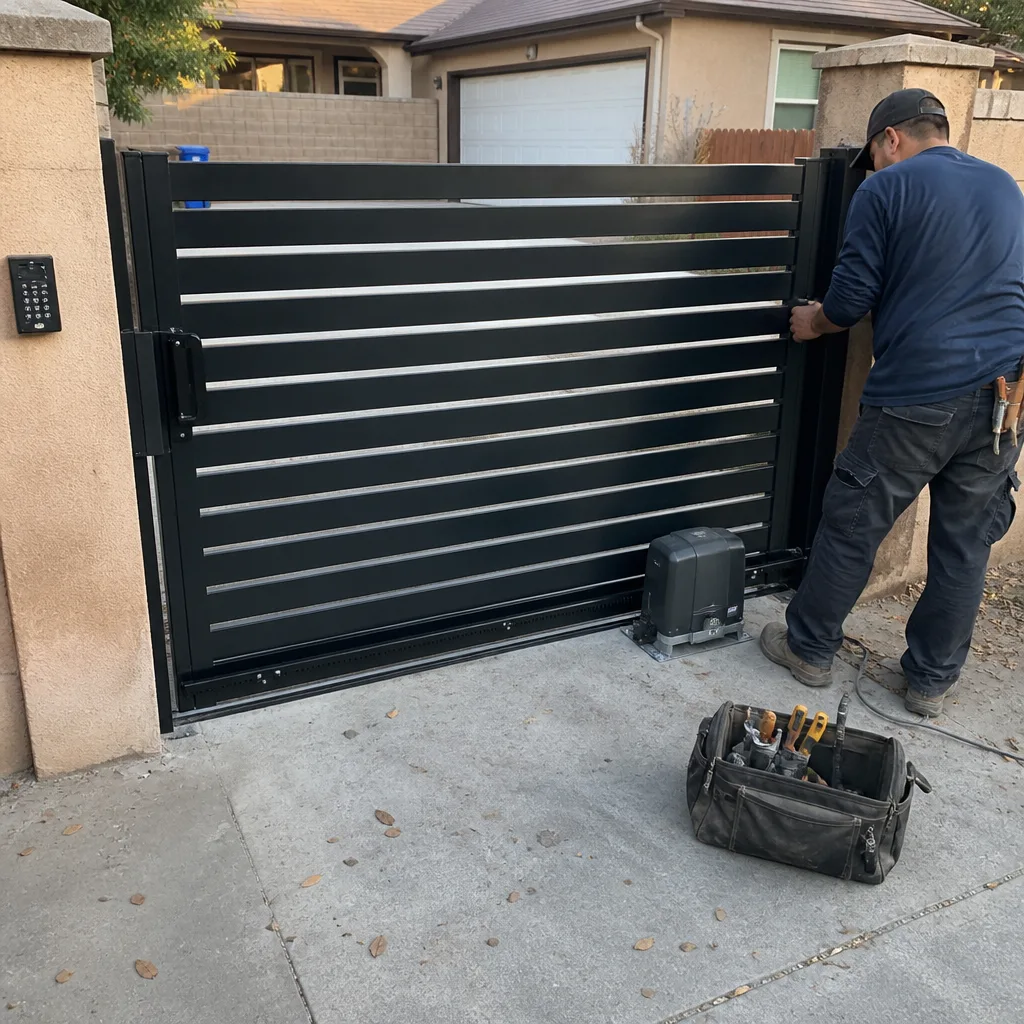 After