
Last updated October 30, 2026
 Wrought iron
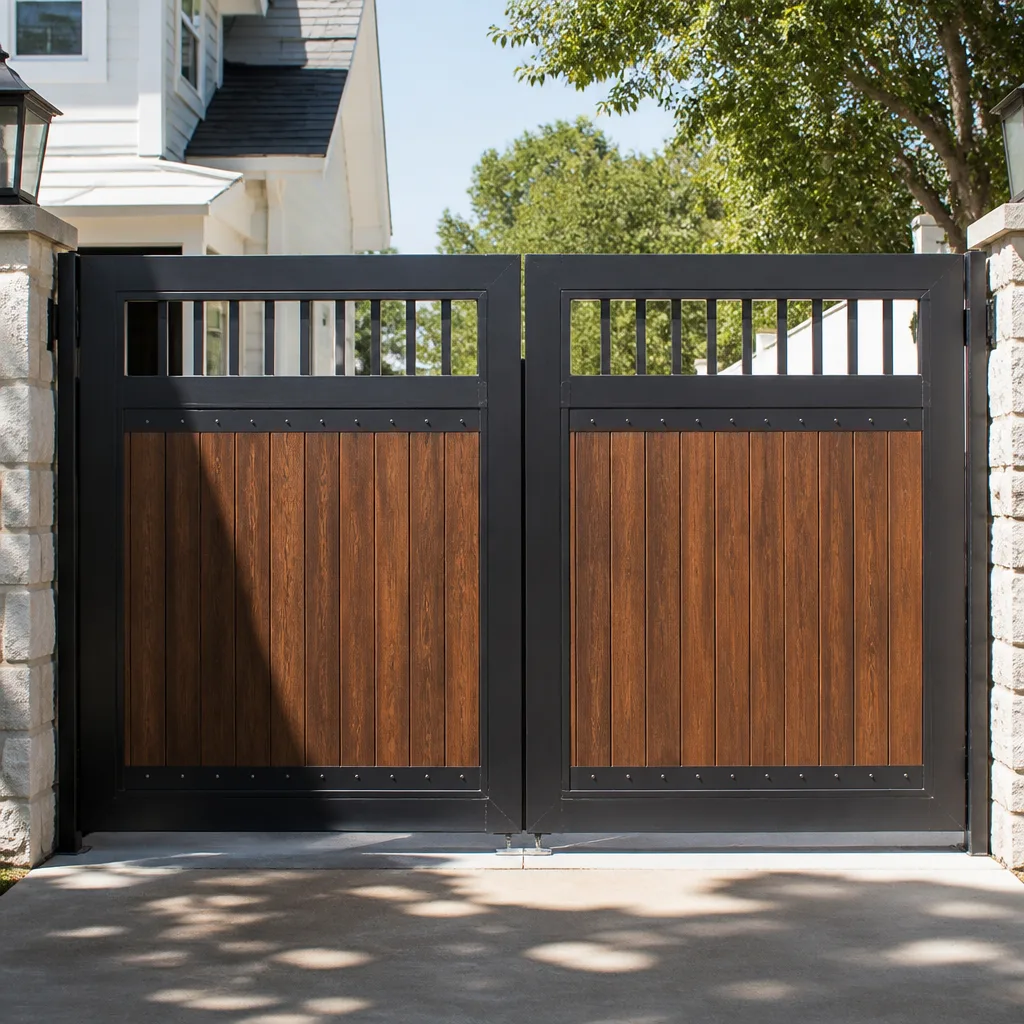 Wood & steel frame
 Farm & ranch
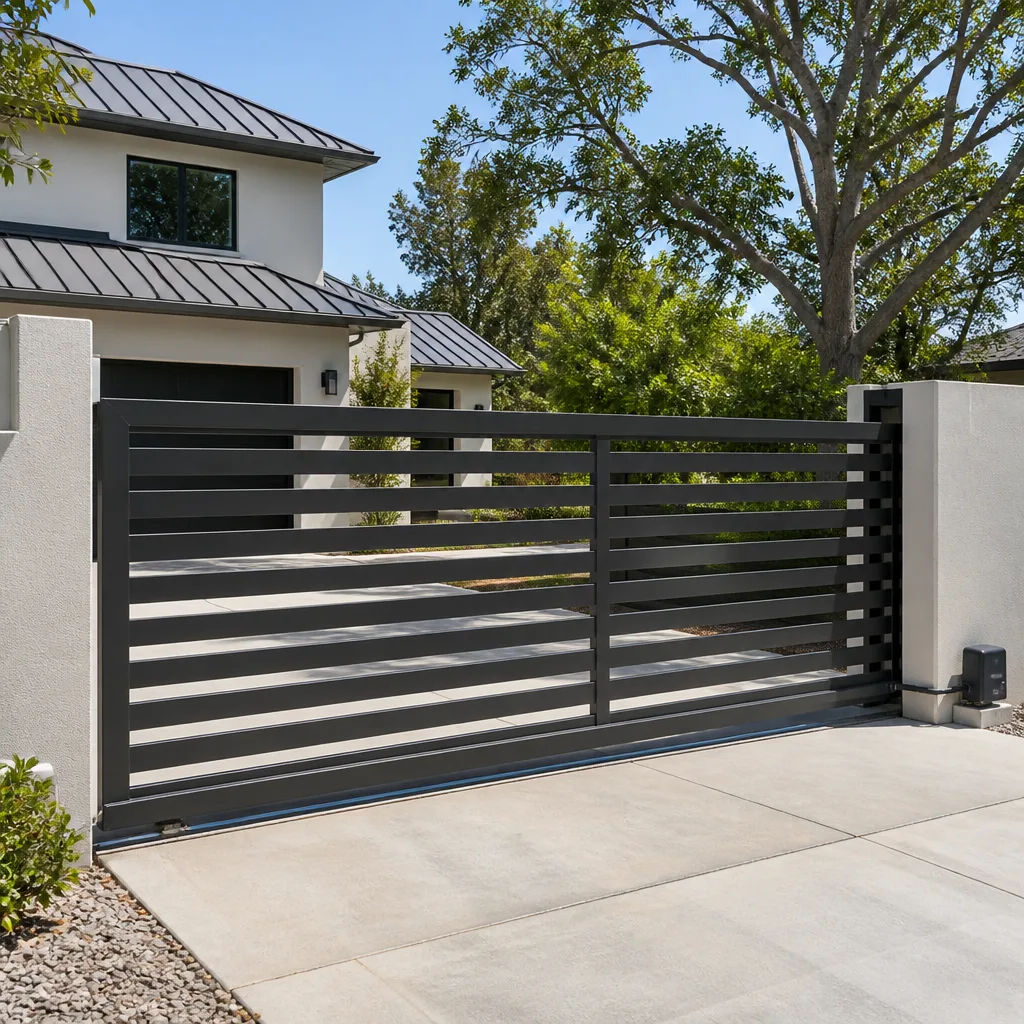 Sliding driveway gates
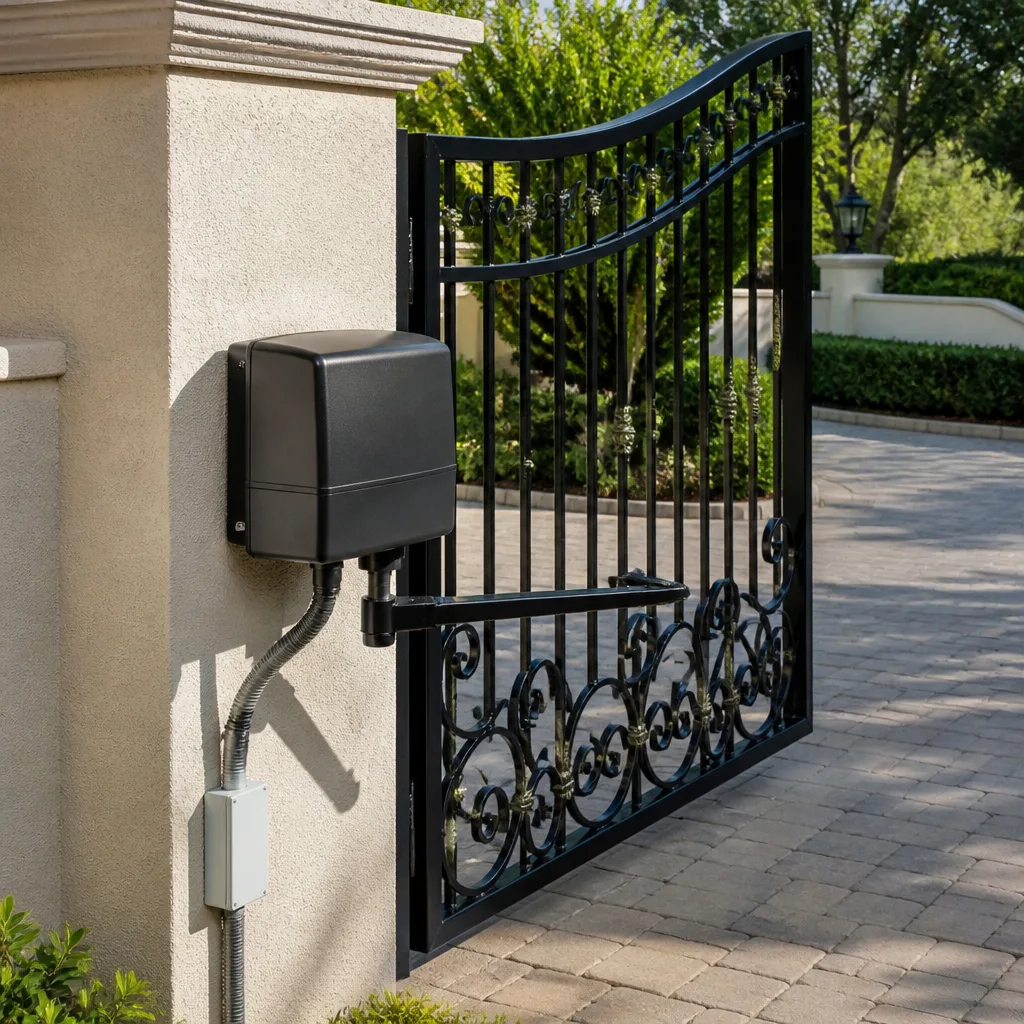 LiftMaster operators
Free on-site gate assessment - hinges, posts, and your LiftMaster or Nice gate operator checked before anything is quoted
The assessment is free and the quote is the invoice.
Get your free estimateThe Complete Guide to Gate Repair in Chino
Most gate repair calls we take in Chino aren’t about the gate itself. They’re about the operator working against a frame that’s already out of square. The motor strains, the board overheats, the gears strip, and by the time anyone notices, the failure looks electrical when the root cause is structural. No amount of motor replacement fixes a geometry problem. This guide walks through how to correctly identify whether your gate failure is mechanical, structural, or electrical before you spend a dollar, why Chino’s clay-heavy soil makes swing gates drift out of alignment faster than homeowners expect, and what each Gate Repair services path actually involves. You’ll finish with a clear decision framework: repair versus replace, when brand knowledge matters, and how to avoid the most common Chino gate repair mistakes we see week after week.
Quick Answer
Gate repair in Chino usually costs between $250 and $650 for common fixes like hinge replacement, sensor realignment, or limit switch adjustments, while operator replacement on an automated gate typically runs $800 to $1,800 depending on brand and horsepower. The repair approach depends on three factors: whether you have a swing gate or slide gate, which automation brand is installed (FAAC, BFT, Linear, Viking, and others), and whether Chino’s clay soil has already shifted your post alignment. Before calling anyone, determine if the failure is mechanical, structural, or electrical. That single diagnosis step saves most Chino homeowners hundreds on unnecessary motor replacements, as we explain in our DIY vs Professional Gate Repair: The Chino Homeowner’s Decision Guide.
Styles & brands we work with
Table of Contents
- Mechanical vs. Structural vs. Electrical: How to Identify the Real Failure
- Swing Gates vs. Slide Gates: Why They Fail Differently in Chino
- Chino Soil Conditions and Post Alignment: The Hidden Culprit
- The Nine Automation Brands We Service and Why Brand Knowledge Changes the Repair
- What a Gate Specialist Sees That a Fence Company or Handyman Misses
- Repair or Replace: A Decision Framework for Chino Property Owners
- Common Mistakes to Avoid
- When to Call a Professional
Mechanical vs. Structural vs. Electrical: How to Identify the Real Failure
Every gate problem in Chino falls into one of three buckets, and getting the bucket right before you call a repair company changes everything about the quote you receive. Mechanical failures involve moving wear parts: hinges, rollers, tracks, chains, ball bearings. Structural failures involve the gate’s frame and mounting points: posts leaning, welds cracking, the gate leaf sagging. Electrical failures involve the operator and its controls: the board, the sensors, the remote receiver, the limit switches.
Here’s the diagnostic sequence we follow on every inquiry:
- Does the gate move at all? If the motor runs but the gate doesn’t move, you likely have a mechanical failure: a stripped gear, a broken chain, a sheared roll pin, or a roller seized in its track. If the gate moves partially then stops, suspect a structural bind: the gate is catching on a warped section or a shifted post is pinching the hinge geometry.
- Does the gate move but not fully? This is almost always a limit switch calibration issue or an obstruction sensor fault. On FAAC and BFT operators, the limit switch assembly is a common wear point after five to seven years of daily cycles. On Viking operators, the magnetic stop sensors can drift out of alignment during Chino’s hot summers when metal components expand.
- Does the gate move but strain audibly? If the operator sounds labored, the motor is working against resistance. That resistance is almost always mechanical or structural, not electrical. Replacing the operator without addressing the underlying drag just burns out a new motor inside eighteen months.
- Does the gate not respond to any input? Now you’re solidly in electrical territory. Check the breaker, check the on/off switch on the operator, then check the photo eye sensors for obstruction. If those are clear, the board may have failed. A board replacement on most residential operators runs $300 to $600 installed.
What complicates this in Chino specifically is how often categories overlap. A gate that’s been binding for months eventually kills the operator. The original problem was structural. The final symptom is electrical. If the technician who shows up only diagnoses the electrical failure and swaps the board, the same failure recurs inside a year. Our gate specialists are trained to look for the binding condition behind the blown board. That’s the difference between a recurring repair bill and a fixed gate.
Swing Gates vs. Slide Gates: Why They Fail Differently in Chino
Chino has both gate types in abundance. The older neighborhoods south of the 60 and the newer HOA communities up in The Preserve have different gate profiles, and each type fails differently in this specific climate and soil.
Swing gates hinge on posts. A swing gate’s entire weight, plus wind load, transfers through two or three hinge points into the post and its foundation. In Chino’s clay-heavy soil, that foundation is the weak point. Clay expands when wet and contracts during dry spells. Over several years of seasonal cycles, a post that was set perfectly plumb drifts. The gate leaf tilts. The hinges bind. The operator, usually an articulated arm on a FAAC or a ram-style actuator on a Linear, starts fighting a gate that no longer swings freely. Swing gate repairs in Chino therefore involve a lot of hinge plate realignment, post shimming, and operator arm reattachment. We also see weld fatigue at the hinge plate connection on older wrought iron gates, especially where the gate face is heavy and the post has shifted enough to transfer torque into the weld joint.
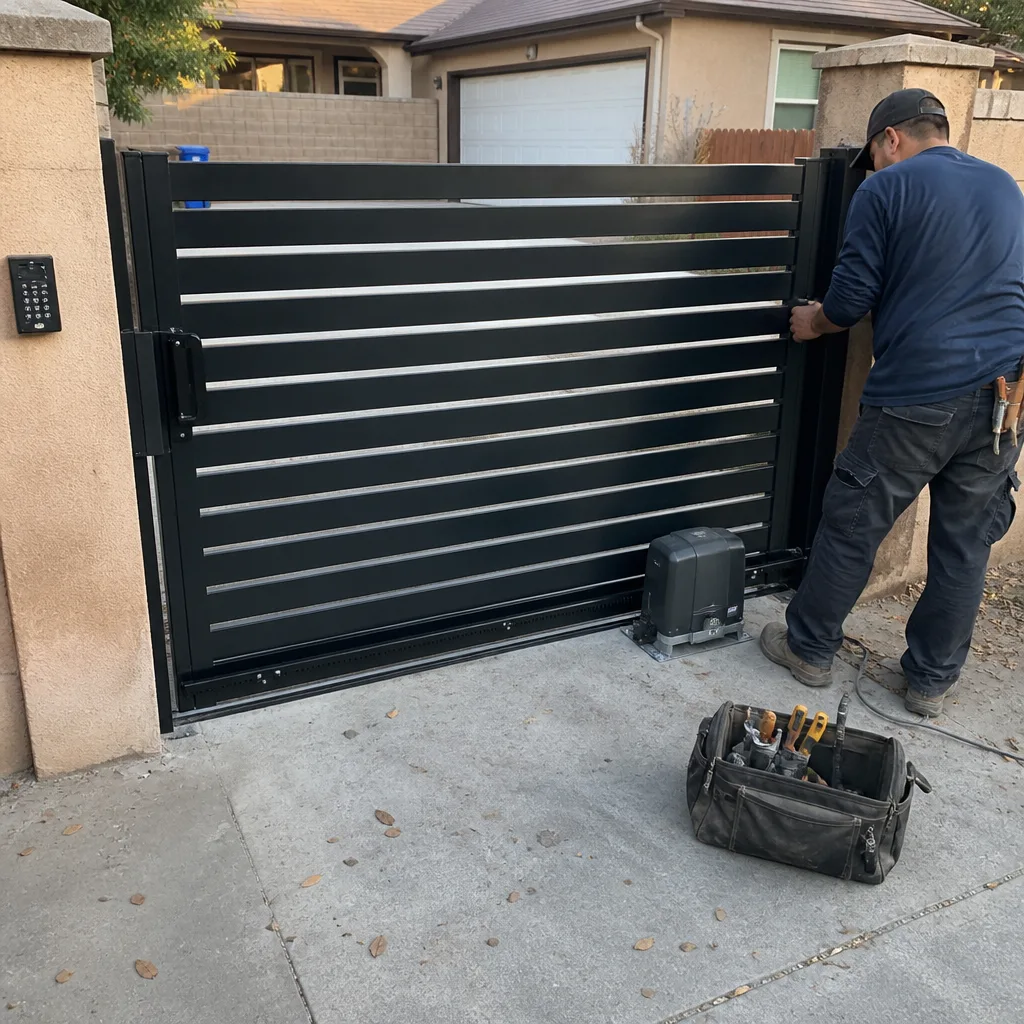
Slide gates roll on a steel track with guide rollers or a V-wheel system. They fail differently. The enemy in Chino is debris: fine dust from the dry hills, plant material, mud from winter rain, and gravel from the driveway. Debris clogs the track and the rollers. The gate plane drags. The operator’s gear rack, whether nylon or steel, chews itself against the pinion. Slide gates also develop cantilever arm sag over time if the gate leaf is long and the support structure wasn’t built for the span. In our experience, Chino slide gate failures split roughly evenly between track contamination and drive rack wear.
Why this matters for the repair call: a swing gate repair and a slide gate repair require different parts, different labor skill, and different diagnostics. A technician who mostly installs fencing may not recognize a rack-and-pinion misalignment until the nylon rack is visibly shredded. We work on both gate types every week, and the repair approach is never interchangeable.
Chino Soil Conditions and Post Alignment: The Hidden Culprit
Chino sits on Quaternary alluvium, much of it clay-rich with high shrink-swell potential. The United States Department of Agriculture’s soil survey maps most of Chino’s flatlands as having soil depths of over 60 inches with a clay or clay loam surface layer. Translated for gate owners: the ground under your gate posts moves more than you think.
Winter rains saturate the clay, which expands. Summer drought desiccates it, which contracts. A post set in a 24-inch deep hole with standard concrete mix will, over five to ten years in Chino, drift out of plumb by a measurable degree. We’ve measured post lean on Chino gates that appears visually subtle but translates to a quarter inch of sag at the latch end – enough to make the gate scrape the ground or the latch post no longer align with the keeper.
Chino’s high-water-table areas, particularly properties near the old agricultural flood channels, compound the issue. Subsurface moisture fluctuations year-round mean the soil never truly stabilizes. When we reset a post in Chino, we typically go deeper than the original installation and use more concrete than what was originally poured. That’s not overbuilding for its own sake. The post has to survive the same freeze, saturate, desiccate cycles that killed the original alignment.
If your gate scrapes the driveway during summer, or the latch sticks only after heavy rain, the actuator and hinges may be perfectly fine. The post has moved. Before you replace a $1,200 operator that’s working hard against a shifting frame, have the post alignment measured. This is the structural diagnosis most often missed by generalist repair callouts in Chino.
The Nine Automation Brands We Service and Why Brand Knowledge Changes the Repair
Whether you have a FAAC, BFT, Linear, or Viking system matters more than most homeowners realize, because the diagnostic process and the replacement parts landscape differ meaningfully between brands. A technician who says “an operator is an operator” is about to make an expensive guess.
At Wrought Gate Repair, we service nine major gate automation brands: LiftMaster, FAAC, BFT, Linear, Viking, Ghost Controls, DoorKing, Elite, and Mighty Mule. That breadth matters in Chino because the city has a mix of older estate gates, tract-home automatic gates from the 1990s and 2000s, and newer HOA builds. Different builders specified different brands. Different HOAs standardized on different operators. Your gate’s brand is a functional fingerprint.
FAAC systems are hydraulic or electromechanical, commonly found on larger residential and light commercial swing gates throughout Chino. Their 400 and 750 series operators are workhorses, but the hydraulic fluid seals and valve adjustments need a technician who understands hydraulic pressure gradients, especially in Chino’s summer heat where overheated fluid changes response speed.
BFT gear motors are splash-lubricated and usually modular. The good news: individual modules are replaceable without scrapping the whole operator. The bad news: the control board logic on newer BFT units is proprietary, and a mismatched board revision causes erratic behavior that looks like a mechanical fault.
Linear operators are prevalent on older residential swing gates in Chino, especially the LRA and ALX series ram actuators. They’re simple and durable, but parts availability is tightening as the brand discontinued several legacy lines. A specialist knows which Linear models still have long-term parts support and which are approaching replacement-only status.
Viking operators tend to run hotter than other brands in residential settings, and in Chino’s 100-degree-plus weeks, the thermal overload protection trips more easily. A tech unfamiliar with Viking’s thermal curve will replace a board that isn’t failing when the real fix is improved ventilation in the operator housing.
Brand-specific work also involves remote programming. Each brand uses a different frequency protocol and learning procedure. A gate that opens with the keypad but not the remote may be a simple programming issue on one brand and a receiver board failure on another. Guessing wrong because you don’t know the brand architecture costs the customer a board that didn’t need replacing.
What a Gate Specialist Sees That a Fence Company or Handyman Misses
We work exclusively on gates. Not fences. Not garage doors. Not general contracting. Every van is stocked with gate-specific parts. Every technician spends their full working week on gate repair, electric gate repair, and gate installation. That focus pays off in scenarios a generalist doesn’t recognize.
A fence company that installs a few gates a month knows how to weld a hinge barrel and hang a leaf. What they often miss is the drive geometry. The swing arc must match the operator arm’s reach. The pivot points must align on the same plane. An operator mounted without respect to the swing geometry will bind and fail early, not because the operator is defective but because it was mounted to a gate whose arc the tech never measured.
A handyman who says “I can look at it” is usually comfortable checking voltage and swapping a remote battery. What they don’t carry in their tool kit is a spare FAAC board, a BFT limit switch, a Linear capacitor kit, or a Viking receiver module. Without brand-specific parts, the “repair” is a temporary patch that lasts until the next failure. That’s why we stock for the nine brands we service.
We also see patterns because gate repair is all we do. We know which Chino neighborhoods have older DoorKing slide gates that were installed when the lots were originally graded. We know which HOA entrances off Pine Avenue have gate posts set in soil with a high clay content. We know which Mighty Mule operators used in residential estates around Chino Hills edge into Chino proper fail most often in deep summer because their plastic gears weren’t rated for the sustained heat. That pattern recognition isn’t available to a company that does gates as a side service.
One call covers it. Manual or motorized. Swing or slide. Nine brands. If the gate is beyond repair, we’re the same crew that handles the Gate Installation in Chino – no handoffs to a separate department or referral to an outside contractor.
Repair or Replace: A Decision Framework for Chino Property Owners
The repair-versus-replace decision isn’t purely financial. It’s a function of gate age, operator condition, and post integrity. Here’s the framework we use when advising Chino clients.
- Gate age and material condition. A well-built wrought iron gate can last 50 years with hinge maintenance. A hollow steel tube gate from a production builder might be structurally compromised by rust after 20 years, especially near the riverbed areas of Chino where ambient humidity runs higher. If the gate leaf itself is rusting through at the bottom rail or at the hinge stile, repairing the automation is money spent on a frame that will need replacement soon anyway.
- Operator age and parts availability. Most residential gate operators have a service life of 10 to 15 years. If the operator is on year 12 and needs a board plus a limit switch, the repair cost may approach 60 to 70 percent of a new operator. That’s the replacement threshold. But if the operator is five years old and the failure is a single component, the repair is almost always the right call.
- Post integrity. If the post has shifted more than two or three degrees out of plumb, no amount of hinge adjustment or operator tuning will fix the underlying geometry. The post needs to be reset or anchored. In Chino’s clay soil, that’s not a minor patch job. If the post is embedded and stable, proceed with repair. If the post wobbles when you push on it with your body weight, the fix starts with the foundation, not the gate.
- Long-term use intent. If this is a rental property you’ll keep for another decade, a full replacement with a current-model operator and fresh hardware amortizes cleanly. If you’re selling within two years, a functional repair keeps the property in salable condition without over-investment.
The framework produces four quadrants: young gate and young operator equals repair. Young gate and old operator equals operator replacement. Old gate and young operator equals gate leaf replacement or reinforcement. Old gate and old operator equals full replacement. If you want a written evaluation of your specific setup, we provide a free assessment and an upfront price before any work begins. No work happens without your approval to the quoted number.
Common Mistakes to Avoid
- Replacing the operator when the post has shifted. Chino’s expansive clay drifts posts out of alignment. A new motor on a binding frame is a $1,200 mistake with a six-month service life.
- Lubricating a slide gate track with WD-40. In Chino’s dust, a light oil turns into an abrasive slurry. Use a dry graphite or a heavy synthetic grease and wipe the track clean first. Or let a professional do it correctly.
- Adjusting limit switches without knowing the brand’s calibration sequence. A Viking operator calibrates differently than a BFT unit. Wrong calibration causes the gate to over-travel and crush the stops or fold the opener arm.
- Dismissing photo eye sensor faults as “the sun.” Chino’s intense midday sun can trigger a sensor fault, but the same symptom appears when the sensor lenses are clouded with dust or the receiving unit has a cracked lens from the previous owner’s impact. Cleaning and re-aiming fixes most issues; replacing the board fixes almost none of them.
- Hiring a general handyman for a FAAC hydraulic service. Hydraulic system repairs involve pressure relief valves and specific fluid types. A generic service call leads to either a gate that slams or a gate that fails to open fully.
- Ignoring a gate that scrapes the driveway because “it still opens.” Every scrape cycle adds stress to the operator’s gear train. The repair bill grows by the week you wait.
- Skipping the written quote for repair work. You should know the full price before the technician begins. At Wrought Gate Repair, the price is quoted and agreed before any work starts. If a provider won’t put the number in writing, walk away.
When to Call a Professional
Call a gate specialist when the gate has stopped moving under power, when the operator runs but the gate binds or stalls, when the gate leaf has visibly sagged and scrapes the ground, when you hear grinding or popping during travel, or when the remote and keypad both fail regardless of battery replacement. If the gate is heavy enough to require two hands to move manually, do not attempt to hold it open while adjusting hinges. A gate under tension can shift suddenly.
High-tension components, especially torsion springs on assisted manual gates and the counterweight systems on some slide gates, carry enough stored energy to cause serious injury if released improperly. Leave those adjustments to a trained technician. Wrought Gate Repair offers free estimates in Chino – call (833) 545-6817 and we’ll give you a direct answer on what’s failing and what the repair costs before any work begins.
See the difference
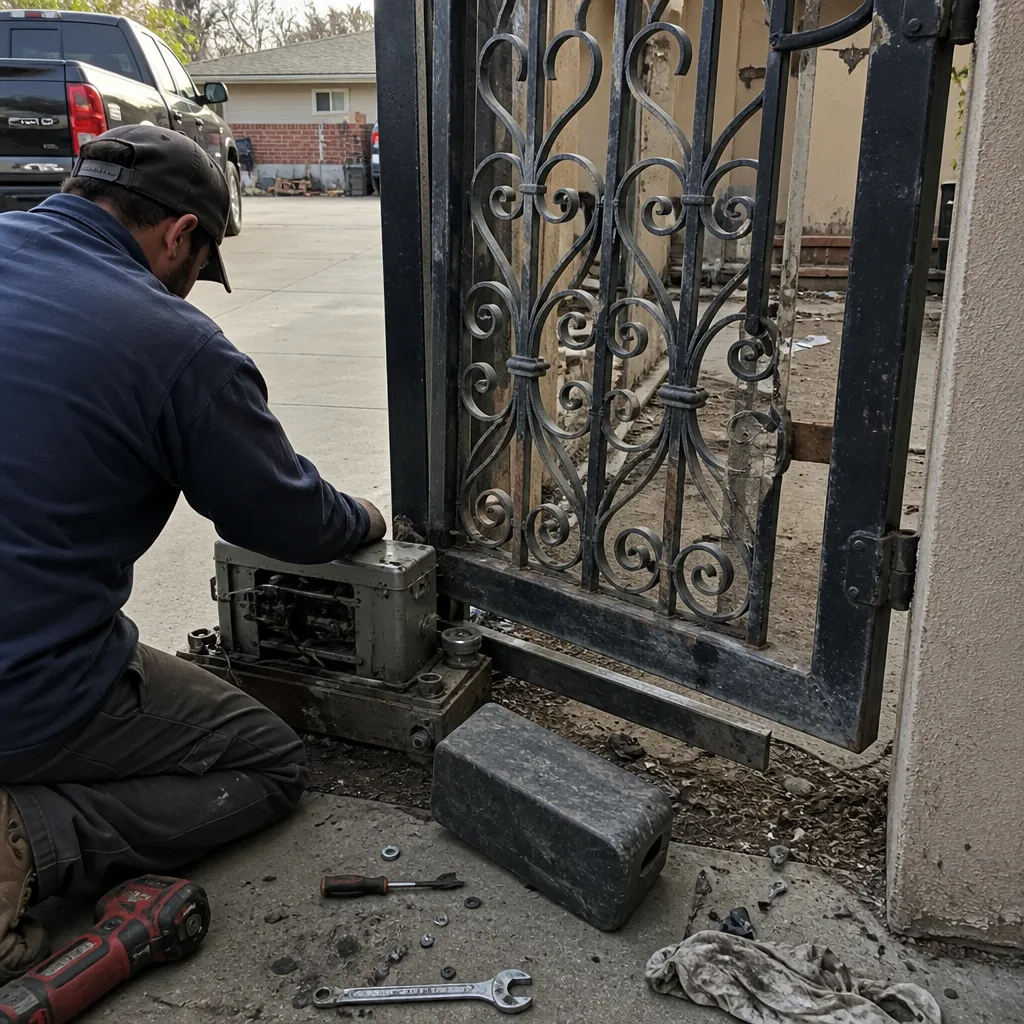 Before
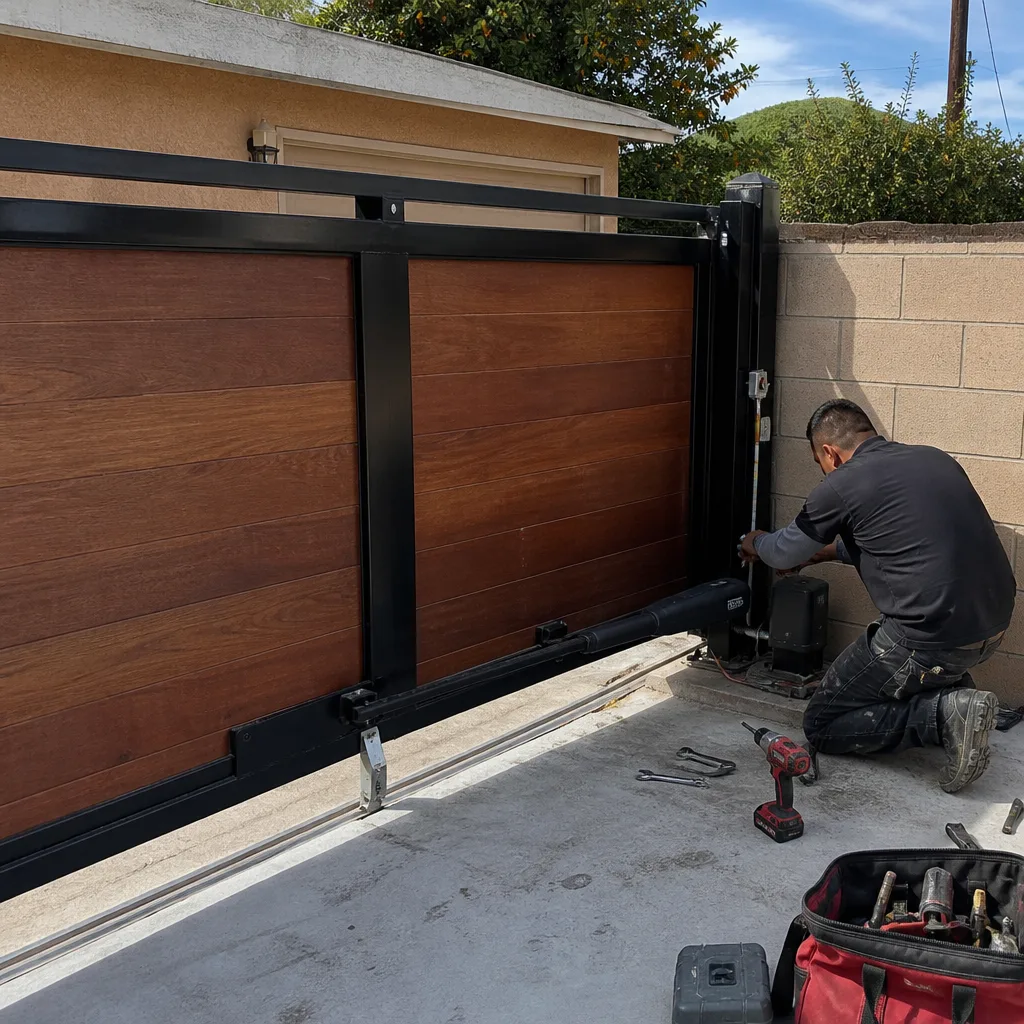 After
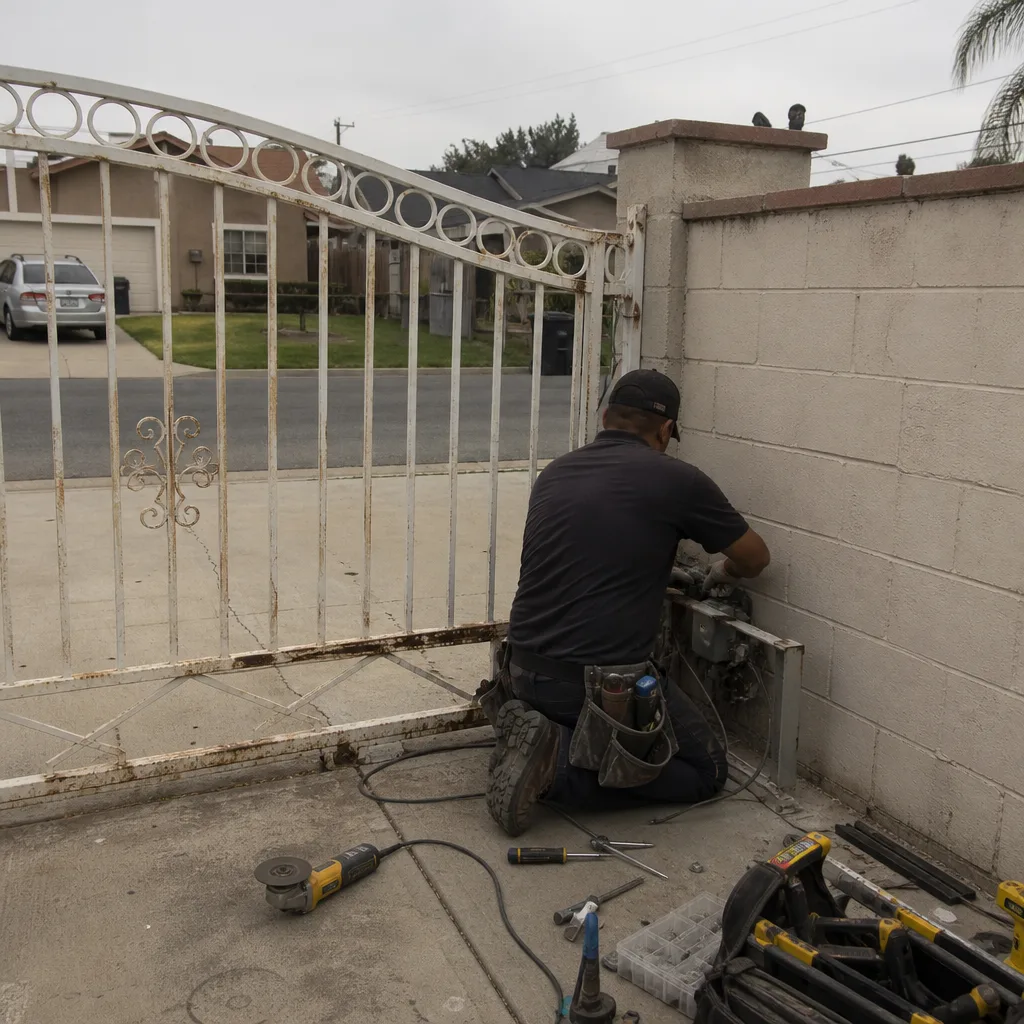 Before
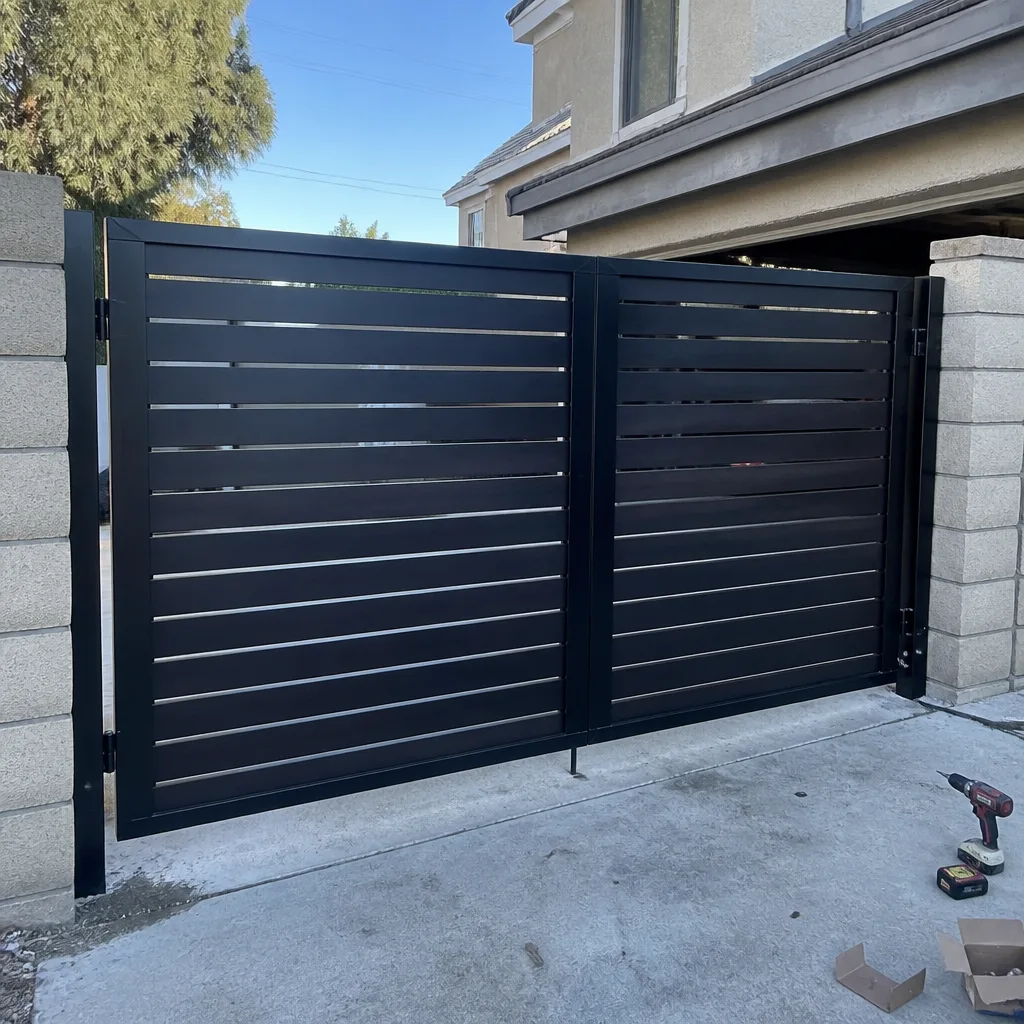 After
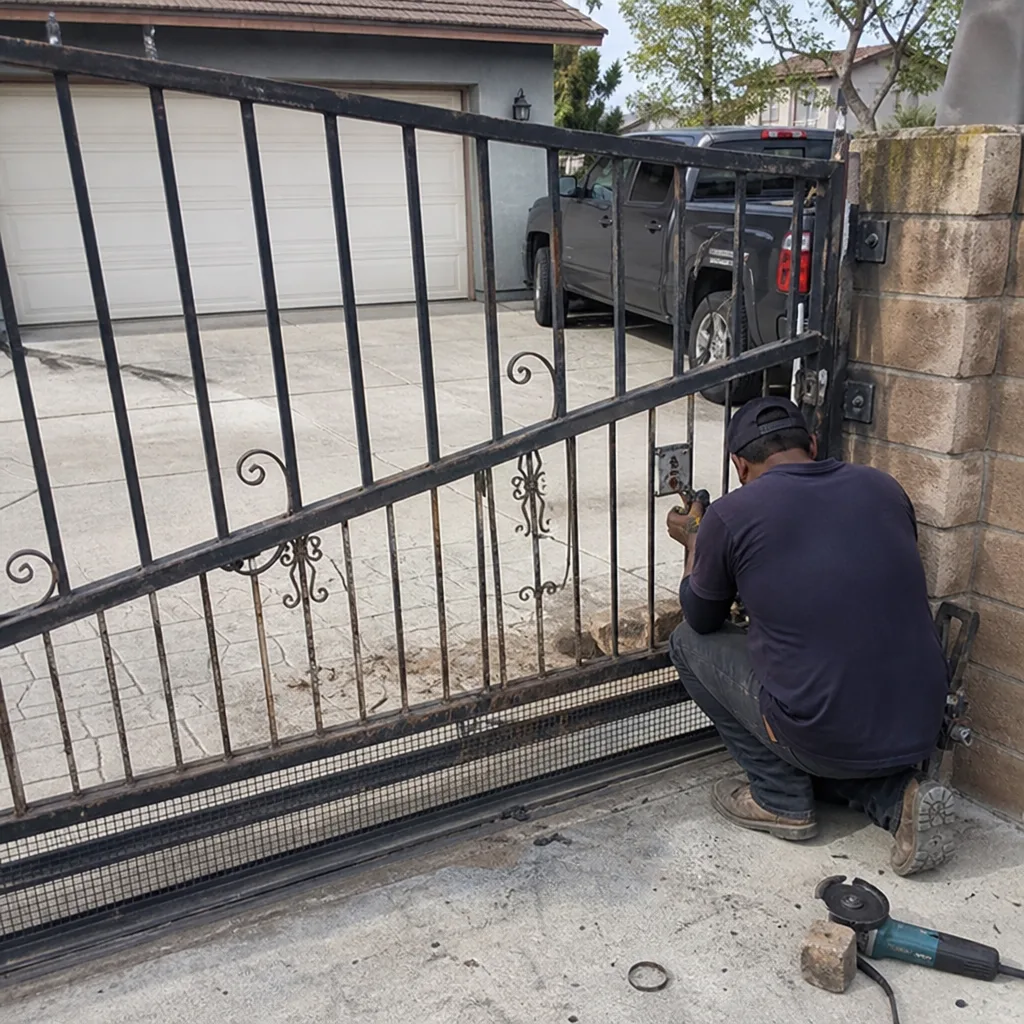 Before
 After
Frequently Asked Questions
Gate repair in Chino typically costs $250 to $650 for common fixes like hinge replacement, roller and track service, limit switch recalibration, and sensor repair—see our Gate Repair Cost Breakdown: The Chino Homeowner’s Reference for 2026 for full details. Operator replacement runs $800 to $1,800 depending on brand, horsepower, and access to the mounting location. Call (833) 545-6817 for an exact quote – estimates are free and we quote a firm price before any work starts.
Yes, that specific symptom is almost always a receiver programming issue or a failed receiver board, not a problem with the operator motor. We service LiftMaster, FAAC, BFT, Linear, Viking, Ghost Controls, DoorKing, Elite, and Mighty Mule systems in Chino, and each brand has a distinct remote programming protocol that we handle directly. Call us for same-week service on most electric gate repair calls.
Chino’s clay-heavy soil shrinks during dry summer months, and a gate post that was set without adequate depth or concrete volume drifts outward enough to drop the latch end of the gate leaf by up to half an inch. The hinge itself is rarely the problem. The fix is post re-alignment or a hinge plate shim, not a new gate.
It depends on the brand and the specific failure. A 15-year-old FAAC hydraulic operator with a single seal leak is worth repairing if the rest of the unit is sound. A 15-year-old Linear operator that needs a board and a limit switch is usually closer to a replacement decision, because parts support for several legacy Linear lines has diminished. We’ll tell you honestly which side your operator sits on.
Yes, we repair and install both gate types across Chino. Swing gates and slide gates fail through different mechanisms, and our technicians diagnose each system on its own mechanical and structural merits. Whether your gate is a manual wrought iron swing gate or an automated slide gate on a rack-and-pinion drive, the diagnosis process starts with identifying whether the failure is mechanical, structural, or electrical.
Most gate repair calls in Chino can be scheduled within a few business days, and we stock parts for the nine brands we service so we’re less likely to be delayed waiting on a component. For urgent cases where a security gate won’t close at all, let us know when you call and we’ll prioritize the visit. Call (833) 545-6817 to check current availability.
The Bottom Line
Gate repair in Chino is a diagnostic exercise before it’s a hands-on fix. The most expensive mistake a property owner can make is paying for an operator replacement when the real failure is a shifted post, a contaminated track, or a binding hinge. Knowing your gate type, your automation brand, and the condition of your posts gives you a sharper conversation with any repair provider. At Wrought Gate Repair, we work exclusively on gates – manual or motorized, swing or slide, across nine major automation brands – and we quote the full price before any work begins. For a straightforward assessment of your gate in Chino, call (833) 545-6817 or learn more about our Electric Gate Repair in Chino services. If you’re still deciding whether repair makes sense this year, our Gate Repair in Chino page covers local pricing in more detail, and the Wrought Gate Repair home page has our complete service range.
Written by the team at Wrought Gate Repair, serving Chino since 2012.