
Last updated October 30, 2026
 Wrought iron
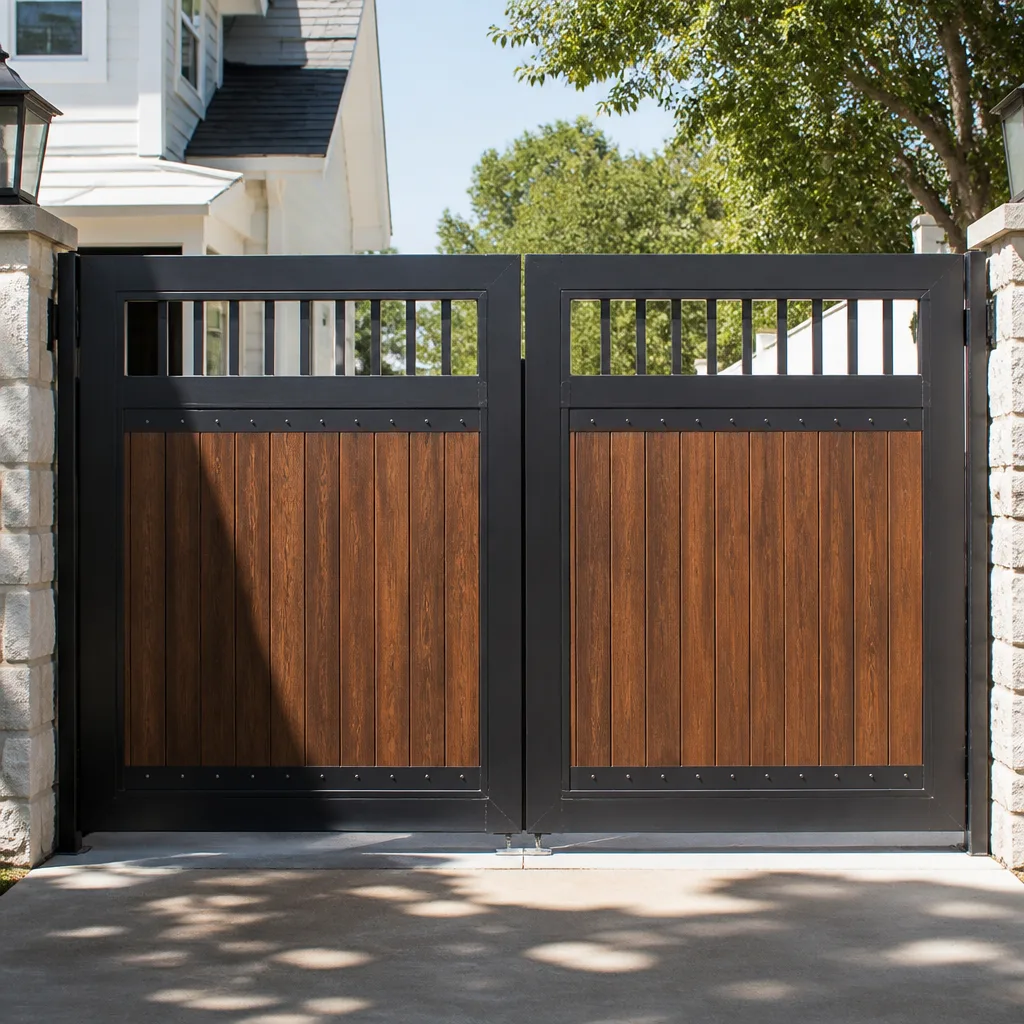 Wood & steel frame
 Farm & ranch
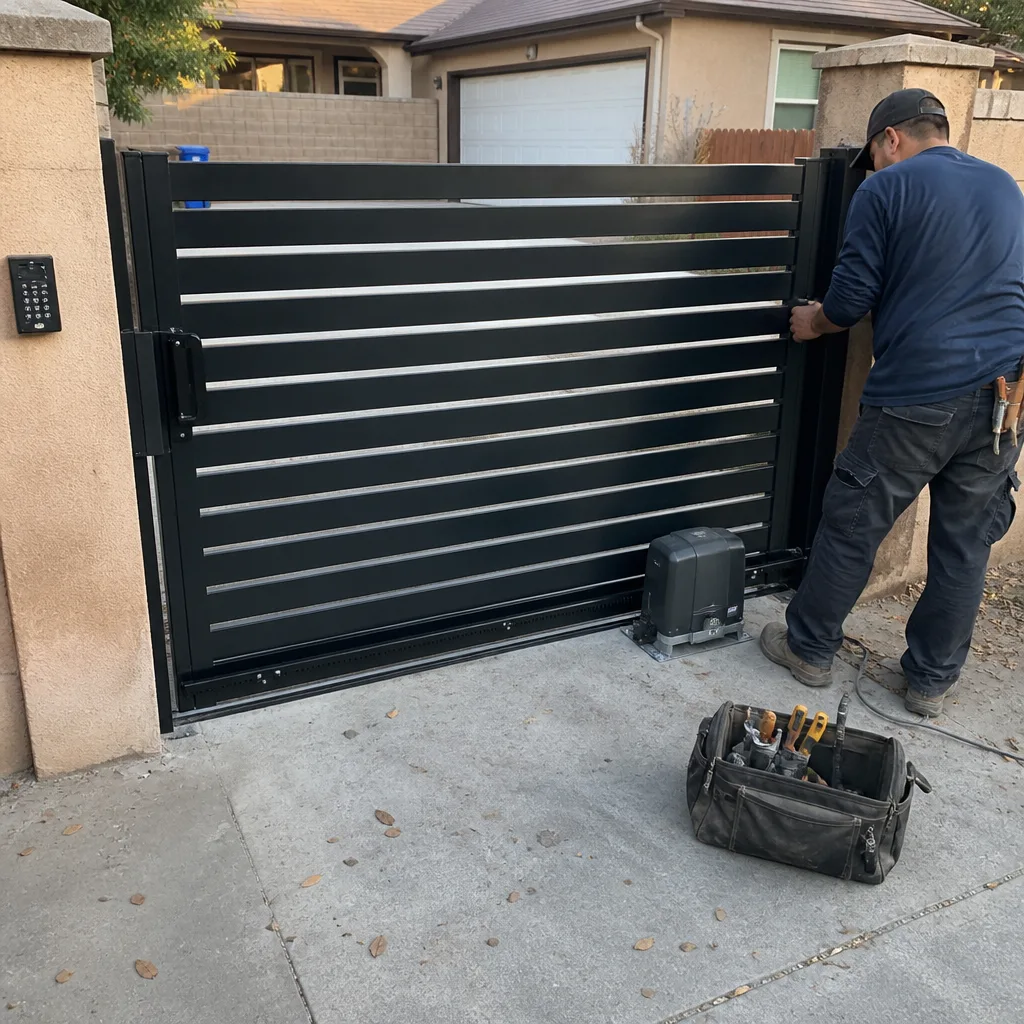
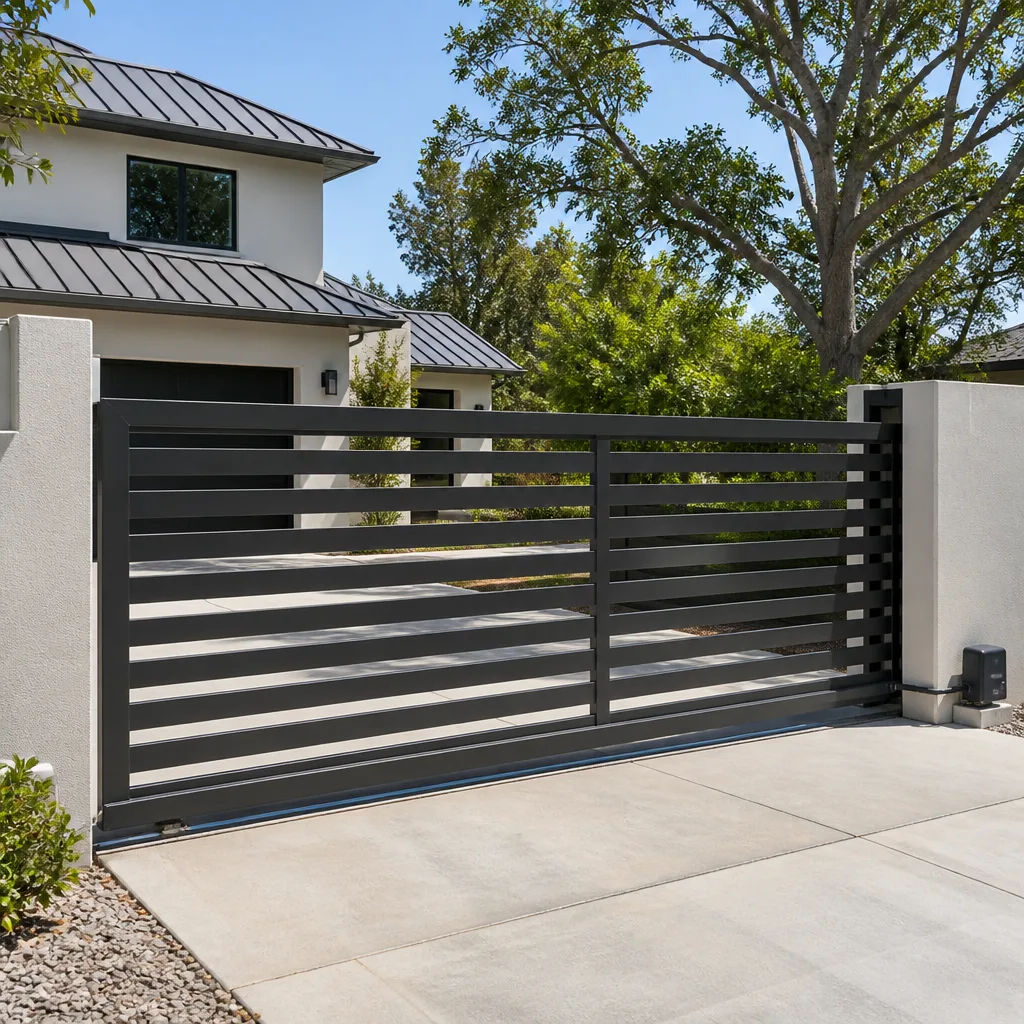 Sliding driveway gates
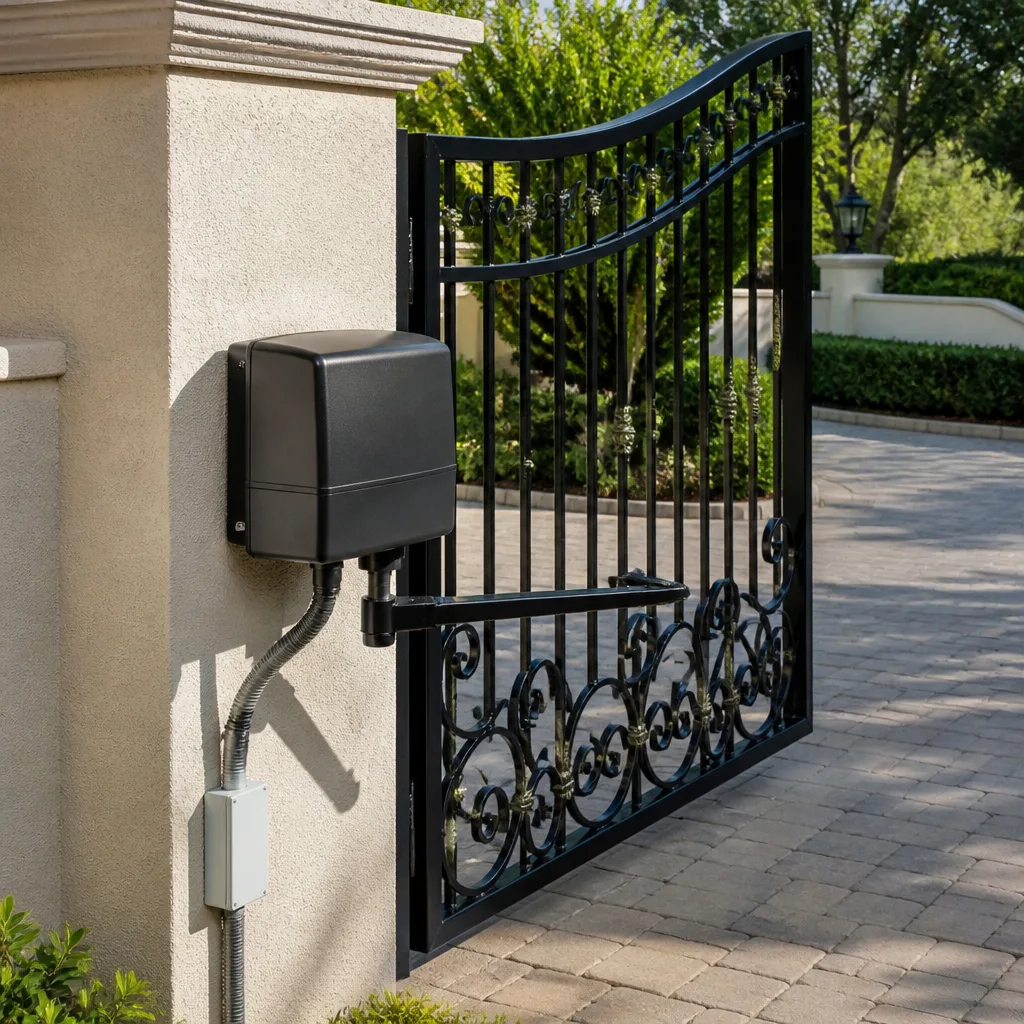 LiftMaster operators
Free on-site gate assessment - hinges, posts, and your LiftMaster or Nice gate operator checked before anything is quoted
The assessment is free and the quote is the invoice.
Get your free estimateDIY vs Professional Gate Repair: The Chino Homeowner’s Decision Guide
Most gate failures in Chino aren’t mysterious. A hinge sags, a sensor drifts out of alignment, a remote battery dies. What surprises homeowners is which of those failures they can safely fix themselves and which ones quietly became dangerous the moment they started. This guide walks through that line: where DIY makes sense, where it doesn’t, and what UL 325 has to say about the difference. By the end, you’ll know exactly which repairs you can handle on a Saturday morning and which ones belong in the hands of someone who works exclusively on gates.
Styles & brands we work with
Quick Answer
DIY gate repair in Chino is reasonable for mechanical tasks like lubricating hinges, tightening bolts, replacing remote batteries, and cleaning photo-eye sensors. It’s not reasonable for anything involving operator wiring, control boards, limit switches, or safety sensor alignment, where UL 325 compliance and brand-specific programming turn a $40 parts fix into a legitimate liability. If the work is on the gate itself, DIY is often fine. If it’s on the motor that moves the gate, call a Gate Repair specialist like Wrought Gate Repair at (833) 545-6817.
Table of Contents
- Where DIY Makes Sense
- Why UL 325 Matters
- The Limit Switch Problem
- The Brand-Specific Reality
- What Chino’s Climate Does to Gate Repair
- What Each Repair Actually Costs
- The Decision Matrix
- Common Mistakes to Avoid
- When to Call a Professional
- Frequently Asked Questions
- The Bottom Line
Where DIY Makes Sense
A surprising amount of gate maintenance is legitimately mechanical, not electrical. If you can turn a wrench and follow a visual inspection, you can handle a meaningful portion of what keeps a gate swinging or sliding properly. The key distinction: mechanical wear happens to the gate itself. Electrical failure happens to the operator. One is approachable. The other isn’t.
Here’s what a mechanically capable Chino homeowner can do without creating risk:
- Lubricating hinges and rollers. Use a lithium-based grease on hinge pins and a dry silicone spray on slide-track rollers. In Chino’s dry climate, dust sticks to wet lubricants fast, so apply sparingly and wipe excess. Do this every six months and most hinge squeaks disappear.
- Tightening mounting hardware. Gates cycle thousands of times a year. Bolts work loose. A 15-minute pass with a socket set, checking hinge plates, operator brackets, and the track mounts, prevents expensive misalignment later.
- Replacing remote batteries. If your remote works only at close range or not at all, swap the batteries before calling anyone. This is the single most common non-issue we get asked about.
- Cleaning photo-eye sensors. A soft cloth and a little glass cleaner restores sensors that have gone dead from dust or spider webs. If cleaning doesn’t fix it, that’s when realignment becomes a job for someone with the right tools.
- Clearing track debris. Slide gates in Chino pick up gravel, leaves, and windblown sand. A clean track is a free repair. A damaged track from running over debris is not.
These tasks share one trait: none of them involve electricity, none of them alter the operator’s safety programming, and none of them can hurt someone if done imperfectly. That’s the line worth remembering. We’ve seen plenty of homeowners in Chino handle this list well and save a service call. Wrought Gate Repair home is honest about that. We’d rather you spend your money on repairs that need a specialist than on a battery swap.
Why UL 325 Matters
UL 325 is the safety standard that governs automatic gate operators in the United States. It exists because people, especially children, were injured and killed by gates that closed on them without stopping. The standard mandates entrapment protection: the gate must sense an obstruction and stop or reverse rather than crush it. That protection comes from monitored photo-eyes, contact edges, or inherent entrapment protection built into the operator. And it must be tested and verified every time an operator is installed or serviced.
Here’s what that means for a DIY repair in practical terms. When you open an operator panel and start adjusting force settings, you are making a change that UL 325 says must be verified by someone who understands the standard. A gate that pushes too hard before reversing is not just poorly adjusted. It’s an entrapment hazard. If that gate injures someone on your property, your homeowner’s insurance carrier will ask whether the system complied with UL 325 at the time of the incident. If the answer is no because you adjusted the close force yourself and didn’t verify it, that’s a denial of coverage waiting to happen.
The standard also requires specific safety device pairings for different gate types. Slide gates need different protection than swing gates. A contact edge that’s fine on one is inadequate on the other. These aren’t suggestions. They’re requirements that our Electric Gate Repair in Chino service addresses on every job because skipping them is how liability gets created.
In short: the moment a repair touches the operator’s safety logic, it stops being a handyman job and becomes a compliance job. The parts cost the same either way. The difference is whether the person doing the work knows what UL 325 requires and can prove the system meets it when it’s done.
The Limit Switch Problem
Limit switches tell a motorized gate where to stop. On a slide gate, they’re typically magnetic or mechanical sensors positioned along the track to mark the fully open and fully closed positions. On a swing gate, they’re tied to the actuator’s travel. They sound simple. They are not.
The most common DIY disaster we see on slide gates in Chino starts with a homeowner adjusting a limit switch to fix what looks like a small problem, a gate that stops a few inches short or rolls a few inches too far. The adjustment itself is easy: loosen a set screw, slide the switch, retighten. What goes wrong is what happens after. If the open limit is set too far, the gate over-travels and slams into the physical end stop. That impact transfers through the chain or belt into the operator gearbox. The result is a stripped gear, a bent chain, or a cracked operator housing. That’s now a $400 to $900 repair instead of a $150 calibration.
If the close limit is off, the gate can fail to fully seat, leaving a gap a child or pet can slip through. Or worse, it can over-close and bind against the end post, which trips the operator’s obstruction logic and leaves the gate dead until reset. Nobody wants that at 7:00 a.m. on a weekday.
Slide gate operators also have a mechanical clutch or torque limiter meant to protect the drivetrain. If the limit switch is wrong and the clutch engages repeatedly, the clutch wears out fast. Then the gate slips out of position on every cycle. The fix isn’t the limit switch anymore, it’s a clutch replacement. The domino effect is real, and it all starts with one set screw moved a quarter inch too far.
Limit switch work also requires an understanding of the operator’s logic board. On modern boards, the limits aren’t just mechanical, they’re programmed. You can move the physical switch and get no result because the board still holds the old travel values. Unless you know how to reset and relearn limits for your specific operator model, you’ll chase your own tail. We work with Viking and Ghost Controls systems regularly in Chino where exactly this happens. The homeowner adjusted a magnetic limit, the gate didn’t change behavior, and now the system needs a full limit relearn plus verification of the safety devices. That’s a specialist call, not a wrench job.
The Brand-Specific Reality
One assumption behind most DIY repair advice is that all gate operators are roughly the same. They aren’t. A DoorKing slide operator and an Elite swing arm are as mechanically distinct as a Ford transmission and a Toyota transmission. The wires go to different terminals, the limit setup procedures use different sequences, and the safety device compatibility differs by model year. A video showing a repair on a generic operator may not match your system at all.
We service nine gate automation brands for exactly this reason. The gate repair companies that do this well keep brand-specific parts on hand and know the programming differences between a LiftMaster and a BFT without looking it up. A generalist who shows up to a Viking system with a multimeter and a prayer is how we end up getting called for a second opinion.
Here’s one example of how brand knowledge changes the repair approach. Ghost Controls swing arm openers use a smartphone app for limit setup on some models. DoorKing slide operators have a VFD or soft-start module on some units that requires factory-level programming. Mighty Mule remains popular for DIY-friendly installations that aren’t actually code-compliant when installed without the monitored safety devices. Knowing which one you’re dealing with determines whether a repair is a 30-minute calibration or a multi-hour diagnostics session.
If you’re determined to attempt a repair on an operator, the best thing you can do is read the manual that came with your specific model. Not a YouTube video. The manual. It will tell you the proper limit adjustment procedure, the correct safety device wiring, and whether the board has self-diagnostic LEDs that tell you what’s wrong. That last part saves enormous time. Most operators have LED codes that indicate a stuck limit, a faulted safety edge, or a photo-eye obstruction. Reading the code is free. Clearing it incorrectly can create a non-compliant system.
What Chino’s Climate Does to Gate Repair
Chino summers hit triple digits regularly. That’s not just uncomfortable, it changes how gate components behave and how safely you can work on them. The Inland Empire heat bakes metal, accelerates plastic degradation in sensor housings, and makes certain adhesives and lubricants fail faster than the manufacturer’s datasheet suggests. If you’re doing DIY work, timing matters.
First, the practical safety issue. Working on a gate operator in 100°F heat isn’t just unpleasant. Heat exhaustion arrives fast when you’re crouched over a metal control panel with no shade. Metal surfaces get hot enough to burn. If the work is electrical, sweaty hands create a shock risk that doesn’t exist in cooler weather. In Chino, early morning is the only sane time for outdoor gate work from June through September. Start at sunrise and you’re done before the heat peaks.
Second, materials. Epoxy and thread-locker cure fast in high heat, sometimes too fast to position a part correctly. Cheap lithium grease thins out and drips off hinges, then dust from Chino’s dry wind sticks to what’s left and turns it into grinding paste. Silicone spray evaporates quicker. If you’re lubricating hinges in July, use a high-temperature lithium grease and apply less than you think you need. We’ve seen hinges gummed up by a homeowner who over-lubricated in summer and then watched the dust do its work.
Third, electrical heat stress. Capacitors and control boards inside operator enclosures age faster when ambient temperatures run over 95°F for weeks on end. If your gate opener fails during a July heat wave, the board may have been cooking for two months before it died. That doesn’t change the repair, but it does mean the failure wasn’t random, and a DIY replacement board installed without addressing ventilation in the enclosure will fail the same way. This is one reason our Gate Repair in Chino work includes checking enclosure ventilation and mounting position, not just swapping the dead part.
What Each Repair Actually Costs
Understanding our Gate Repair Cost Breakdown: The Chino Homeowner’s Reference for 2026 helps you decide whether DIY is even financially worth it. Some tasks save you $80. Others save you $50 on a part and cost you $600 in resulting damage. Here’s what we see in the Chino market for common repairs, based on the work we do and the fix-up calls we get after DIY attempts go wrong.
- Hinge lubrication (DIY): $0 – $15 in materials. Professional: $75 – $150 if you’d rather not do it.
- Remote battery replacement (DIY): $5 – $10 for two batteries. Professional: not usually a standalone charge.
- Photo-eye sensor cleaning (DIY): $0. If cleaning doesn’t fix the issue, professional realignment: $100 – $200.
- Limit switch adjustment gone wrong (DIY): $0 for the adjustment, $400 – $900 for the gearbox, chain, or clutch repair that follows.
- Control board replacement (professional): $350 – $850 depending on brand. DIY parts cost is lower, but a miswired board can damage the new part and void the warranty.
- Full operator replacement (professional): $1,800 – $4,500 installed, depending on gate size, operator class, and safety device requirements.
The pattern is clear. The cheap DIY tasks are truly cheap. The expensive-looking DIY tasks are cheap on parts and potentially expensive on consequences. That’s a trade-off worth being honest about before you take a panel off. The price you get quoted is always before work starts. We don’t do surprise invoices.
The Decision Matrix
If you only take one thing from this guide, make it this table. It separates gate repairs into two categories: things you can do, and things you shouldn’t. If a task has any overlap with the second column, it belongs with a professional. In our experience serving Chino, the homeowners who use a simple decision rule avoid the expensive fix-up calls.
| Task | DIY | Professional | Why |
|---|---|---|---|
| Lubricate hinges and rollers | ✓ | Mechanical, no risk, no safety system involvement | |
| Replace remote batteries | ✓ | Zero risk, no tools required | |
| Clean photo-eye lenses | ✓ | Non-invasive; only becomes complex if misalignment continues | |
| Tighten loose hardware | ✓ | Preventative, no electrical components | |
| Clear track debris | ✓ | No tools, no adjustments | |
| Adjust close force or sensitivity | ✓ | UL 325 safety setting; wrong setting creates entrapment risk | |
| Adjust or reprogram limit switches | ✓ | Over-travel causes mechanical damage; board relearn required | |
| Replace or rewire control board | ✓ | Low-voltage wiring, brand-specific programming, compliance | |
| Replace safety photo-eyes or contact edges | ✓ | Entrapment protection must be tested to UL 325 standards | |
| Any repair involving 120V line voltage | ✓ | Shock hazard, code compliance, liability | |
| Gate operator installation | ✓ | UL 325 compliance from day one, warranty preservation |
Keep this matrix somewhere handy. If a task doesn’t appear on the left column, treat it as a professional job. That single filter would prevent most of the damage we’re called to fix after a DIY attempt.
Common Mistakes to Avoid
- Adjusting force settings without a force gauge. The manual says “set close force to minimum that reliably closes the gate.” That’s not a feel adjustment. Without a force gauge, you’re guessing, and a guess that’s 10% too high is an entrapment hazard.
- Bypassing a photo-eye that keeps tripping. A sensor that faults repeatedly is warning you about an alignment or wiring problem. Shorting it out to make the gate close is exactly how UL 325 violations happen, and it turns a $150 realignment into a legal liability.
- Using WD-40 on gate hinges. WD-40 is a solvent, not a lubricant. It washes out the grease that was there and leaves bare metal. You’ll be back in three weeks with a louder squeak.
- Working on the gate operator with the power on. Even low-voltage DC systems can spike. Kill the breaker and verify the operator is dead before touching any wiring. Chino summers make sweaty-hands contact a real risk.
- Replacing a chain without checking sprocket wear. A new chain on worn sprockets destroys both in months. If the chain is worn enough to need replacement, the sprockets need inspection too.
- Assuming the remote is the problem. If the remote doesn’t work, check the batteries, then check if the manual push-button or keypad still opens the gate. If the keypad works, the operator receiver may be the issue, not the remote. Many homeowners replace a perfectly good remote and the gate still won’t open.
- Doing gate work in the middle of a Chino summer afternoon. Heat stress sneaks up fast. The gate will still be broken at 7:00 a.m. tomorrow. Work then instead.
When to Call a Professional
Call a professional the moment the repair involves operator wiring, control boards, limit switches, or any safety device. For urgent situations, see our Gate Repair Emergency Preparedness Guide for Chino Homes. That’s the entire threshold. It applies to slide gates, swing gates, and every operator brand we service. If you have a Viking, Ghost Controls, DoorKing, or Elite system and the problem lives in the operator, not the hardware, you need someone who knows that brand’s programming and the UL 325 requirements attached to it.
Examples of calls worth making: the gate opens but won’t close, the operator hums without moving the gate, safety edges are cracked or hanging, the board shows an LED fault code, or the gate reverses for no reason. These are diagnostics, not DIY repairs.
Wrought Gate Repair offers free estimates in Chino, call (833) 545-6817. We work exclusively on gates, we service the brands you actually have, and we verify safety compliance on every repair. One call covers it.
Frequently Asked Questions
Gate repair in Chino typically runs $75 to $150 for simple tasks like hinge lubrication or sensor cleaning, $150 to $400 for component replacement like safety photo-eyes or limit switches, and $350 to $850 for control board replacement. Full operator replacement starts around $1,800 and can reach $4,500 for larger gates. Call (833) 545-6817 for an exact quote, estimates are free.
You can fix the mechanical parts yourself, lubricating hinges, tightening bolts, replacing remote batteries, and cleaning photo-eye lenses. You should not fix operator wiring, control boards, limit switches, or safety devices yourself because those repairs affect UL 325 safety compliance and create real liability if done incorrectly. If the problem is on the metal gate, try DIY. If it’s in the motor, call a gate specialist.
UL 325 is a safety standard requiring automatic gates to detect obstructions and reverse instead of causing entrapment. It matters because any repair that changes operator force, limit settings, or safety device wiring puts the gate out of compliance, and a non-compliant gate that injures someone creates serious homeowner liability. A gate specialist verifies UL 325 compliance on every repair.
It’s only safe if you work early in the morning, the operator is powered down, and you’re not dealing with heat stress or sweaty hands on electrical connections. Chino’s summer heat also causes adhesives to cure too fast and lubricants to thin, so even the materials behave differently. If you’re doing the work, start at dawn and use high-temperature products. If the repair involves wiring, schedule a professional instead.
Wrought Gate Repair services nine gate automation brands: LiftMaster, FAAC, BFT, Linear, Viking, Ghost Controls, DoorKing, Elite, and Mighty Mule. That coverage means most homeowners in Chino never need to track down a brand-specific dealer when their operator fails. Our Gate Repair in Chino service handles the diagnosis and repair across that entire lineup.
Yes, Wrought Gate Repair provides free estimates for gate repair, electric gate repair, and gate installation in Chino. The price is quoted and agreed before any work starts, so you won’t see a surprise number after the job is done. Call (833) 545-6817 to schedule an estimate.
The Bottom Line
DIY gate repair in Chino works when the repair is mechanical and the stakes are low. Hinges, bolts, batteries, sensors, and tracks are fair game for a homeowner with basic tools and good sense. The moment the work touches the operator, the rules change. UL 325 compliance isn’t a formality, and limit switches that seem like small adjustments can cascade into $900 drivetrain failures. Chino’s heat makes even the legitimate DIY work time-sensitive. For everything else, a gate-only specialist with brand depth across Viking, Ghost Controls, DoorKing, and Elite is the difference between a repair that holds and a repair that doesn’t. For more guides & resources, visit our blog. Need gate work in Chino? Call Wrought Gate Repair at (833) 545-6817 for a free estimate. We work exclusively on gates, and we’ll tell you honestly which repairs are worth your time and which ones need our hands.
Written by the team at Wrought Gate Repair, serving Chino since 2012.
See the difference
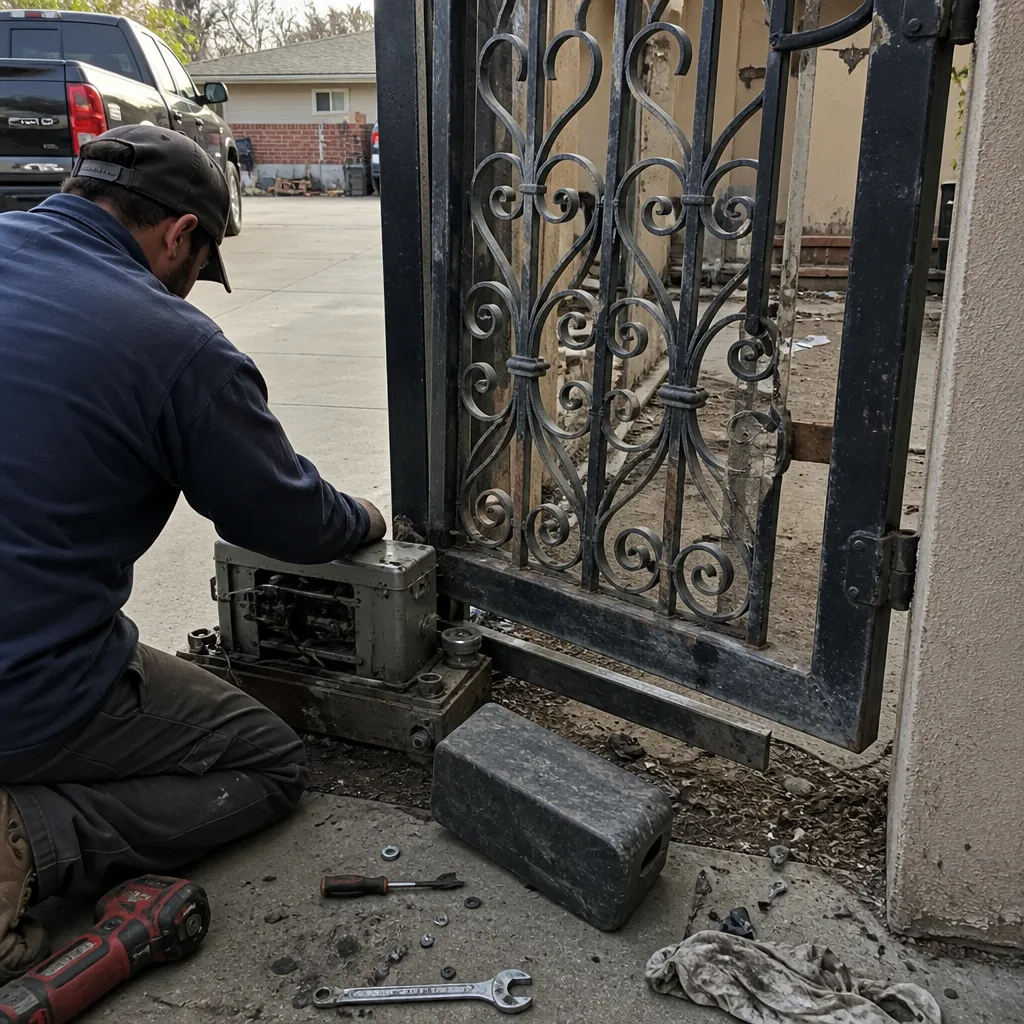 Before
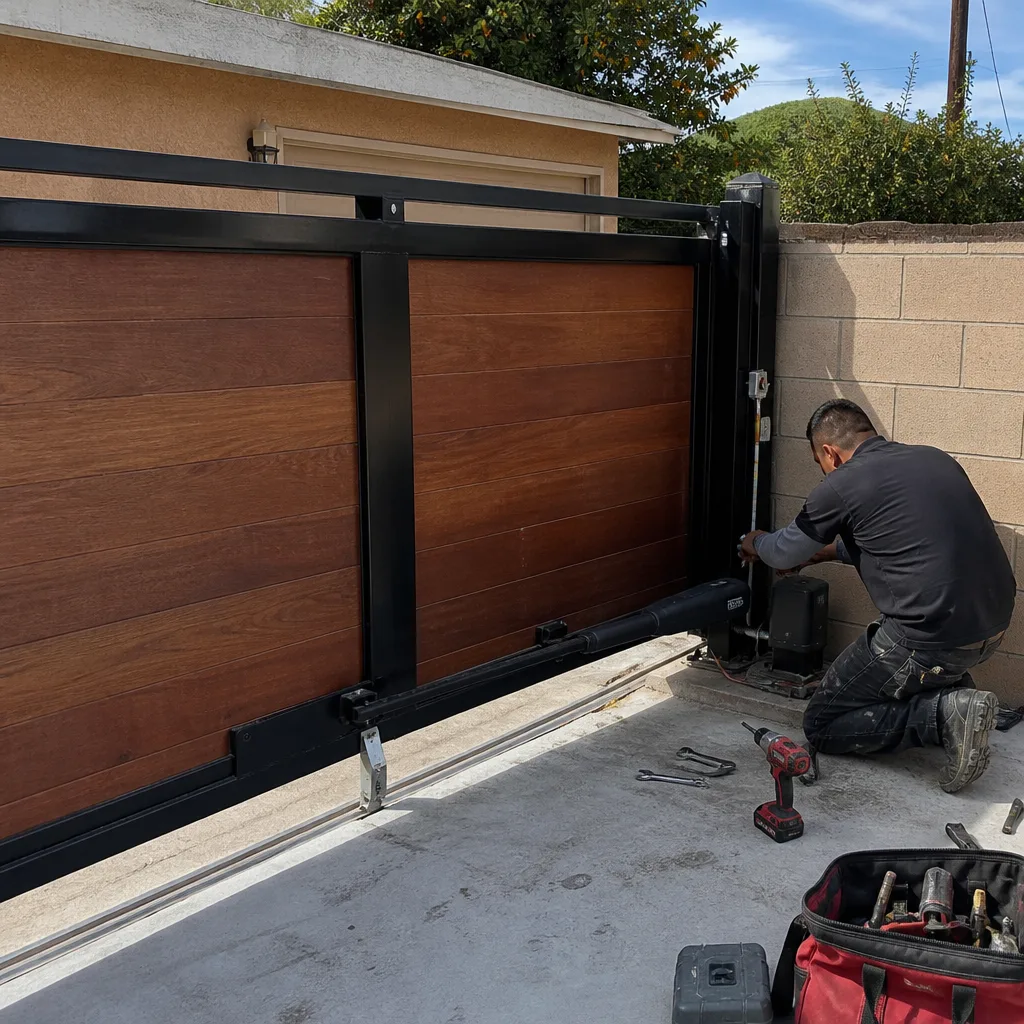 After
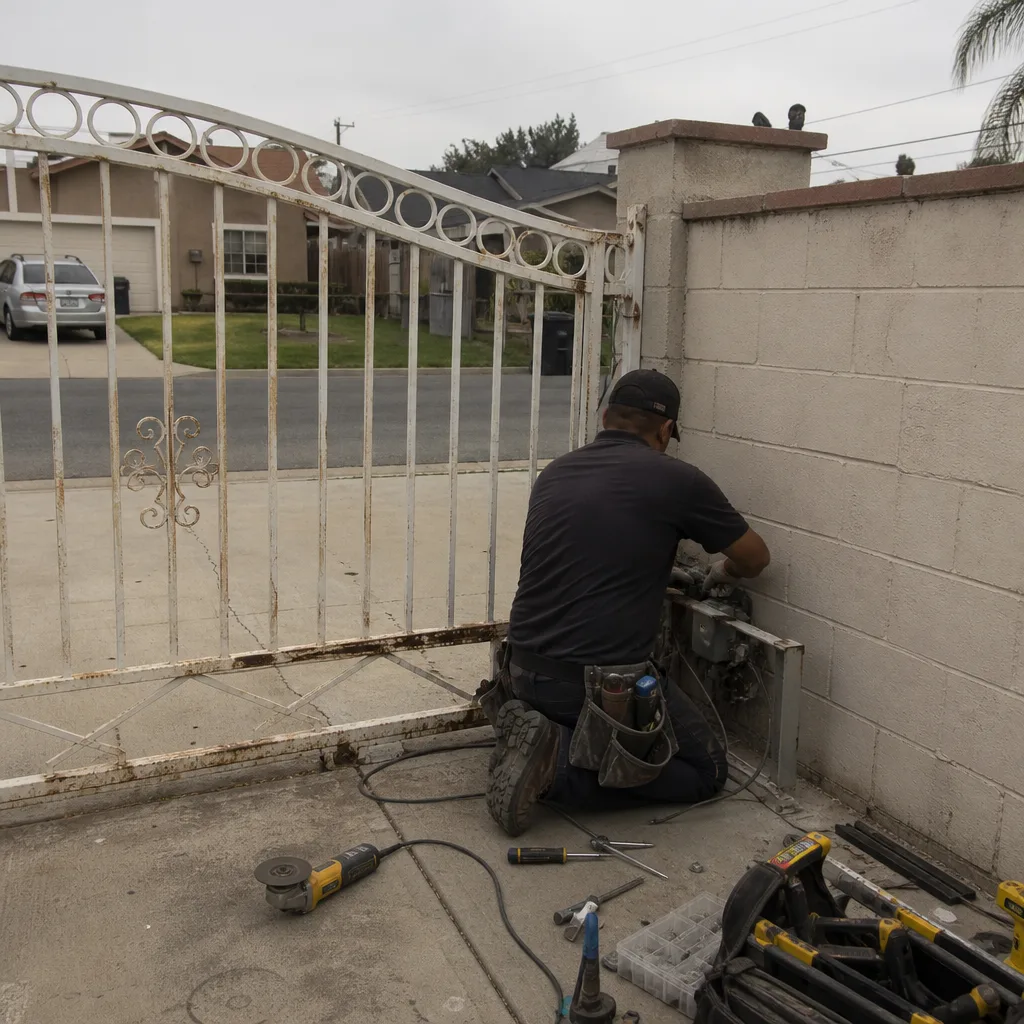 Before
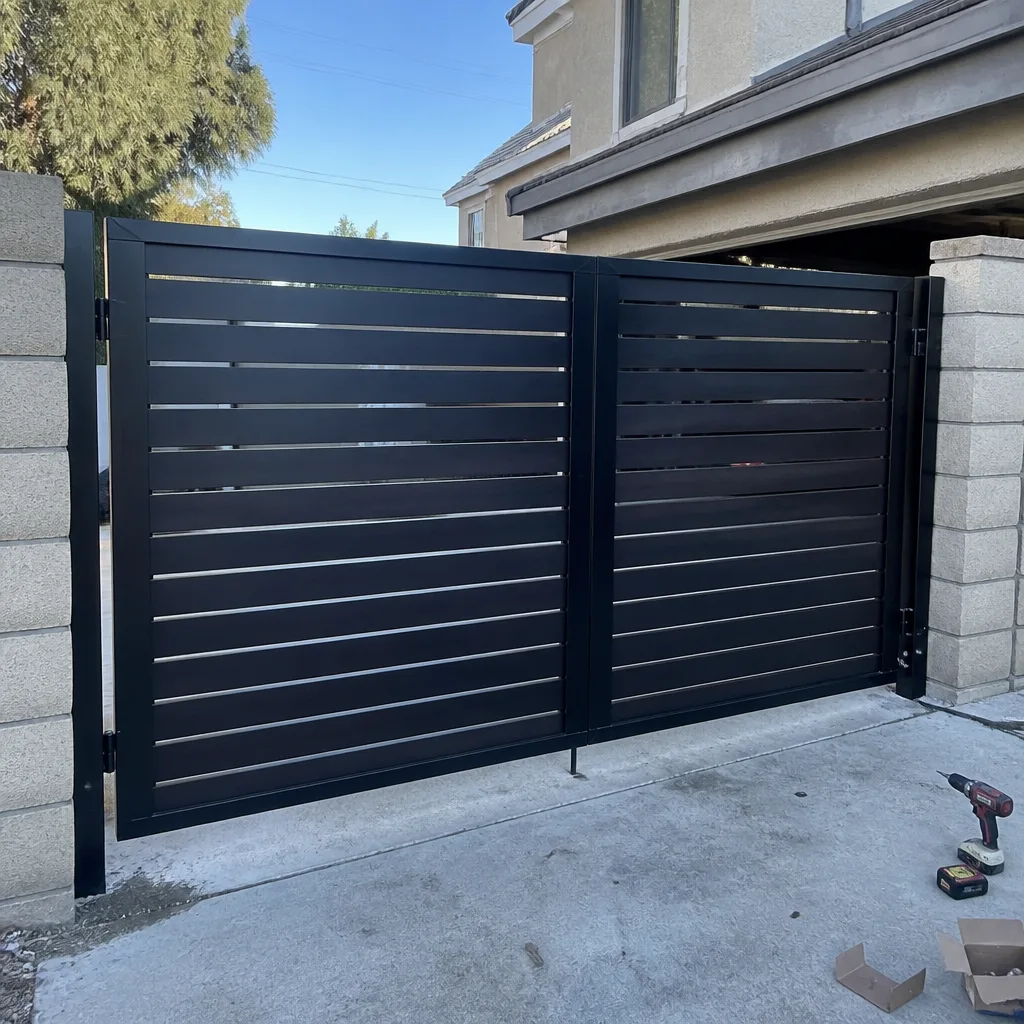 After
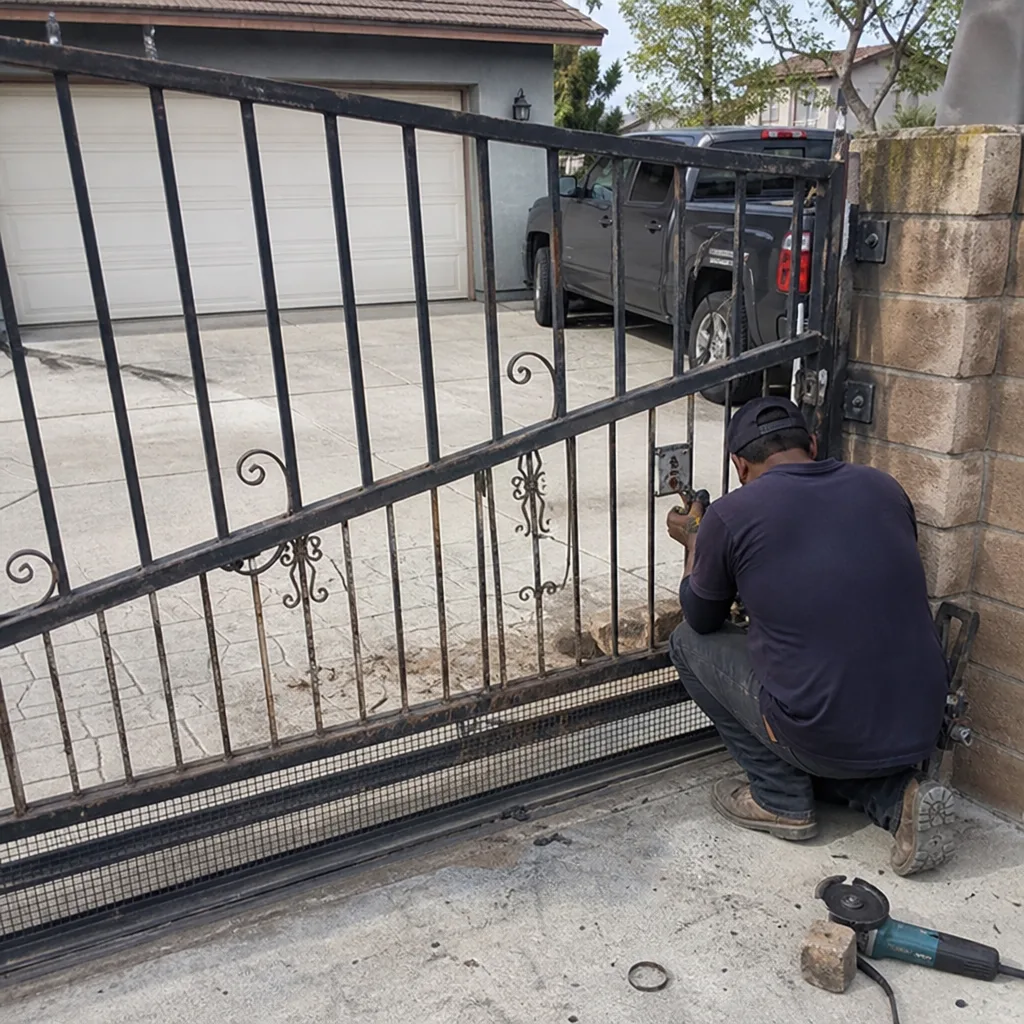 Before
 After