
Last updated October 30, 2026
 Wrought iron
 Wood & steel frame
 Farm & ranch
 Sliding driveway gates
 LiftMaster operators
Free on-site gate assessment - hinges, posts, and your LiftMaster or Nice gate operator checked before anything is quoted
The assessment is free and the quote is the invoice.
Get your free estimateGate Repair Maintenance Checklist for Chino Homeowners
Lubricating a FAAC hydraulic operator the same way you’d service a Mighty Mule swing arm will degrade the hydraulic seals, yet most gate maintenance checklists online treat every operator as if it were interchangeable. That’s a costly error, and it’s one we see regularly when we’re called out to gates in Chino that have been “maintained” using generic advice. This guide is different. We’re going to walk you through a maintenance protocol tied to what is actually bolted to your property: the brand of operator, the type of gate, and the specific wear patterns that Chino’s inland heat and clay-heavy soil create. For related help, see our Gate Repair services. By the end, you’ll have a clear monthly, semi-annual, and annual task list, plus an honest breakdown of what you can safely do yourself and what belongs in the hands of a specialist.
Styles & brands we work with
Quick Answer
A proper gate maintenance plan for a Chino home is a three-tier schedule: monthly visual checks of hinges, posts, and safety sensors; semi-annual cleaning and lubrication specific to your operator brand (hydraulic vs. electromechanical); and an annual professional inspection of the operator internals, control board, and battery backup. The single most important variable is knowing your operator brand, because a FAAC hydraulic system and a Mighty Mule swing arm have fundamentally different lubrication and wear requirements. Skipping the annual inspection is the primary reason Chino homeowners face mid-summer gate failures, when temperatures above 100°F push aging components past their limit.
Table of Contents
- Why Generic Checklists Fail on Chino Gates
- Operator-Specific Maintenance: FAAC, LiftMaster, Mighty Mule, and More
- The Chino Climate Factor: Heat, UV, and Clay Soil
- Your Monthly Gate Maintenance Checklist
- Your Semi-Annual Gate Maintenance Checklist
- Your Annual Gate Maintenance Checklist
- Post and Hinge Inspection Protocol for Chino Clay Soil
- Battery Backup and Safety Sensor Testing
- Common Mistakes to Avoid
- When to Call a Professional
- Frequently Asked Questions
- The Bottom Line
Why Generic Checklists Fail on Chino Gates
A gate is not a single machine. It’s an assembly of a mechanical frame, a drive unit, a control board, sensors, and often a battery backup, all of which age differently depending on the operator brand and the environment they live in. Wrought Gate Repair home specializes exclusively in these systems, and in our experience, the failure we see most often in Chino is a gate that was maintained on a schedule designed for a different climate and a different operator type.
Here’s the core issue. A one-size-fits-all checklist tells you to “lubricate the operator.” But what does that mean on a Viking electromechanical arm versus a Linear piston drive versus a Ghost Controls swing opener? Each has different lubrication points, different seal materials, and different tolerances. Apply the wrong product to a hydraulic unit like a FAAC and you can break down the seals that keep the fluid where it belongs. Skip lubrication on a chain-driven LiftMaster and you accelerate sprocket wear. The first step in any real maintenance plan for a Chino homeowner is identifying what you have, then following a protocol that respects that specific equipment.
Operator-Specific Maintenance: FAAC, LiftMaster, Mighty Mule, and More
We work on nine major gate automation brands: LiftMaster, FAAC, BFT, Linear, Viking, Ghost Controls, DoorKing, Elite, and Mighty Mule. That breadth matters because each brand has a distinct maintenance personality. Here is how we approach the most common systems we see on Chino properties.
FAAC Hydraulic Operators
FAAC systems use hydraulic fluid to move the gate, which means the maintenance focus is on seals, fluid level, and hose integrity. Check for weepage at the cylinder fittings every six months. A slow seep that stains the housing is the earliest warning sign. Never use a generic spray lubricant on the hydraulic ram, because petroleum-based products can degrade the wiper seals. If the gate starts moving slower in summer, that’s often hydraulic fluid that has thickened due to repeated heat cycling, and it needs a fluid service rather than a new board.
LiftMaster Electromechanical Operators
LiftMaster operators are chain- or belt-driven in most residential configurations. The maintenance priority here is chain tension and sprocket wear. A chain that’s too loose will slap and jerk the gate, which transmits shock load back into the operator gearbox. Check tension every six months, and inspect the drive sprocket teeth for a shark-fin profile, which indicates wear. On belt-driven models, look for cracking on the belt’s inner surface, especially if the operator housing has been exposed to direct Chino sun for multiple summers.
Mighty Mule Swing Arm Actuators
Mighty Mule units are popular on lightweight residential gates. The weak point on a Mighty Mule is almost always the arm’s pivot joints and the clevis pins. These are sacrificial wear points by design. Inspect the pins every month for slop. A quarter-inch of free play at the end of the arm translates into noisy operation and premature motor wear. Also, the control board on older Mighty Mule units is sensitive to voltage irregularities, so if you’re on a Chino street with known power fluctuations, a surge protector on the outlet serving the operator is cheap insurance.
Viking and Ghost Controls
Viking operators are built for heavy gates and run demanding duty cycles. The maintenance focus shifts to the gearbox and the limit switch adjustments. Listen for a change in motor pitch under load, which can indicate gear wear before visible symptoms appear. Ghost Controls swing openers, by contrast, are quieter and low-maintenance, but their battery backup module requires a specific charging check that many homeowners skip. We’ll cover that in the battery section below.
If you’re unsure which brand you have, look for a metal data plate on the operator housing. The model number is stamped there, and it’s the single most useful piece of information to have ready when you call for service or electric gate repair in Chino.
The Chino Climate Factor: Heat, UV, and Clay Soil
Chino sits inland, which means a summer week above 100°F is not an anomaly, it’s normal operating conditions for your gate. That heat does three specific things to gate hardware, and each one demands a targeted maintenance response.
Control board capacitors. Electrolytic capacitors on the control board have a rated lifespan that drops significantly with sustained heat. A capacitor that’s rated for 10 years at 75°F might fail in four or five years when the board inside a metal housing bakes at 130°F every afternoon. The early symptom is a gate that works intermittently, especially on hot afternoons, then returns to normal after the housing cools. If you notice that pattern, the board needs inspection before it fails permanently.
Hydraulic fluid viscosity. FAAC and other hydraulic systems rely on fluid that holds a specific viscosity range. When Chino temperatures swing from 35°F winter mornings to 110°F summer afternoons, the fluid thins and thickens across a wide range. Over years, this thermal cycling breaks down the fluid’s additives. A FAAC operator that’s sluggish in the morning but normal by noon is often telling you the fluid is due for a change.
UV degradation of wiring and housing. The sun in Chino is relentless, and low-voltage wiring that runs from the house to the operator, especially if it was run in flexible conduit that has become brittle, is vulnerable to insulation cracking. Once the insulation opens, moisture from winter rains gets in and creates corrosion that causes phantom faults. Inspect any exposed wiring runs twice a year, specifically looking for discoloration and hairline cracks in the sheathing.
Clay soil adds a separate challenge. Chino homeowners know the soil here expands when wet and contracts when dry, which is why fence posts move over time. The same movement affects gate posts, and a post that has shifted even an inch changes the geometry of the gate’s swing or slide path. We’ll cover that in the post and hinge section below.
Your Monthly Gate Maintenance Checklist
A monthly check takes under ten minutes once you know where to look. The goal is to catch small problems before they become operator failures. Walk the gate through a full open-and-close cycle while you watch and listen.
- Watch the gate move. It should be smooth and fluid. Jerky motion, hesitation, or a visible wobble at the hinge end means something is loose or binding. On a sliding gate, look for the wheel trucks staying centered on the track.
- Listen. Turn off any radio or ambient noise. A gate that sounds different than it did last month, whether it’s a new squeak, a grinding tone, or a clunk at the start or end of travel, is telling you something. Note the location of the sound.
- Check the safety sensors. On an automated gate, block the photo eye beam with your hand or a piece of cardboard while the gate is closing. The gate must reverse or stop immediately. If it doesn’t, stop using the auto-close function until the sensor is serviced. Never bypass a safety sensor.
- Inspect the hinge and bracket bolts. Look for rust weep lines running down from bolt heads, which indicate water ingress, and check for visible movement at the hinge when you push on the gate by hand. A gate that moves at the hinge under hand pressure is already stressing the operator.
- Clear the gate path. Remove debris, weeds, or gravel that has accumulated in the gate’s travel arc or track. Chino wind and rain both push material into gate paths, and a rock in a slide gate track can derail the gate entirely.
Your Semi-Annual Gate Maintenance Checklist
Twice a year, in spring and fall, do a deeper service. This is where brand-specific knowledge matters most.
- Clean the operator housing. Use a dry brush and a vacuum, never a hose. Dust and spider webs inside a control board housing retain heat and create a place for moisture to collect. A clean housing runs cooler.
- Lubricate hinges and pivot points, not the operator tracks. Use a dry silicone or PTFE spray on hinge pins, wheel bearings, and the pivot joints of a Mighty Mule arm. Keep lubricant away from photo eye lenses and rubber seals. If you have a FAAC hydraulic system, skip lubricant on the ram entirely and instead wipe the shaft clean with a dry cloth.
- Inspect all wiring connections. With power off at the breaker, check that terminal screws on the control board are tight. A loose terminal generates heat under load and is a common cause of intermittent faults on BFT and Viking systems.
- Test the manual release. Every automated gate must have a manual disconnect for emergencies, and it must actually work. Engage the release and open the gate by hand. If it binds or won’t move, the gate itself has a mechanical problem that the operator was masking.
- Check the battery backup. Not all systems have one, but if yours does, trigger a simulated power loss by turning off the breaker and running the gate. The gate should operate at reduced speed. If it doesn’t move at all, the battery has failed and your gate will not function during the next Chino rolling blackout or storm outage.
Your Annual Gate Maintenance Checklist
The annual service is where you stop guessing and let someone who works exclusively on gates inspect the internals. Even if you’re diligent with the monthly and semi-annual lists, there are wear points inside the operator housing and control board that require a trained eye and, in some cases, specialized test equipment.
- Full operator internal inspection. The housing comes off and the internal components get examined: gear teeth, drive belts, hydraulic hoses, limit switches, and capacitor condition. On a Linear piston drive, the internal screw receives a specific grease that a homeowner’s spray lubricant cannot replace.
- Control board diagnostics. The board is checked for burn marks, swollen capacitors, and cold solder joints. A board on the edge of failure often shows visual evidence before it quits.
- Safety system verification. Photo eyes are cleaned and aligned, edge sensors are tested, and the auto-reverse force setting is verified against the manufacturer’s specification. This is not a test you can do reliably by hand.
- Battery load test. A battery that holds a surface charge might still fail under load. The annual check applies a simulated load to confirm the battery can actually open the gate, not just power the board.
- Structural review. Hinges, posts, and the gate frame itself get checked for true alignment. If you’re considering gate installation in Chino because your current gate is at end of life, the annual check is the right moment to discuss it with a specialist who can tell you honestly whether repair or replacement makes sense.
Post and Hinge Inspection Protocol for Chino Clay Soil
Chino’s clay soil is the hidden variable that ruins more gates than bad operators ever will. Clay absorbs water and swells during winter rains, then shrinks and cracks during dry summer months. This repeated movement works gate posts loose in the ground, and a post that’s out of plumb by even a degree changes the entire gate geometry.
Here’s the test we use. Stand at the hinge side of the gate and sight down the line where the gate meets the post. The gap should be even top to bottom. If the gap is wider at the top than the bottom, or vice versa, the post is leaning and the gate is hanging off it. Next, open the gate halfway and release it. A properly hung gate stays put. A gate that swings open or closed on its own is telling you the post is out of plumb or the hinges are worn.
Check the post base for visible cracks in the surrounding concrete or soil. A hairline crack in the concrete footing that wasn’t there in spring is evidence of frost heave or soil movement. On slide gates, the rail posts take the most force, and they’re the ones that shift first in expansive clay. If you catch post movement early, it’s often a matter of resetting and re-anchoring before the misalignment strains the operator and shortens its life by years.
Homeowners in the Chino neighborhoods closest to the Chino Hills, where slopes add another vector of soil movement, should check post plumb every month during rainy season, not just twice a year.
Battery Backup and Safety Sensor Testing
Two components account for a disproportionate share of emergency gate calls in Chino: batteries that were never tested and sensors that were never aligned. Both are easy to check, and both fail silently.
Battery Backup Testing
A gate battery backup is not a car battery. It’s a deep-cycle battery designed to deliver moderate current over a short period, typically two to ten open-and-close cycles during a power outage. The failure mode that surprises homeowners is a battery that reads full voltage on a multimeter but collapses as soon as the operator draws from it. That’s why the test is behavioral, not electrical.
Twice a year, turn off the breaker that feeds the operator. Run the gate through a complete cycle. It should open and close at reduced speed, without stalling. If it stalls halfway through, the battery is marginal. If it doesn’t move at all, the battery failed long ago and you had no way to know. Ghost Controls systems, in particular, have a specific battery module that requires this manual check because the board’s diagnostic light doesn’t always reflect the battery’s true state.
Safety Sensor Alignment
Photo eye sensors lose alignment over time because the gate vibrates, the ground shifts, and the little plastic housings get bumped by debris or people. An aligned pair shows a solid indicator light on the receiving unit. If the light is blinking, the beam is broken either by obstruction or misalignment, and the gate’s auto-close function is compromised.
Test the sensor every month as part of your routine. Block the beam while the gate is closing and confirm the gate reverses. Then, with the gate open, walk across the path to break the beam and verify the gate holds open rather than closing on you. This is not a courtesy feature. Safety sensors and reverse edges exist because a gate that closes into a person, a pet, or a car is a life-safety incident, and in our experience, the homeowners who contact us for gate repair in Chino after a sensor-related accident wish they’d tested the sensors far earlier. If your sensors aren’t functioning, disable the auto-close feature and call a specialist before you use the gate manually.
Common Mistakes to Avoid
- Applying WD-40 to hydraulic rams. The solvent in generic sprays attacks the seal material on FAAC operators and turns a minor seep into a fluid leak. Use a dry cloth, not a spray can.
- Tightening bolts without checking plumb first. If a Chino post has shifted in clay soil, cranking down on hinge bolts just locks the misalignment in place and transfers the stress to the operator. Check alignment, then tighten.
- Testing the battery by checking its voltage. A multimeter reading of 12.6 volts on a deep-cycle gate battery means nothing under load. The only valid test is running the gate with the breaker off.
- Ignoring a slow gate in summer. A gate that moves slower when Chino temperatures climb past 100°F is often a hydraulic system crying for service, not a quirk. Let it go and the strain compounds until a seal or a hose fails.
- Bypassing a failed safety sensor. Some homeowners jump the sensor circuit to keep using the gate. This disables a life-safety device. Never do it, and if you see a jumper wire on your board, have it removed by a professional.
- Using a pressure washer on the operator housing. Water forced into the housing corrodes the board and connectors. A dry brush and vacuum are the only tools that should touch the inside of a control box.
- Lubricating the slide gate track. The wheels are meant to roll on a dry track. Grease on the track collects Chino dust and creates a grinding paste that wears the wheels flat.
When to Call a Professional
Some maintenance tasks are genuinely DIY-appropriate: visual checks, listening for new sounds, cleaning debris, and testing the manual release. Others belong with someone who works on gates every day. Call a specialist if your gate is moving slower than it used to and you can’t identify why, if you see fluid weeping from a hydraulic operator, if the control board shows burn marks or swollen capacitors, if the safety sensors fail to reverse the gate after alignment, or if a post has visibly shifted in Chino clay soil. Replacing a failed operator is also not a homeowner job, and the wrong choice of replacement can create a mismatch between motor torque and gate weight that shortens the life of every component. Before any major work, check Gate Repair Permits, Codes & Inspections in CA: What You Need to Know. Wrought Gate Repair offers free estimates in Chino. Call (833) 545-6817 and we’ll tell you exactly what you’re working with.
Frequently Asked Questions
A monthly visual and functional check is the baseline, with deeper cleaning and lubrication every six months and a full professional inspection once a year. The monthly check catches debris, loose bolts, and sensor drift. The semi-annual service handles lubrication and wiring inspection. The annual service is where a specialist opens the operator and inspects internals that a homeowner can’t safely access.
Control board capacitor failure is the most common heat-related gate failure we see in Chino summers. Sustained temperatures above 100°F push electrolytic capacitors past their thermal threshold, and the gate works only intermittently, usually failing on the hottest afternoons. Hydraulic fluid breakdown in FAAC systems and UV-cracked wiring are close behind.
Yes, but only the hinge pins, wheel bearings, and pivot points, using a dry silicone or PTFE spray. Do not lubricate hydraulic rams on FAAC systems, do not grease slide gate tracks, and do not spray anything into the operator housing. The wrong lubricant in the wrong place damages seals and gathers dust.
Sight down the gap between the gate and the hinge post. If the gap is wider at the top or bottom, the post has moved. A gate that swings open or closed on its own when released at halfway is another sign. Chino’s clay soil expands and contracts with moisture, and slope-adjacent properties see faster post movement than flat lots.
Disable the auto-close function immediately and call a professional for electric gate repair. A gate that closes without a functional sensor is a serious injury hazard, and bypassing the sensor with a jumper is never acceptable. Sensor realignment is a quick fix when caught early, and it’s far cheaper than the alternative.
If your gate is automated and you rely on it for daily vehicle access, yes. A battery backup keeps the gate operational during Chino’s rolling blackouts and storm outages. If you don’t have one, ask about adding one during your next annual service. The battery should be load-tested every six months.
The Bottom Line
A gate maintenance checklist is only as good as the gate it’s written for. If you run a FAAC hydraulic operator on a Mighty Mule schedule, you’ll destroy seals and wonder why the fluid is weeping. If you skip sensor testing because the gate “seems fine,” you’re one misalignment away from a close call. And if you ignore what Chino’s clay soil and summer heat do to posts, boards, and fluids, the failure will find you at the worst possible moment. Know your operator brand. Run the monthly, semi-annual, and annual schedules. Test the battery under load and the sensors under real conditions. And when the work goes past what you can see and clean, call a gate specialist. For more guides & resources, visit our blog. Wrought Gate Repair works exclusively on gates, across nine major operator brands, and we serve Chino homeowners from repair through replacement. Call (833) 545-6817 for a free estimate.
Written by the team at Wrought Gate Repair, serving Chino since 2012.
See the difference
 Before
 After
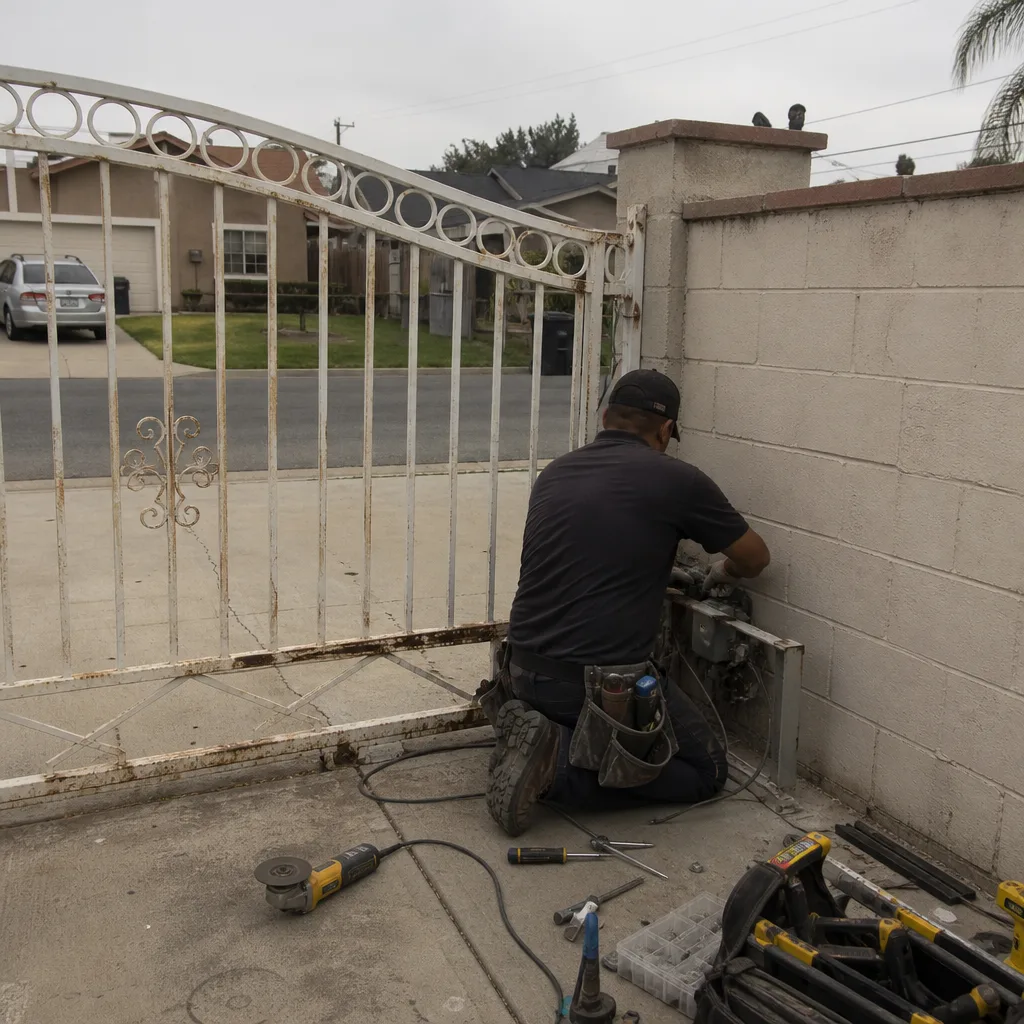 Before
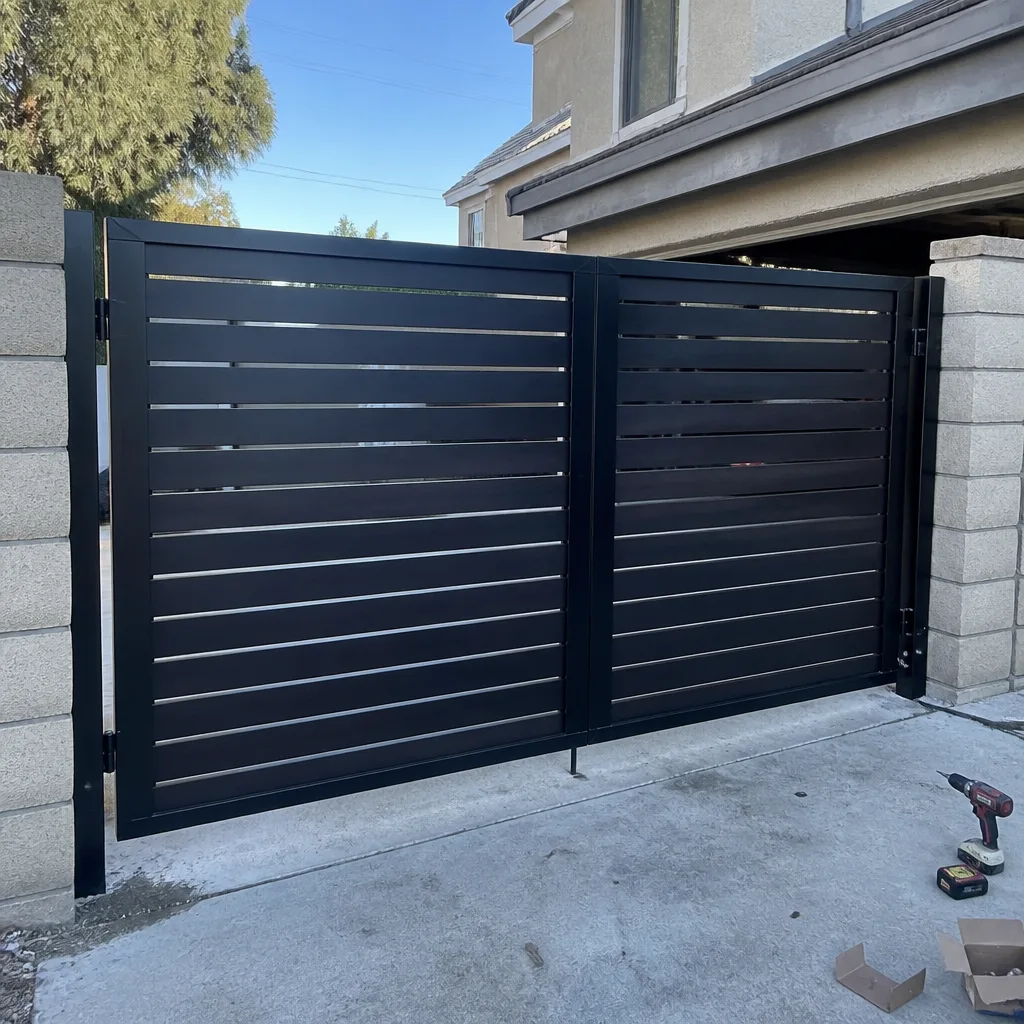 After
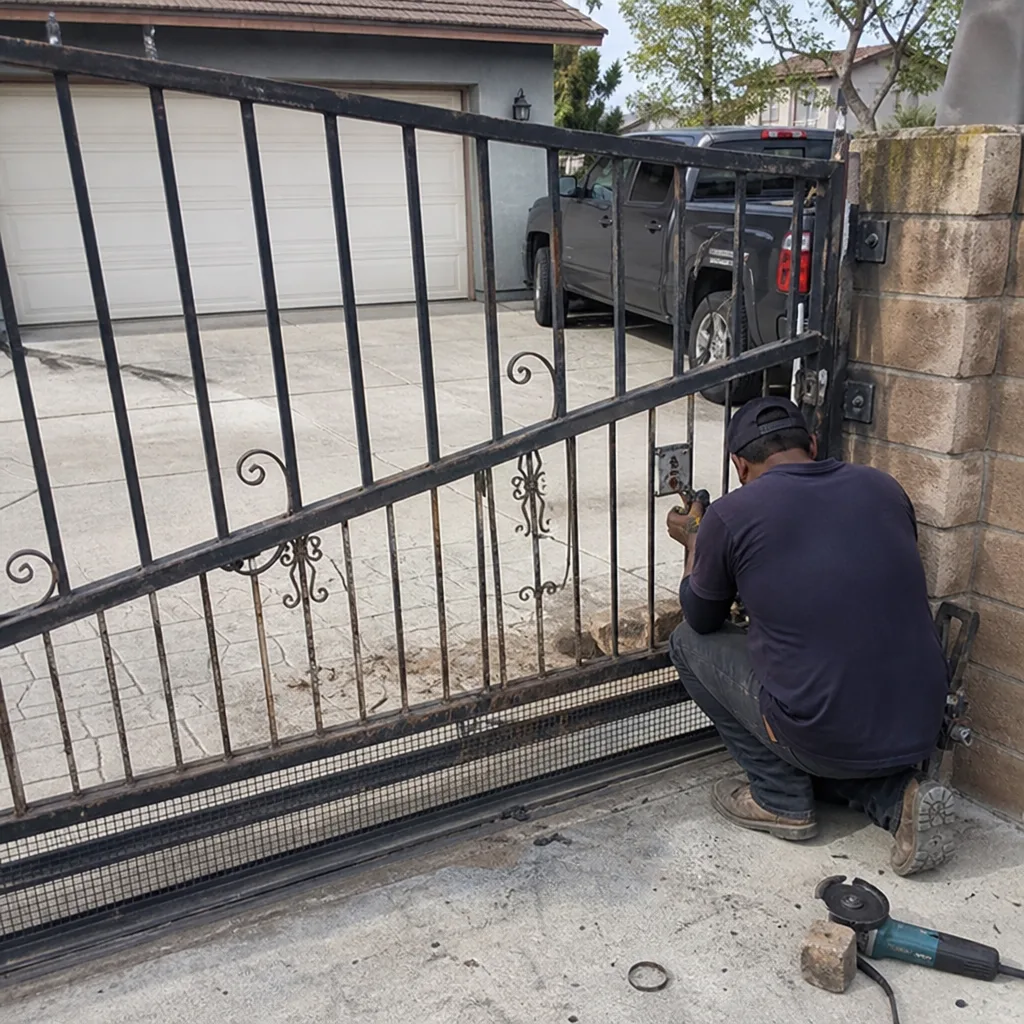 Before
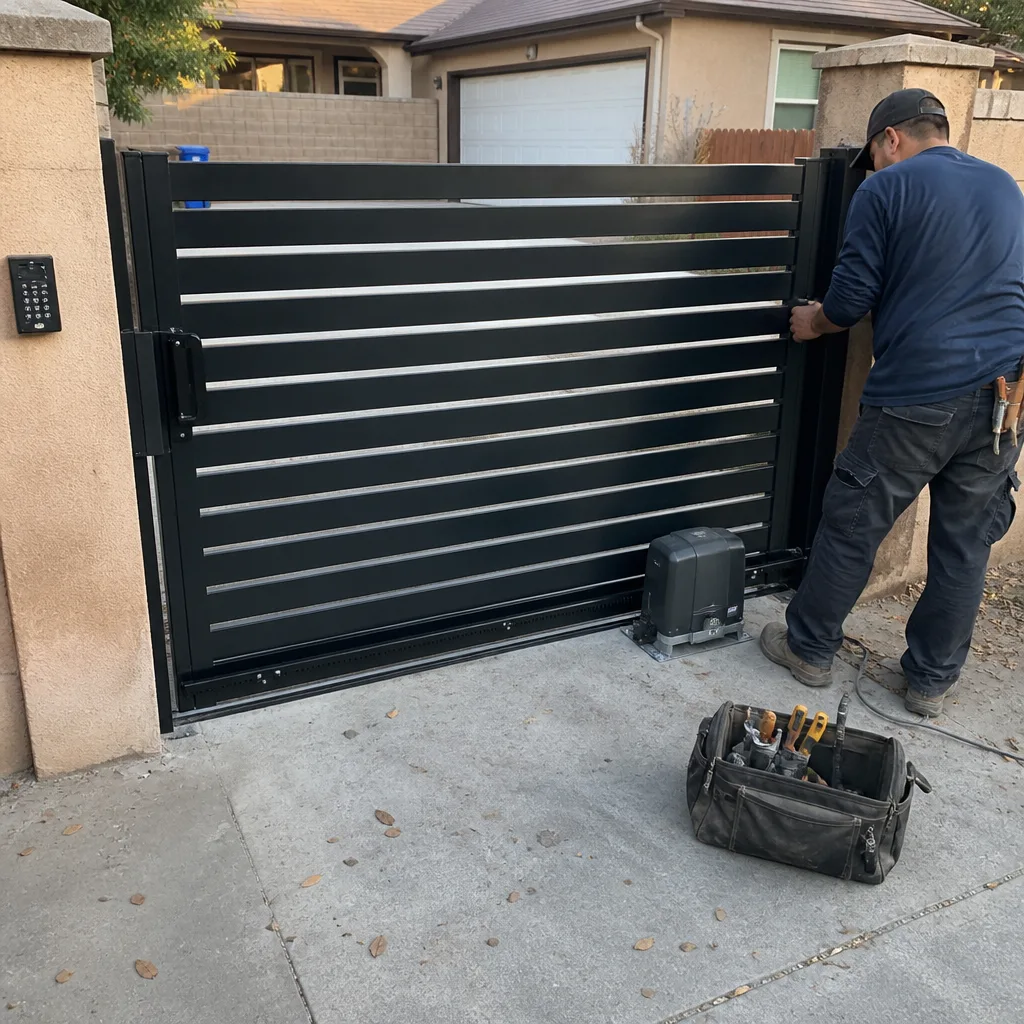 After