
Last updated October 30, 2026
 Wrought iron
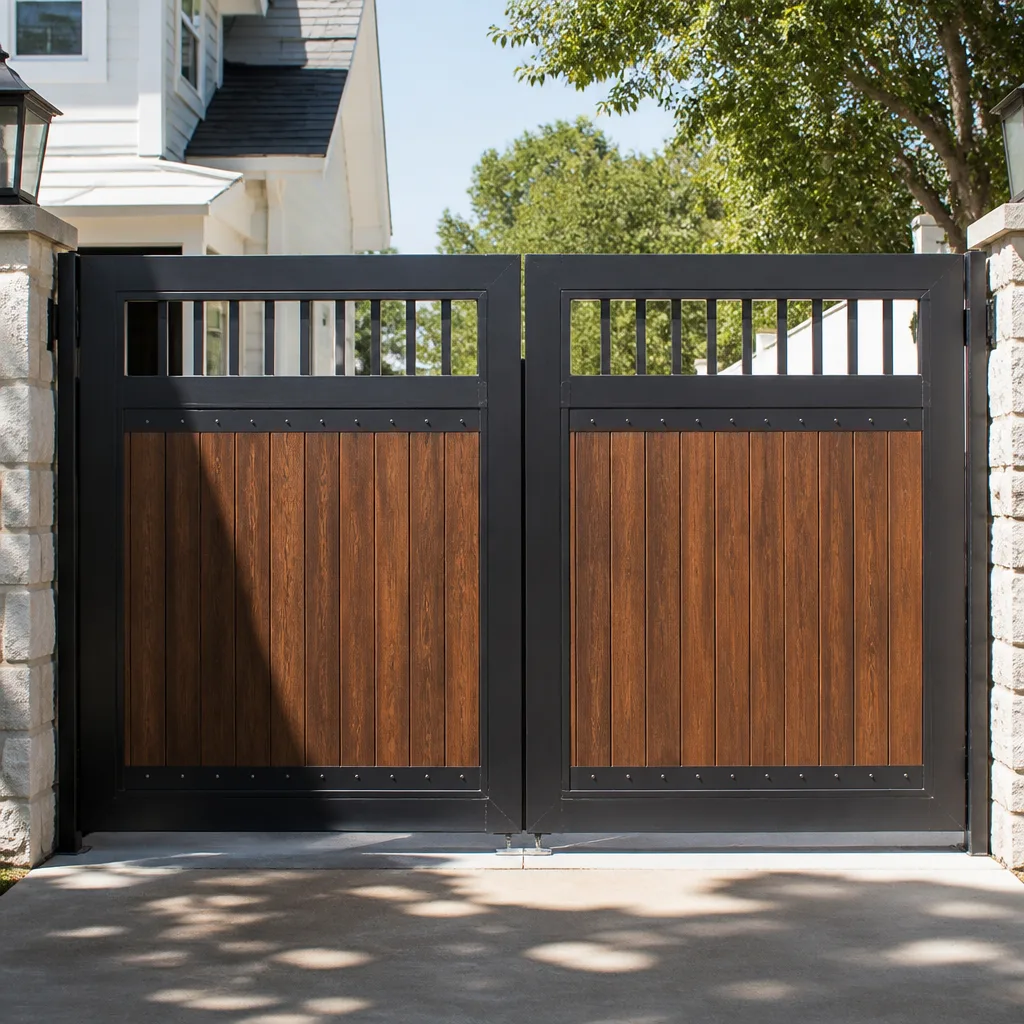 Wood & steel frame
 Farm & ranch
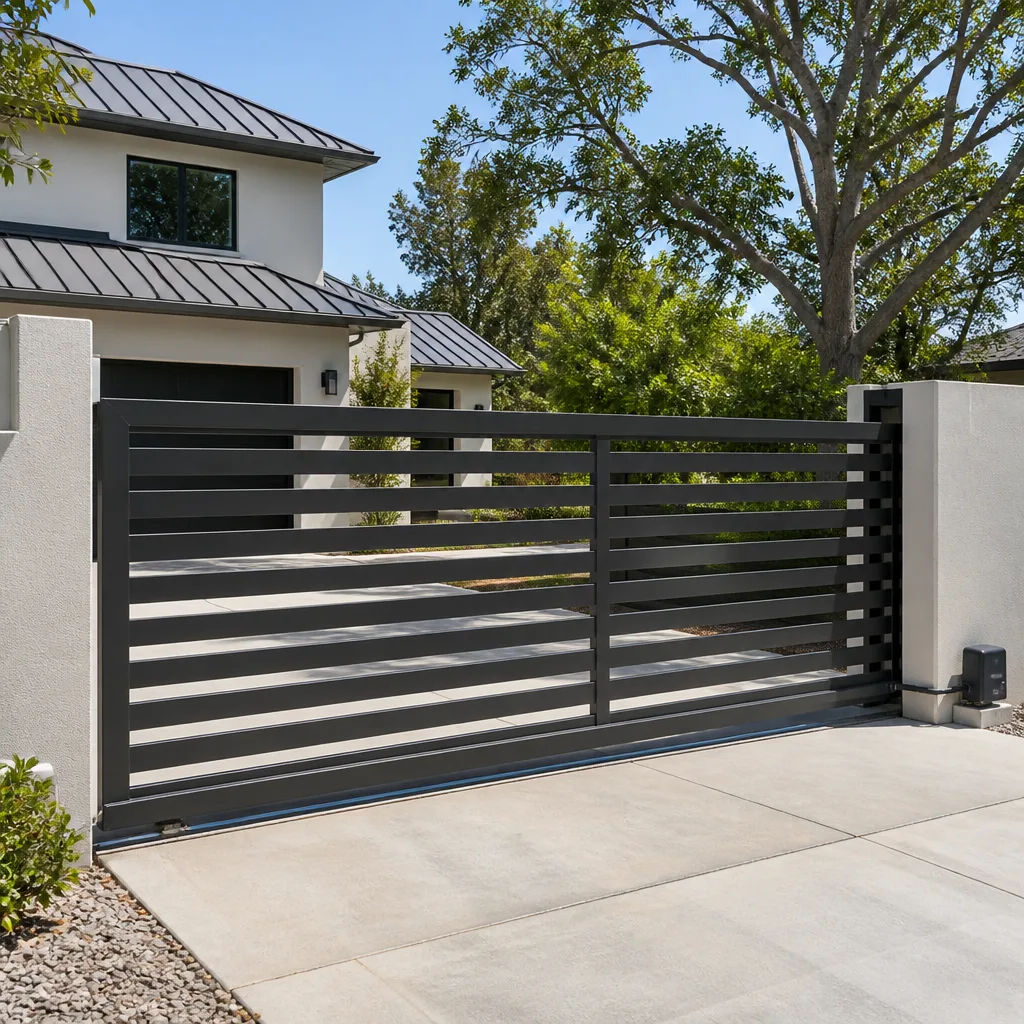 Sliding driveway gates
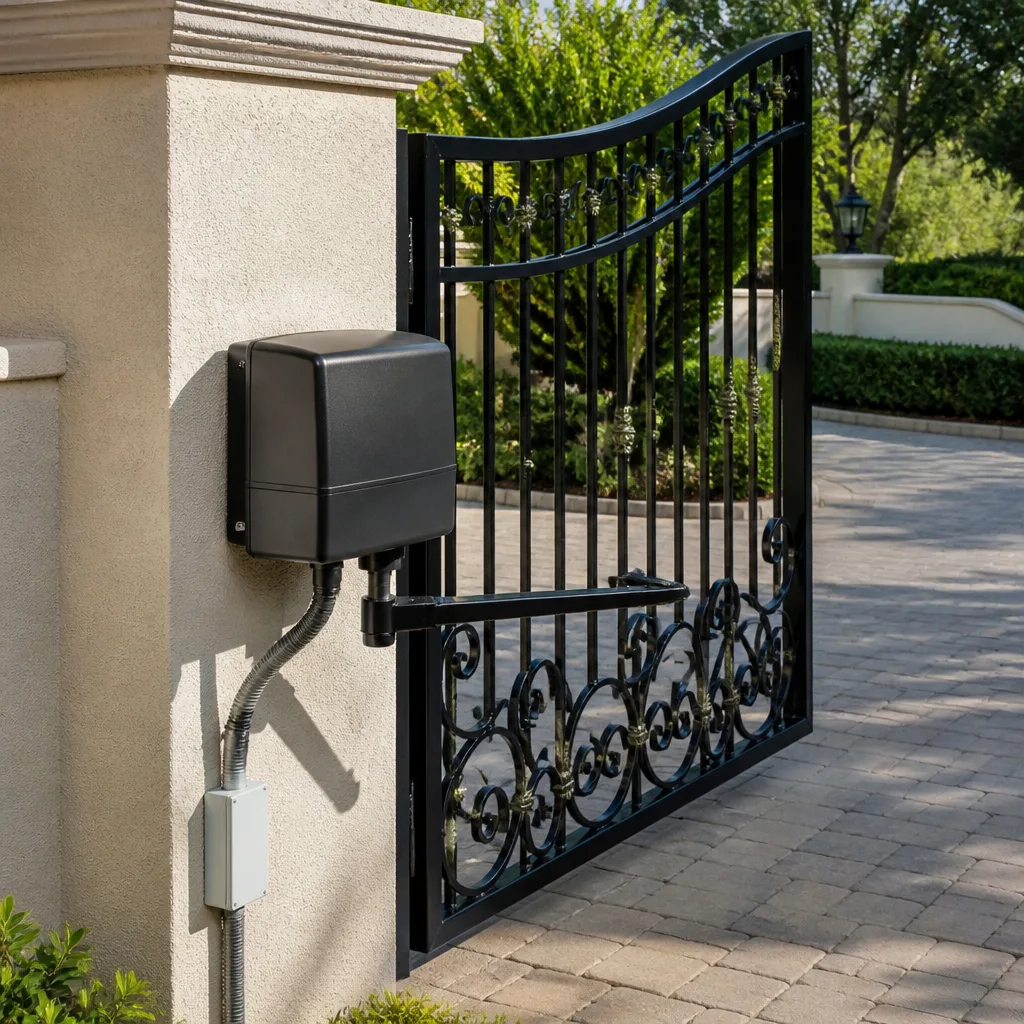 LiftMaster operators
Free on-site gate assessment - hinges, posts, and your LiftMaster or Nice gate operator checked before anything is quoted
The assessment is free and the quote is the invoice.
Get your free estimateGate Repair Emergency Preparedness Guide for Chino Homes
Here’s a number that catches most Chino homeowners off guard: roughly six out of ten people who call us for emergency gate service have never laid hands on their operator’s manual release. They’re standing in a driveway, gate frozen, paying emergency rates because a technician has to drive out and pull a cord that was always reachable. This guide changes that. You’ll learn how to identify a true gate emergency, what you can safely handle yourself at 10pm versus what actually needs a specialist, and how to build a simple pre-failure plan so your next gate problem costs less and gets resolved faster. For additional help, see our Gate Repair Maintenance Checklist for Chino Homeowners. If you live in Chino, where a stuck-open gate on a property bordering open space can change your whole night’s security picture, this is worth fifteen minutes.
Styles & brands we work with
Quick Answer
Gate emergencies in Chino fall into two categories with opposite priorities: a gate stuck open is a security problem that needs barricading or law enforcement until a technician arrives, while a gate stuck closed is an access problem that most operators solve with a manual release pull. Before calling for emergency gate repair, locate your operator’s manual release (brand-specific, usually a red handle or keyed override), secure the property if the gate is stuck open, and document your operator model number. Wrought Gate Repair covers Chino with Gate Repair services including same-day emergency response for gate failures and free estimates at (833) 545-6817.
Table of Contents
- The Two Gate Emergencies That Actually Matter in Chino
- Manual Release by Brand: Where It Is and How It Works
- Stuck-Open Protocol: Security First, Repair Second
- Stuck-Closed Protocol: Access Without Damaging the Operator
- What Is a True Emergency vs. Next-Business-Day Work
- Pre-Failure Preparedness: What to Document Before You Need It
- Chino-Specific Factors That Affect Gate Failures
- Common Mistakes to Avoid
- When to Call a Professional
- Frequently Asked Questions
- The Bottom Line
The Two Gate Emergencies That Actually Matter in Chino
Gate failures in Chino break into two categories, and they demand opposite responses. Most people treat every gate failure the same way, which is how a simple access problem turns into a $300 emergency call for something a homeowner could have resolved in ninety seconds with the right knowledge.
A stuck-open gate is a security emergency. Your property line is no longer closed. Whether you’re on a residential lot near Chino’s newer developments or managing a commercial yard off Euclid Avenue, an open gate changes your perimeter. In some Chino neighborhoods, HOA rules add a second layer of pressure: a non-functional security gate can violate community standards and trigger notices from property management within days.
A stuck-closed gate is an access emergency. Cars can’t get in or out. If the gate is your only vehicle entry point, you’re effectively locked out of your own driveway. This is frustrating but usually lower-stakes than a security breach. The fix often involves a manual release, and rushing the process without knowing your specific operator can turn a stuck-closed gate into a damaged gearbox or stripped drive motor.
The distinction matters because it determines your first move. Stuck open: secure first, then call. Stuck closed: release the operator, then decide whether the underlying failure warrants a service call. Confusing the two is the most common reason homeowners pay emergency rates for non-emergencies.
Manual Release by Brand: Where It Is and How It Works
Every automated gate operator sold in the United States has a manual release mechanism. It disengages the motor from the gate leaf so you can push the gate by hand. But here’s the problem: the mechanism is not standardized. A LiftMaster’s release looks and works differently from a Viking’s, which differs again from a Mighty Mule’s. If you don’t know your brand, you don’t know your release, and that knowledge gap is exactly what emergency dispatches are built on.
In our experience working exclusively on gates across Chino, more than half of stuck-closed service calls involve an operator with a functional manual release the homeowner simply couldn’t locate. Here’s the brand breakdown for the operators we service most often:
LiftMaster
LiftMaster slide and swing operators typically have a red release handle mounted on the operator housing or a keyed release on the control box. Slide operators use a chain-disconnect lever; swing operators use an arm-release bolt. If you have a LiftMaster with a battery backup, the manual release is usually accessible without removing any covers. Look for a red handle. It’s almost always red.
FAAC
FAAC hydraulic operators hide their manual release behind a small access cover on the operator body. Inside, you’ll find a release valve that requires a flathead screwdriver or the dedicated FAAC release key that ships with the unit. Turning the valve counterclockwise depressurizes the hydraulic circuit and lets the gate swing freely. Do not force a FAAC gate without releasing this valve first: hydraulic resistance can cause the piston seal to fail, which converts a simple release into an operator rebuild.
Viking
Viking operators use a manual disconnect lever on the drive unit, usually located near the bottom of the cabinet. On Viking swing operators, the release is a pull-chain or a locking handle that disconnects the drive arm. Viking’s design philosophy prioritizes service access, so the release is generally easier to reach than on FAAC or BFT units, but it still requires knowing which panel to open.
Mighty Mule
Mighty Mule is the DIY-common brand in Chino. Its operators are designed for homeowner installation, so the manual release is deliberately simple: a small pull-pin or T-handle on the swing arm itself. Pull the pin, and the arm disconnects from the gate bracket. The gate swings free. This is the easiest release in the lineup, which means Mighty Mule owners paying emergency rates for a stuck-closed gate are almost always paying for a diagnosis rather than a repair.
Elite
Elite slide operators use a manual release handle that disengages the drive chain from the sprocket. On Elite swing models, the release is a lever on the operator arm. Elite’s commercial-grade units sometimes require a key to access the release, which adds a step: if you don’t have the key, a technician can release the gate without damaging the operator, but it takes specific knowledge of where the override points are.
The actionable takeaway: identify your operator brand today, not during an emergency. The manual release location is the single most valuable piece of gate knowledge you can have before a failure.
Stuck-Open Protocol: Security First, Repair Second
If your gate fails in the open position in Chino, the sequence of actions matters. The instinct is to call someone immediately, and that’s not wrong, but a call alone doesn’t secure your property while you wait. Here’s the protocol we recommend to Chino homeowners and property managers:
- Assess the security exposure. What does the open gate actually expose? A front driveway gate on a busy street is different from a rear gate opening onto horse trails or open land. In Chino’s more rural edges, an open gate can mean coyotes, loose dogs, or unauthorized vehicles entering at night.
- Attempt a visible barricade. For a residential driveway, a vehicle parked across the opening is the fastest temporary measure. For a commercial property, cones, caution tape, or a temporary chain (if you have one) signals that the opening is not an invitation. Don’t attempt to wedge a motorized gate closed with physical objects; the operator may still be under power and could strain against the obstruction.
- Check the operator’s power state. A gate stuck open with the operator humming or cycling is an active malfunction: shut off power at the breaker or the operator’s disconnect switch. A gate stuck open with no power at all is a different failure mode, likely electrical or mechanical, and power cycling won’t fix it.
- Document the failure. A short video of the gate’s behavior, the operator panel, and any error lights is genuinely useful to the technician you eventually call. It can distinguish a limit-switch failure from a broken chain before anyone drives out.
- Decide who to call. If the open gate poses an immediate safety risk, such as a commercial yard with unsecured equipment or a residential property with a known threat, calling Chino PD for a temporary patrol check is reasonable. But law enforcement will not repair your gate. You still need a gate specialist, and the longer the gate sits open, the longer your property exposure lasts.
A stuck-open gate is the one scenario where emergency dispatch rates are genuinely justified. The security window is real, and a same-day response from a gate specialist in Chino can restore a closed perimeter faster than any amount of temporary barricading.
Stuck-Closed Protocol: Access Without Damaging the Operator
A stuck-closed gate traps vehicles, which is annoying, but it also presents a specific risk: someone, usually a frustrated homeowner, decides to force the gate open. Forcing a motorized gate without disengaging the operator causes damage that multiplies the repair bill. The sequence below prevents that.
- Identify your operator brand before touching anything. The release mechanism differs by brand, as covered above. If you don’t know the brand, look for a manufacturer label on the operator housing or the control board cover.
- Locate the manual release. For a LiftMaster, look for the red handle. For a FAAC, find the access cover and release valve. For a Mighty Mule, look for the pull-pin on the swing arm. If you can’t find it within two minutes, stop and call rather than prying at random components.
- Disengage the operator. Operate the release exactly as designed. Do not use tools as levers on parts that aren’t meant to move. A flathead screwdriver in the wrong place on a FAAC valve body is a multi-hundred-dollar mistake.
- Push the gate slowly. Once disengaged, the gate should move with moderate effort. If it doesn’t move, something is physically binding: a broken wheel, a bent track, or debris in the slide path. Don’t force it. That’s a diagnostic finding worth sharing with your technician.
- Re-engage the operator only after the gate is back in the desired position. Many homeowners forget this step, leaving the gate free-swinging, which creates a new stuck-open problem.
One check to perform before forcing any hydraulic gate open: confirm the release valve is fully open. A partially open valve on a hydraulic operator (common with FAAC and BFT units) creates resistance that feels like a mechanical failure. Homeowners sometimes assume the gate is jammed and apply brute force, when the real issue is an incomplete release.
What Is a True Emergency vs. Next-Business-Day Work
Not every gate failure warrants a 10pm dispatch call. Knowing the difference saves you money and helps the technician who answers your call prioritize correctly. Here’s how we advise Chino customers to think about it:
True emergencies (call now)
- Gate stuck open on a property with security exposure, occupied residence, or unattended assets.
- Gate stuck closed with all vehicles trapped and no alternative exit, especially if medical access is a factor.
- Operator smoking, sparking, or showing signs of electrical failure. This is a fire-safety risk; kill the breaker and call immediately.
- Gate moving erratically while under power, such as reversing direction mid-cycle or failing to stop at limits, which creates a crushing hazard, especially with children or pets on the property.
Can wait for next business day
- Gate squealing, grinding, or slow-moving but still cycling. This indicates wear that needs attention, but the gate still functions.
- Remote control range reduced or intermittent. Typically a battery, antenna, or receiver issue; not an emergency.
- Gate closes but won’t lock, or a magnetic lock that buzzes. Security concern but not an acute breach in most Chino residential settings.
- Cosmetic damage to gate panels, posts, or ornamental ironwork. Appearance issue, not a functional failure.
When you call a dispatch service at 11pm, the dispatcher is working from a script. They won’t always ask the right questions. Lead with the specific situation: “My gate is stuck open and I can’t secure my property” triggers a different response than “My gate is making a noise.” The first sentence you say determines the priority you get.
Pre-Failure Preparedness: What to Document Before You Need It
The gate failures we see in Chino are rarely catastrophic surprises. They’re the endpoint of neglect, wear, and ignored warning signs. But when they happen, the homeowners who resolve them fastest are the ones who already have basic documentation in place. Here’s what you should record today, ideally in a note on your phone or a laminated card near your electrical panel:
- Operator brand and model number. LiftMaster, FAAC, BFT, Linear, Viking, Ghost Controls, DoorKing, Elite, or Mighty Mule. The model number is on a label on the operator housing or control board. This one piece of information lets any competent gate technician arrive with the right parts and the right diagnostic approach.
- Manual release location and type. Now that you’ve read this guide, go find it. Note whether it’s a pull-pin, a red handle, a keyed release, or a valve. Write that down.
- Control board access panel location. Service technicians need to reach the control board for most electrical diagnostics. Knowing where the panel is, and whether it requires a key, saves time.
- Installer or previous service provider contact. If a previous company installed or serviced your gate, their records may include the operator’s revision level and any prior repairs. This history matters when diagnosing intermittent issues.
- A photo of your gate from both sides. In an emergency, a technician can assess the gate type, hinge configuration, and operator mounting before arrival. For slide gates, a photo of the track and wheels helps too.
- Your circuit breaker location for the gate operator. Many Chino homes have a dedicated breaker for the gate operator, often labeled “GATE” in the panel. Knowing this saves time during electrical emergencies.
Five minutes of documentation today prevents a thirty-minute troubleshooting conversation at 10pm, and it can be the difference between a technician arriving with the right part or scheduling a second visit.
Chino-Specific Factors That Affect Gate Failures
Chino isn’t a generic suburban market, and its gate failures aren’t generic either. Several local conditions shape the gate repair landscape here more than homeowners realize.
Climate and dust. Chino’s hot, dry summers and persistent dust from the surrounding agricultural land and the Santa Ana wind corridor accelerate wear on gate rollers, chains, and control boards. Dust infiltration into control enclosures is one of the most common causes of intermittent operator failures we see in Chino, more so than in coastal communities. The fix is usually a control board cleaning and seal replacement, not an operator replacement, but it takes an inspection to know which.
HOA communities with uniform gate requirements. Chino has a significant number of master-planned communities where gates are either required by the HOA or governed by architectural standards. That means gate failures aren’t just a homeowner inconvenience; they can generate HOA notices and compliance timelines. A gate repair in Chino that restores function quickly is often as much about satisfying community standards as it is about restoring access.
Rural and equestrian edge properties. Chino’s southern and eastern boundaries still support equestrian zoning and larger lots. These properties often have wider, heavier gates: farm tube gates, custom wrought iron, or dual-leaf swing configurations on long driveways. These gates are subject to high wind loads, and the operators driving them wear out faster than on a typical residential property.
Older wrought iron inventory. Chino has a substantial stock of original wrought iron gates from the 1980s and 1990s, many of them ornamental and custom-fabricated. These gates are durable but often hinge-bound or out of square after decades of use. When an older iron gate jams, the issue is rarely the operator: it’s the gate geometry. Repairing the gate itself, not replacing the opener, is the actual fix. That’s the kind of distinction a gate-only specialist makes in the first five minutes of diagnosis.
Common Mistakes to Avoid
- Not knowing your operator brand before an emergency. Calling a repair line and saying “my gate is broken” starts the diagnosis from zero. Saying “my LiftMaster slide operator won’t release” gives the dispatcher something to work with. This single piece of knowledge changes the entire service experience.
- Forcing a motorized gate without disengaging the operator. This is the most expensive mistake in gate repair. A gate pushed against an engaged motor strips gears, bends drive arms, and sometimes snaps chains. The manual release exists to prevent this exact damage, but it only works if you use it.
- Power-cycling an operator with a visible electrical smell or scorch marks. If your gate operator smells like burned electronics, do not reset the breaker. That smell indicates a component failure, and re-energizing the board can cause further damage or create a fire hazard. Kill the power and call a technician.
- Lubricating a grinding gate without identifying the cause first. Grease hides symptoms; it doesn’t fix them. A grinding gate usually has a failed bearing, a bent wheel, or a structural misalignment. Lubricating it makes the noise quieter while the underlying problem continues to worsen.
- Assuming every gate failure is an operator failure. In Chino, with its older iron gates and wide temperature swings, many “operator failures” are actually gate failures: hinges seized, posts leaning, wheels worn flat, track sections drifted out of alignment. Replacing the operator without fixing the gate leaves you with the same problem six months later.
- Leaving a manual release disengaged after resolving a stuck-closed situation. A free-swinging gate looks closed but provides no security. It also lets wind move the gate, which can slam it into the operator or the vehicle path. Re-engage the release once the gate is in position.
- Calling a generalist for a brand-specific operator issue. A FAAC hydraulic system and a Mighty Mule DC swing arm share almost no diagnostic overlap. A general handyman who “does gates sometimes” may not have the brand-specific knowledge to diagnose the problem correctly the first time. Specialization matters here, more than in most home repairs.
When to Call a Professional
Some gate problems are genuinely homeowner-handled: a dead remote battery, a tripped breaker, a manual release pull, a gate that’s simply misaligned on its track and can be pushed back into position. But several scenarios should prompt an immediate call to a gate specialist rather than a do-it-yourself attempt.
Any electrical issue inside the control board, any hydraulic leak on a FAAC or BFT operator, any gate that moves erratically under power, or any structural problem with the gate itself (bent hinge, cracked weld, leaning post) is professional territory. These failures involve either safety risk or repair complexity that exceeds what a homeowner should attempt. Gate operators run on 24-volt DC or 120-volt AC circuits; the control boards are sensitive, and the moving gates they drive are heavy enough to cause serious injury when they behave unpredictably.
For Chino homeowners who need a gate evaluated, Wrought Gate Repair works exclusively on gates: no fencing, no garage doors, no general handyman work. Our service coverage includes LiftMaster, FAAC, BFT, Linear, Viking, Ghost Controls, DoorKing, Elite, and Mighty Mule operators, plus the gates they drive, whether manual or motorized. Free estimates are available for repair and installation work in Chino. Call (833) 545-6817.
Frequently Asked Questions
Emergency gate repair in Chino typically ranges from $150 to $450 depending on the failure type, operator brand, and time of dispatch. A simple manual-release reset at 10pm costs far less than a control board replacement at 2am. The price is quoted and agreed upon before any work begins, so you’re never surprised by the invoice. For an exact quote on your specific operator, call (833) 545-6817.
Yes, same-day emergency response is available for Chino homeowners with a gate stuck open, stuck closed with vehicles trapped, or showing electrical failure symptoms. True emergencies are prioritized over routine service calls. If your gate is still functioning but noisy or slow, we’ll schedule the soonest available non-emergency appointment, which is typically next business day.
A full gate installation includes the gate itself (wrought iron, steel, or aluminum), the operator (slide or swing, matched to the gate weight and cycle frequency), the control board, safety devices (photo eyes, edge sensors, or both), and the power run to the operator location. Chino installations also include concrete work for operator pads and gate posts, plus final programming and safety testing. Every installation is quoted in writing before work starts.
Yes, gate installations include all necessary electrical work for the power run, plus safety edges and photo eyes sized to the gate and operator. For code compliance in Chino, automated gates require entrapment protection, which means safety devices are not optional add-ons but standard installation components. The installation quote covers everything from trenching to final safety certification.
We service nine major gate automation brands: LiftMaster, FAAC, BFT, Linear, Viking, Ghost Controls, DoorKing, Elite, and Mighty Mule. This coverage means Chino property owners rarely need to track down a brand-specific dealer; one call covers nearly any gate system already installed.
A gate stuck open is a security emergency and warrants an immediate call. A gate stuck closed that traps your vehicles or blocks emergency access is also urgent. A gate that still operates but is noisy, slow, or intermittent can wait for a next-business-day appointment. When in doubt, describe the specific failure when you call: “stuck open,” “trapped vehicles,” or “still works but grinding” gives the dispatcher what they need to triage correctly.
The Bottom Line
Your gate will eventually fail. Every gate does. The difference between a manageable inconvenience and a genuine emergency comes down to what you know before the failure happens: your operator brand, your manual release location, your breaker position, and the phone number of a gate specialist who covers your area. Chino’s climate, its mix of old iron gates and new automated systems, and its HOA-driven expectations all make gate preparedness more than a nice-to-have. The homeowners who handle gate failures with minimal stress are the ones who spend fifteen minutes documenting their system today, not the ones who improvise at 10pm. Explore our more guides & resources to stay prepared. When you need a gate repaired or replaced in Chino, call (833) 545-6817 for a free estimate, quoted before any work begins.
Written by the team at Wrought Gate Repair, serving Chino since 2012.
See the difference
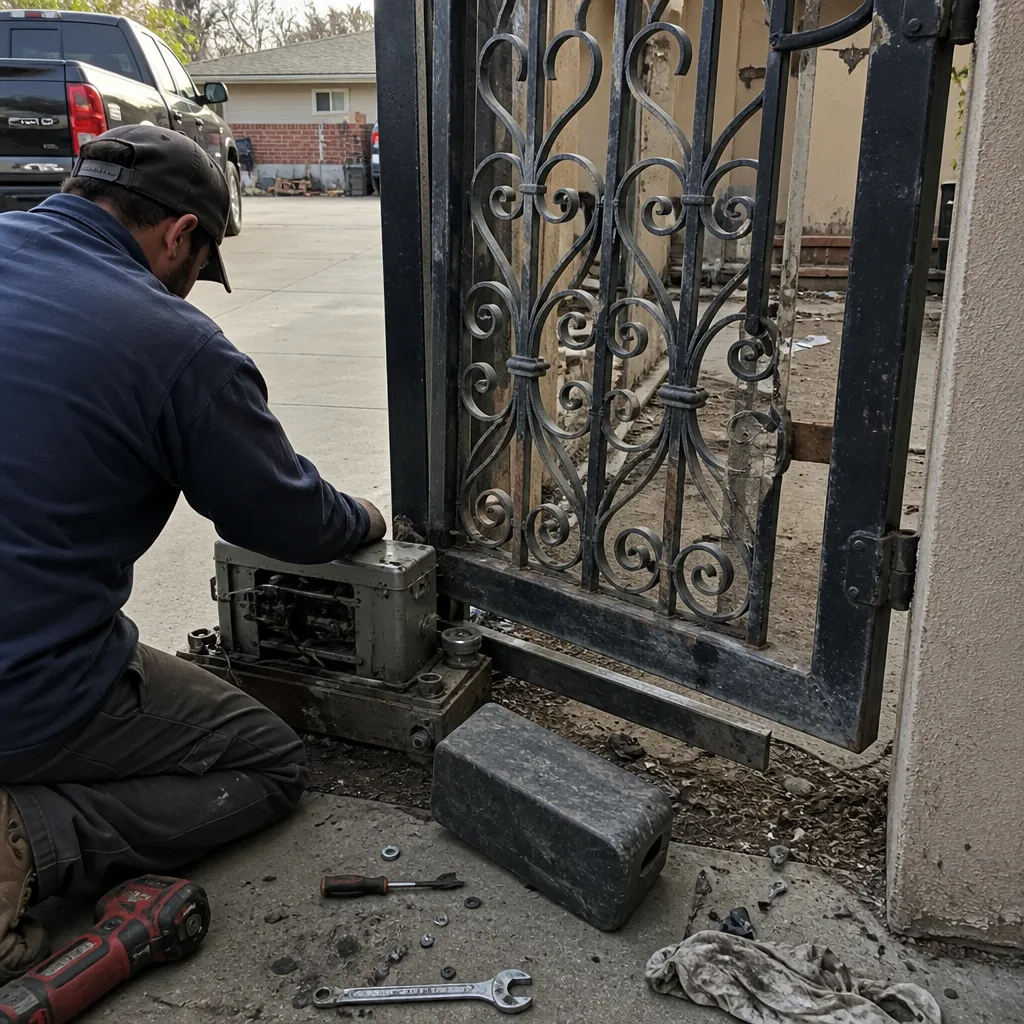 Before
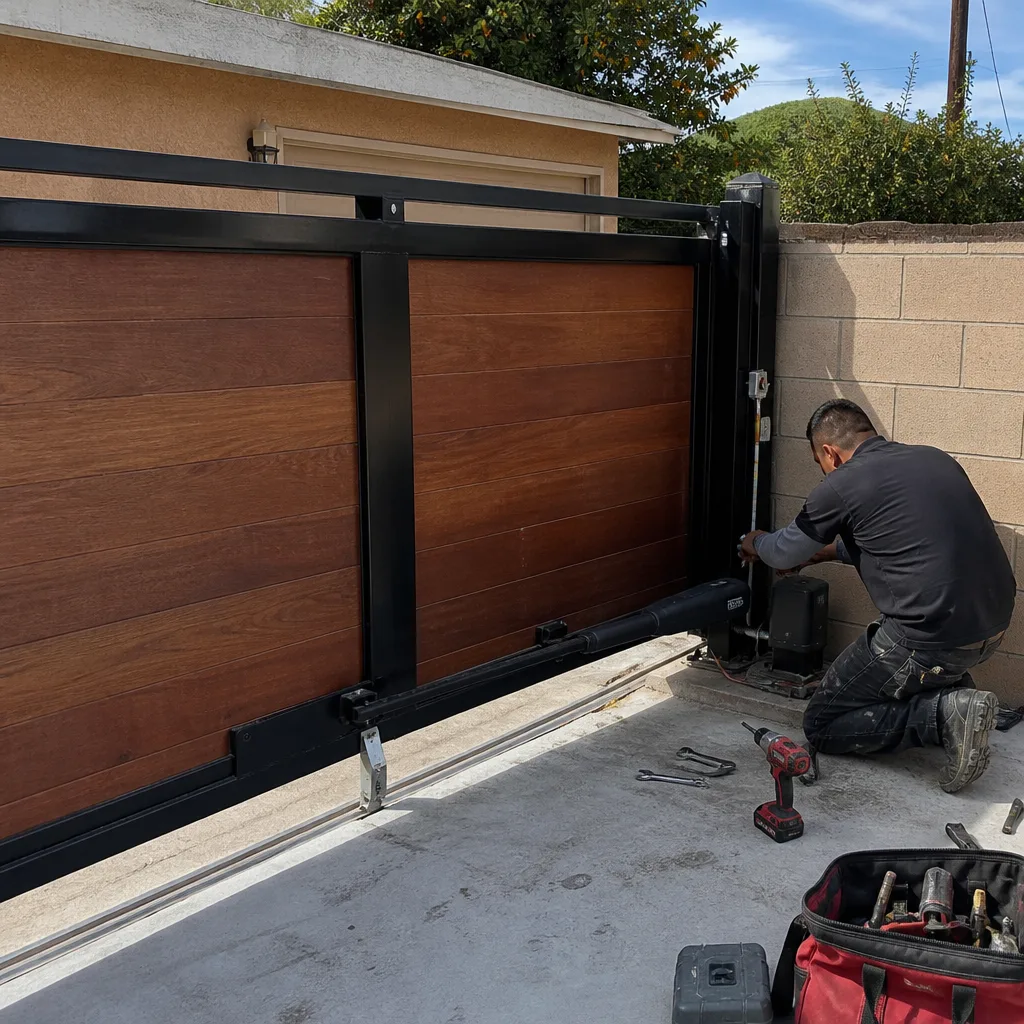 After
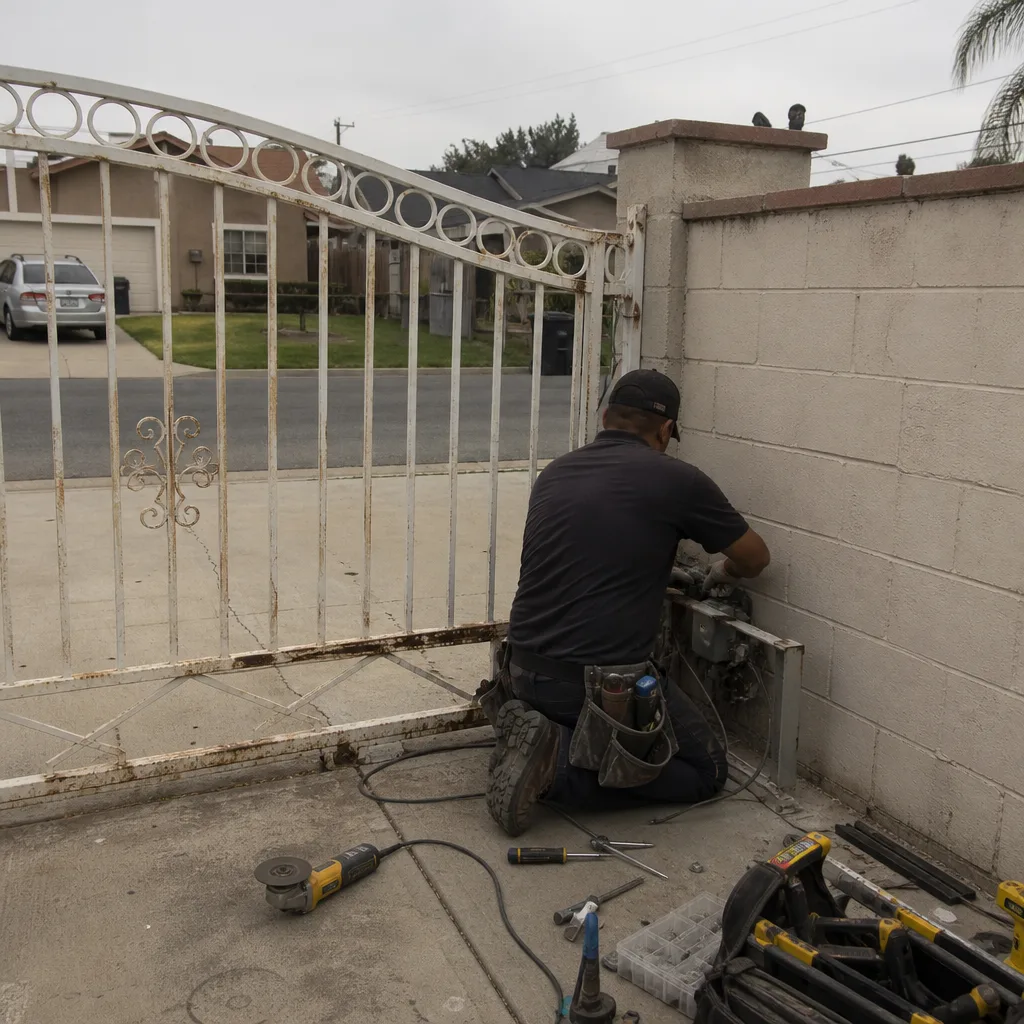 Before
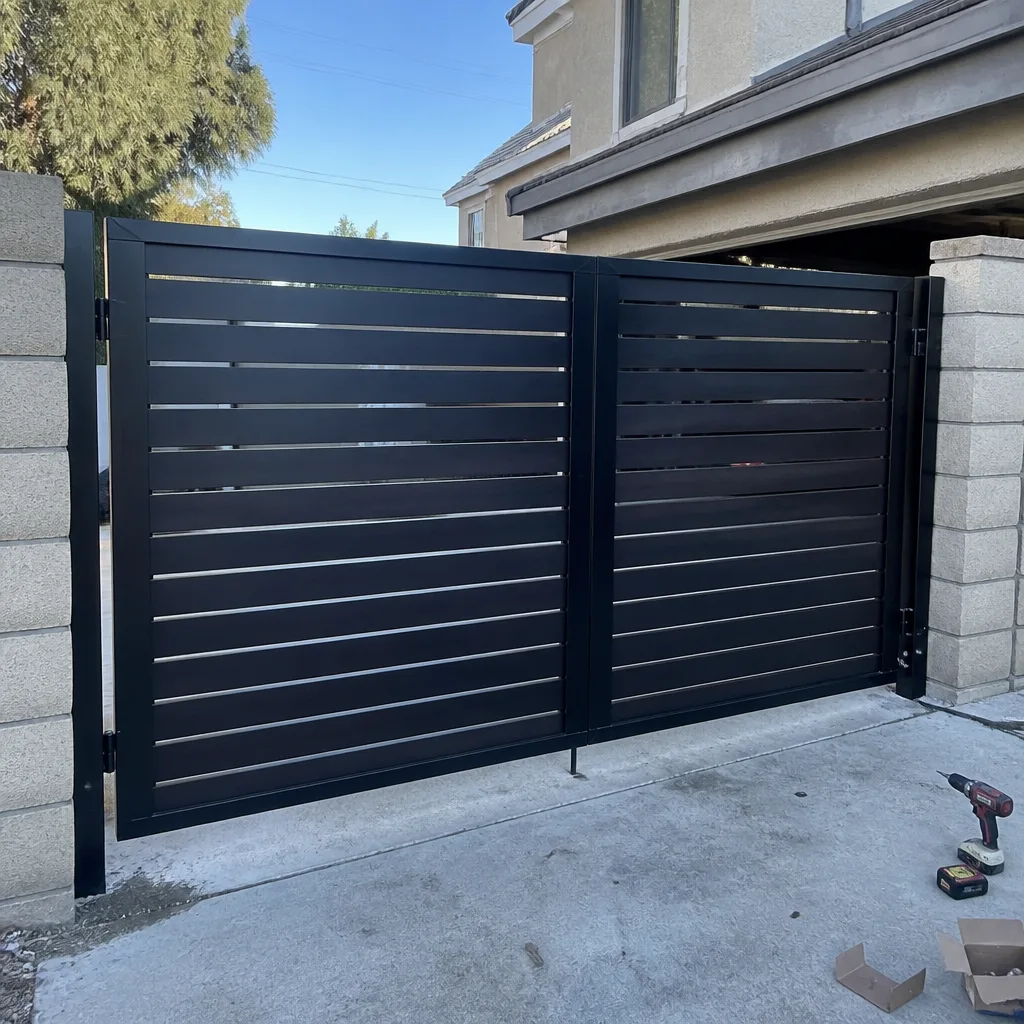 After
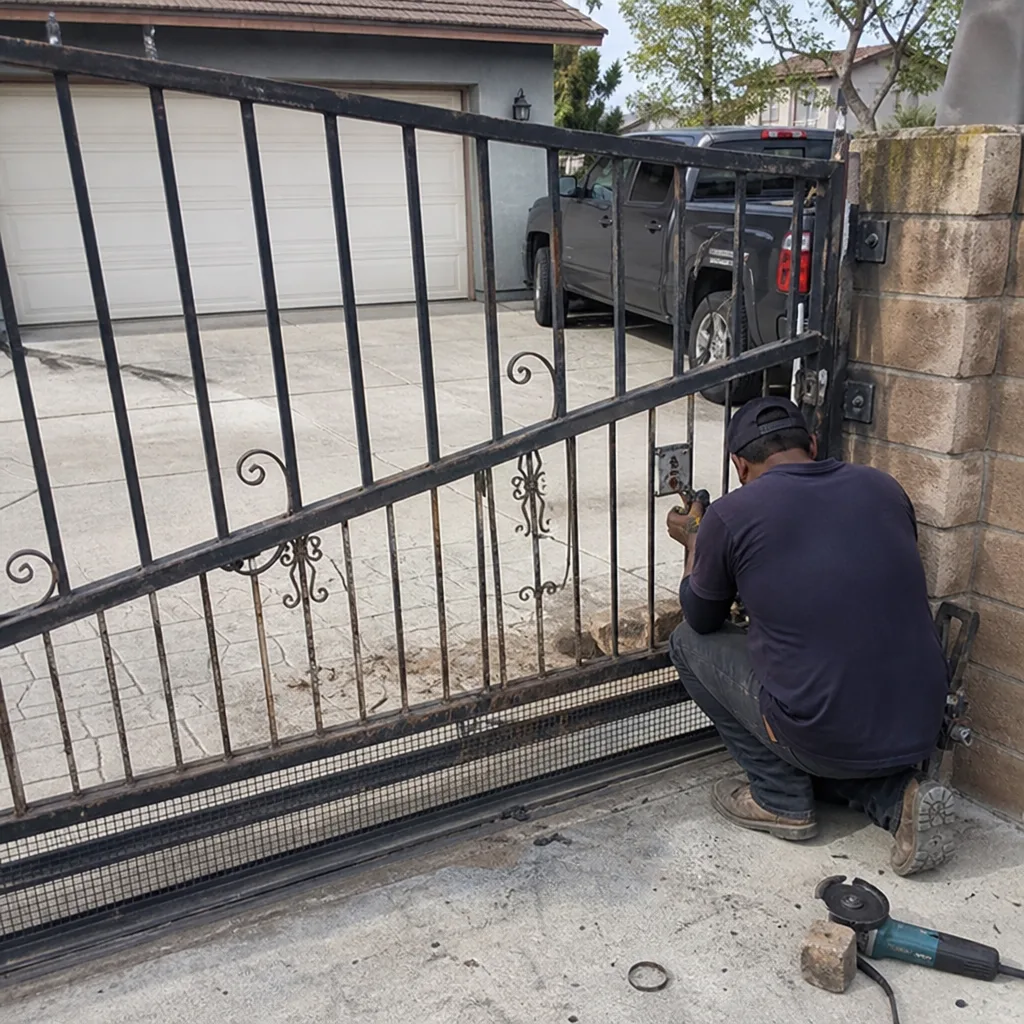 Before
 After