
Last updated October 30, 2026
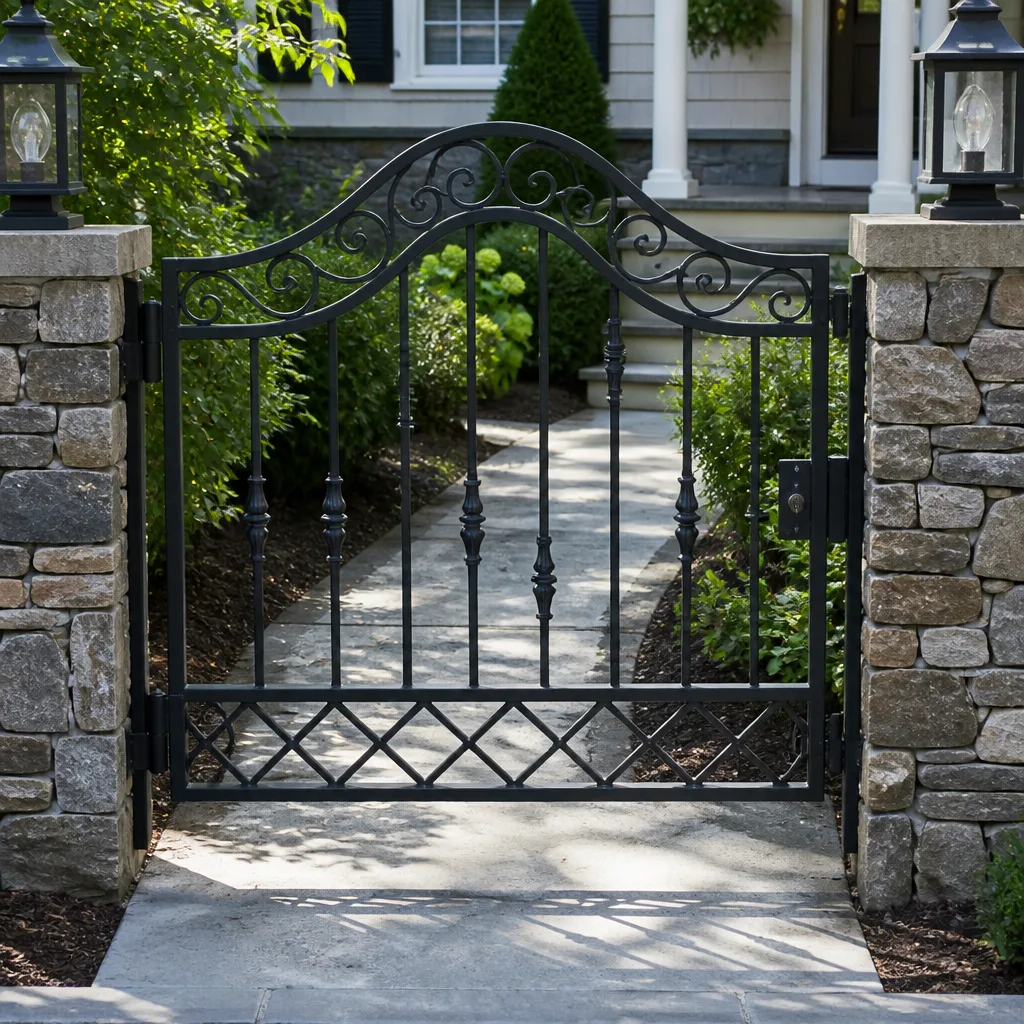 Wrought iron
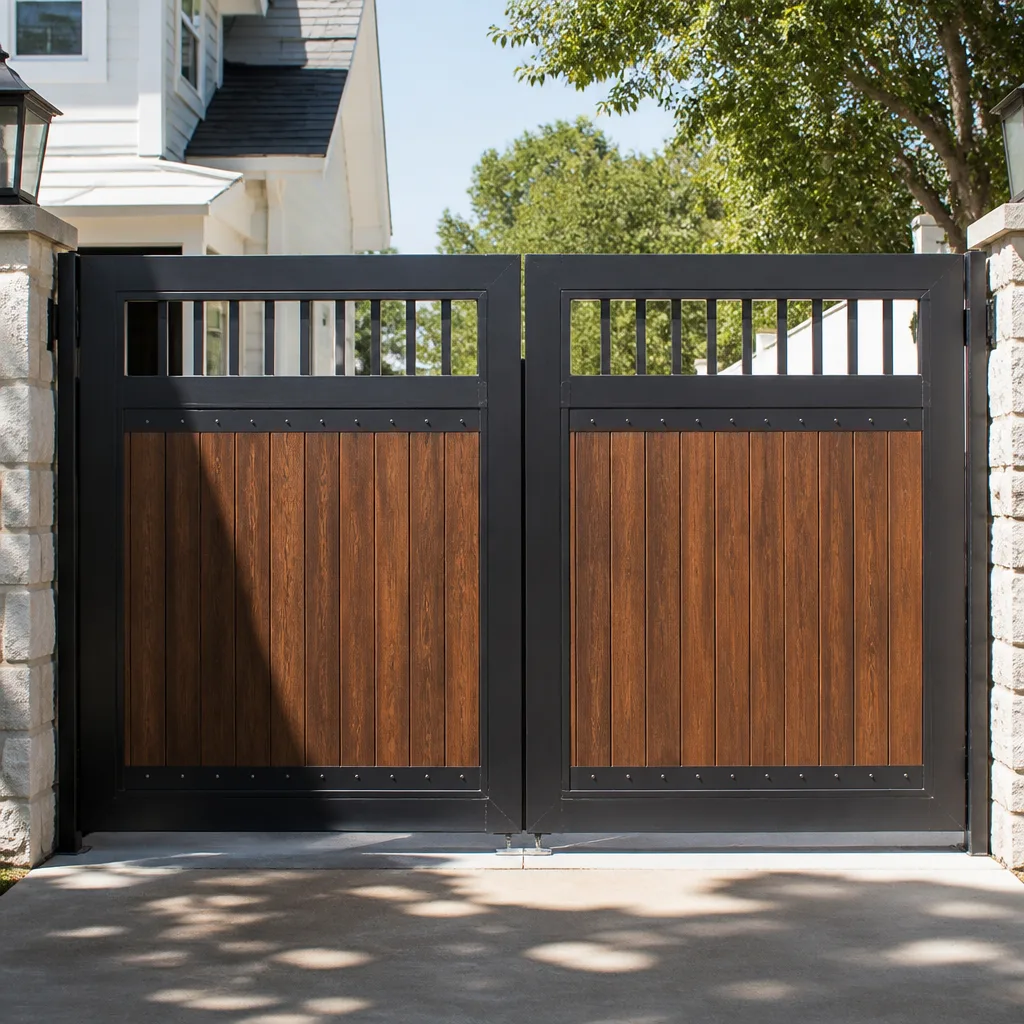 Wood & steel frame
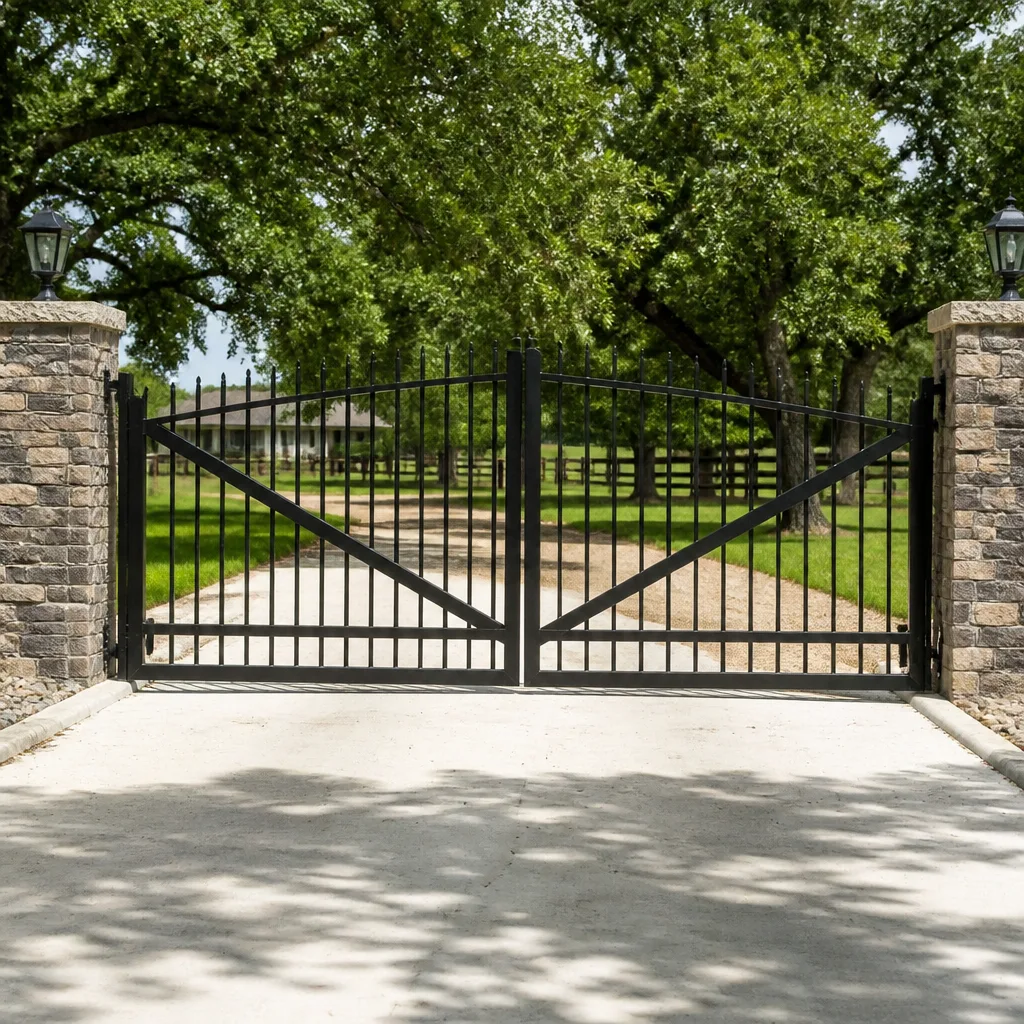 Farm & ranch
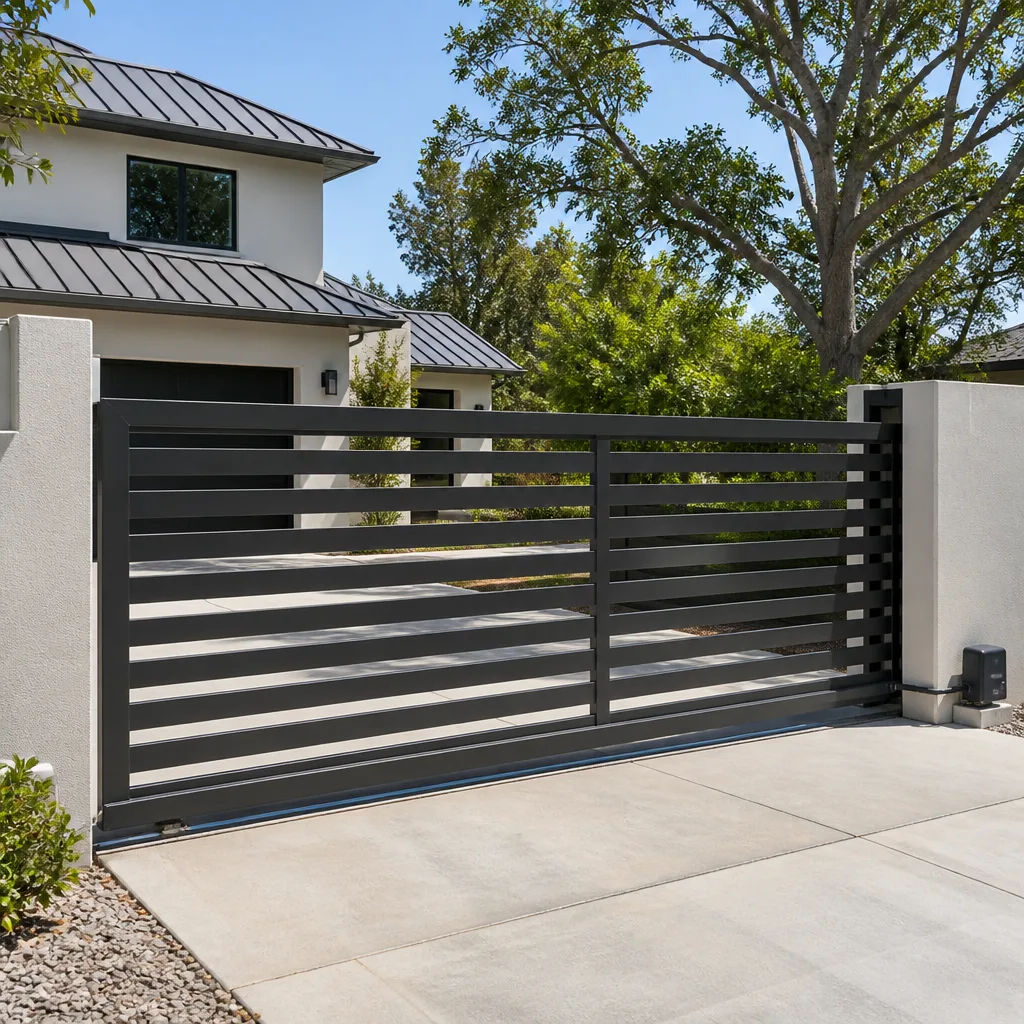 Sliding driveway gates
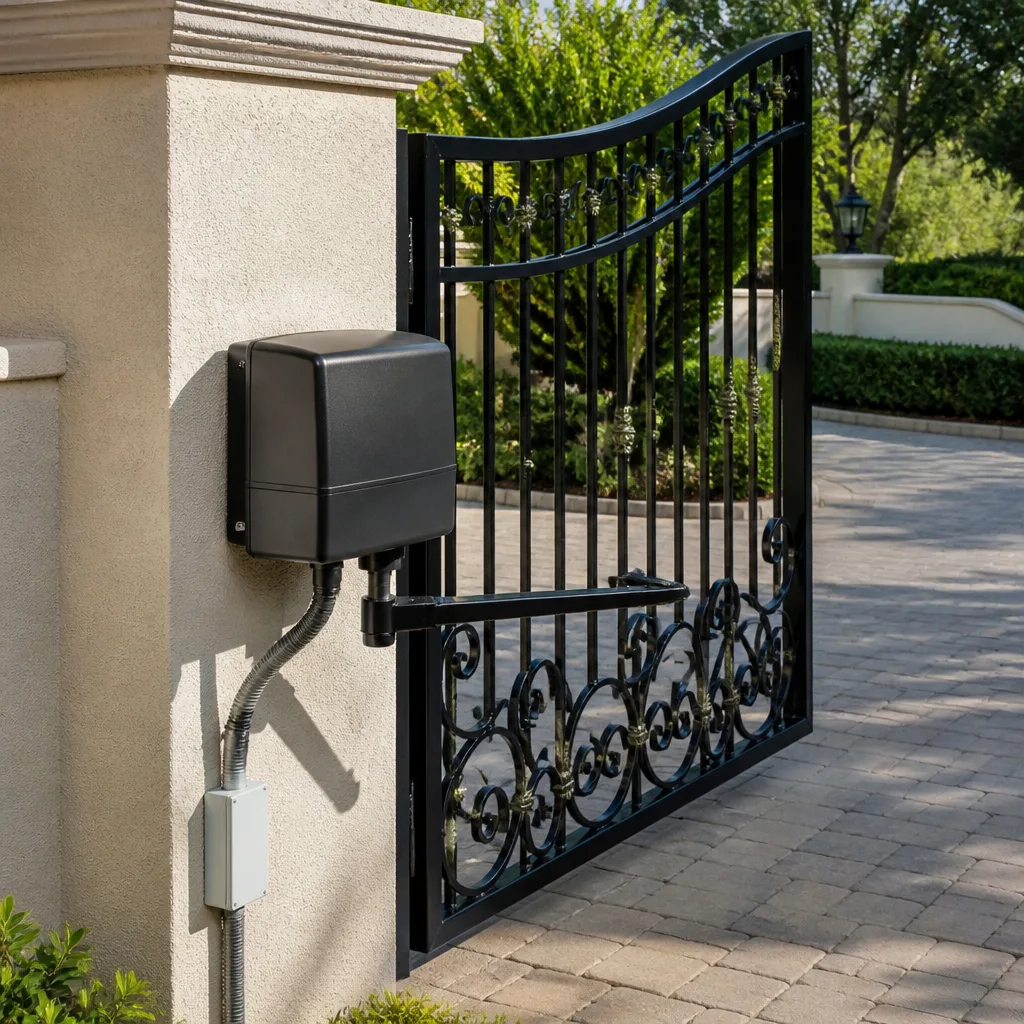 LiftMaster operators
Free on-site gate assessment - hinges, posts, and your LiftMaster or Nice gate operator checked before anything is quoted
The assessment is free and the quote is the invoice.
Get your free estimateChoosing the Right Gate Repair Brand: A Buyer’s Guide for Chino
Most gate brand comparisons you’ll read are written by people who’ve never replaced a capacitor in a Viking operator under a 105-degree Chino afternoon sun. They talk about features. They don’t mention that the real decision lives in three questions: how heavy is your gate, how many times a day does it cycle, and how fast can a local technician get parts. A residential-class operator installed on a commercial-frequency-use gate in a Chino rental property will fail within 18 months. Not because the brand is bad. Because the duty cycle was ignored during selection and nobody explained that a 10-cycles-per-day rating means exactly that. This guide is different. You’ll learn how to match operator class to your actual gate, why parts availability in Chino matters more than brand name recognition, and where Wrought Gate Repair fits into the decision.
Styles & brands we work with
Quick Answer
The right gate repair brand for a Chino property is the one whose operator class matches your gate’s weight and daily cycle count, and whose parts can be sourced locally within 24 hours when something fails. For most residential gates in Chino, LiftMaster and FAAC residential lines work well; for commercial or shared-driveway gates, Viking, BFT, or Elite commercial-class operators hold up far better. Before choosing a brand, calculate your actual duty cycle (vehicles per day × 2) and confirm a Chino technician stocks or can next-day source parts for that specific model.
Table of Contents
- The Duty Cycle Reality Check: Why Most Chino Gates Are Undersized
- Brand Comparison: What Each Major Gate Brand Actually Gets Right for Chino
- The Parts Availability Test: Same-Day vs. Three-Day Lead Times in Chino
- Hydraulic vs. Electromechanical Operators in Chino’s Climate
- Total Cost of Ownership: The $400 Decision That Costs $3,200 Later
- Manual Gates vs. Electric Gate Repair: Choosing Your Starting Point
- Common Mistakes to Avoid
- When to Call a Professional
- Frequently Asked Questions
- The Bottom Line
The Duty Cycle Reality Check: Why Most Chino Gates Are Undersized
Duty cycle is the single most misunderstood number in gate automation. A residential operator rated for 10 cycles per day means ten open-close sequences. That’s five cars leaving and five cars returning. For a single-family home with two cars and no deliveries, that’s fine. For a Chino rental property with four tenants, each driving separately, plus Amazon deliveries, landscaping crews, and the occasional contractor, you’re hitting 20 to 30 cycles before anyone notices the problem. And the problem shows up as a burned-out capacitor or a stripped gear, usually within 18 months of installation.
Here’s the calculation every Chino property owner should run before buying a new operator or repairing an existing one:
- Count every vehicle that passes through the gate daily. Include tenants, family members, deliveries, service vehicles, or staff. Don’t guess. Spend three days noting the count. A Chino property with a separate guest house or ADU often doubles the count the owner estimates.
- Multiply by two. Each vehicle means one open and one close. A property with 12 vehicles per day needs a 24-cycle minimum.
- Add 30% as buffer. Days with parties, contractors, or holiday traffic spike cycles unpredictably. A 24-cycle minimum becomes a 32-cycle rated operator.
- Check the operator’s continuous duty rating. If the brand says “10 cycles per day,” that’s the hard ceiling, not a suggestion. If the brand says “continuous duty,” you have headroom.
- Compare gate weight. Cycle ratings assume a gate at or below the operator’s maximum weight. A 600-pound iron gate on an operator rated for 400 pounds will fail regardless of brand. Wrought iron gates in Chino often exceed manufacturer assumptions because of their material density.
In our experience at Wrought Gate Repair, roughly half the residential operators we’re called to repair in Chino were undersized for the actual duty cycle. The homeowner bought a brand they recognized, not the operator class the gate required. The brand was not the failure point. The specification was. Choosing the right brand starts with knowing your numbers, and most people have never been shown how to calculate them. Our gate repair work in Chino often begins with this exact conversation.
Brand Comparison: What Each Major Gate Brand Actually Gets Right for Chino
Every brand has a sweet spot. The one that works best depends on your gate’s weight, its cycle count, and the type of property. Here’s a practical breakdown of the major brands serviced in Chino, organized by what they’re genuinely built for, not marketing language.
Residential-Class Brands: Built for Low Cycles on Moderate Gates
- LiftMaster: The default choice for single-family driveway gates. Reliable electronics, decent weather sealing, and parts are readily available from multiple distribution channels in Southern California. For a standard 250-pound tubular steel gate on a Chino home with two cars, a LiftMaster residential swing operator is hard to beat on parts availability and simplicity. Our Wrought Gate Repair home service area sees more LiftMaster units than any other residential brand, and most repairs are straightforward same-visit fixes.
- Mighty Mule: The DIY-accessible brand. Battery-friendly and solar-compatible, which matters for Chino properties where running conduit to the gate is impractical. But Mighty Mule operators are rated for lighter workloads. A Mighty Mule arm on a heavy wrought iron gate or on a property with frequent traffic will consume its own gears quickly. We see these when homeowners or handymen installed them without checking gate weight.
- Ghost Controls: Similar positioning to Mighty Mule with slightly better build quality in its arm assemblies. Good for light residential gates. Its app integration works well, but the mechanical components are still residential duty. If your Chino property never exceeds 8 to 10 cycles a day and the gate is under 300 pounds, Ghost Controls is acceptable. Beyond that, you’re borrowing reliability from a unit designed for lighter use.
Commercial and Heavy-Duty Brands: Built for Cycles and Heat
- FAAC: The brand we recommend most often for medium to heavy residential and light commercial gates in Chino. FAAC’s hydraulic and electromechanical operators handle high cycle counts without complaint. The brand’s 400 and 750 series operators are workhorses for gates in the 500 to 1,200 pound range. Parts availability in Southern California is consistent, with multiple distributors stocking common failure components. If you have a shared driveway or a large wrought iron gate that cycles more than 20 times daily, FAAC deserves a serious look. Our electric gate repair calls in Chino frequently involve FAAC systems that have run for a decade before needing anything beyond routine lubrication.
- Viking: A commercial-first brand. Viking operators are built for continuous duty, and their hydraulic and electromechanical models handle heavy gates and frequent cycling without overheating. The trade-off is price and a steeper installation curve. But for a Chino HOA entrance or a commercial property where gate downtime means unhappy tenants or lost business, Viking earns its cost. Parts are generally available through commercial gate supply houses in the Inland Empire, though residential homeowners rarely encounter the brand until they buy a property with an existing Viking system.
- BFT: Italian engineering, mid-range pricing, excellent software diagnostics. BFT operators are common on newer Chino residential developments and small commercial properties. The brand’s control boards self-diagnose well, which speeds up repair work when a knowledgeable technician is on site. The mechanical components are solid, though BFT-specific parts can have slightly longer lead times than LiftMaster or FAAC if a distributor is between shipments.
- Linear: A workmanlike brand that shows up frequently on apartment complexes and commercial buildings in Chino. Linear operators are not the most feature-rich, but they’re durable and parts are among the easiest to source in this region. If you have a Linear system, you’re in a good position for fast repairs. The brand’s strength is consistency, not innovation, and for a gate that simply needs to open and close reliably for years, consistency wins.
- Elite: Primarily known for telephone entry and access control systems, but Elite also manufactures operators found on many Chino commercial gate installations. Elite’s strength is integration: their operators work cleanly with their own telephone entry panels, which reduces compatibility headaches. If your property has an Elite phone entry system already, matching the operator brand simplifies wiring and troubleshooting.
- DoorKing: Like Elite, DoorKing is an access control brand that also produces operators. DoorKing 9150 and 9150 series slide gate operators are ubiquitous on industrial and commercial properties across the Inland Empire. They’re old-school in design, which means fewer failure points and an enormous existing knowledge base for repair. Parts availability for DoorKing in Southern California is excellent because the brand has been installed here for decades.
If you’re deciding between brands for a new installation in Chino, the short version is this: match the operator class to the actual gate, not the brochure. A Viking on a single-family home with two cars is overkill in the same way a Mighty Mule on a four-unit rental property is underkill. The brand matters less than the class, and the class is determined by weight and cycles. Wrought Gate Repair services all nine of these brands, which means the brand conversation doesn’t limit who can fix your gate later. Our electric gate repair for Chino properties covers the full lineup, from Mighty Mule residential arms to Viking commercial hydraulic units.
The Parts Availability Test: Same-Day vs. Three-Day Lead Times in Chino
Brand reputation does not fix a gate that’s stuck open on a Tuesday. Parts availability does. This is the test most buyers skip, and it’s the one that determines how long your gate stays broken when something fails. In Chino, we’re close enough to major distribution hubs in Ontario, Pomona, and the broader Inland Empire that some brands can have parts in-hand the same day. Other brands, often European imports with thinner stateside distribution, can take three to five business days for a control board or a limit switch assembly. Three days may sound minor until your gate is parked open and anyone can drive into your property.
Here’s how to run the parts availability test before committing to a brand:
- Identify the three most common failure components for the model you’re considering: the control board, the capacitor or motor assembly, and the limit switch. These are the parts that fail on every brand eventually.
- Call two or three local gate supply houses in the Inland Empire and ask if they stock those parts for that specific model. Don’t ask about the brand generally. Ask about the model. A distributor may stock LiftMaster generally but not the specific board your operator uses.
- Ask the lead time for a non-stocked part. Same-day, next-day, or three-plus days? This number will determine your worst-case repair timeline before you even buy the operator.
- Weigh the feature set against the downtime cost. A brand with a slick app but a 72-hour lead time for a control board is the wrong choice for a Chino rental property where a stuck-open gate creates an immediate security liability.
In our experience, LiftMaster, FAAC, Linear, and DoorKing parts are the most reliably available in the Chino area because these brands have deep existing install bases across Southern California. Viking and BFT are close behind, with occasional gaps on less common models. Ghost Controls and Mighty Mule parts are generally available through online channels but less likely to be sitting on a local supply house shelf. That distinction matters. A part you order online on Monday and receive on Thursday is fine for a convenience feature; it’s not fine for a security gate that must close today.
Hydraulic vs. Electromechanical Operators in Chino’s Climate
Chino summers push 100 degrees regularly, sometimes higher. Sustained heat affects gate operators differently depending on their drive type. Understanding this trade-off before you choose a brand will spare you seasonal failures that seem mysterious when they happen but are entirely predictable once you know the mechanism.
Electromechanical Operators: Lighter, Simpler, Heat-Tolerant but Wear-Prone
Electromechanical operators use a motor to drive gears or a screw mechanism directly. They handle heat reasonably well because there’s no fluid to degrade in high temperatures. However, the moving metal components accumulate wear faster under frequent cycling, especially in a dusty environment. Chino’s dry summers mean fine dust works its way into gear assemblies, accelerating wear on the mechanical parts. Electromechanical units are typically lighter, less expensive, and easier to install. For a single-family home in Chino with a moderate cycle count, an electromechanical FAAC or LiftMaster operator will serve well for years with basic annual lubrication. Our gate installation service in Chino often recommends electromechanical for standard residential gates where simplicity matters more than brute force.
Hydraulic Operators: Heavy-Duty, Smooth, and Seasonally Adjusted
Hydraulic operators use pressurized fluid to move the gate. They’re smoother, quieter under heavy load, and generally handle high cycle counts better than electromechanical units of the same price class. The fluid system also self-lubricates, which means less mechanical wear overall. But hydraulic operators are sensitive to temperature fluctuations. Hot Chino summers thin the hydraulic fluid, which can affect gate speed and stopping accuracy if the unit isn’t adjusted seasonally. A good hydraulic gate installation in Chino includes a summer and winter adjustment schedule. Viking and high-end FAAC hydraulic units are common on commercial properties in Chino and on large custom wrought iron residential gates that exceed 600 pounds. The operators handle the heat fine as long as the maintenance schedule accounts for it. When someone skips the seasonal adjustment, that’s when a hydraulic gate starts drifting or creeping during a 105-degree afternoon.
The practical takeaway: for gates under 400 pounds with under 15 daily cycles, electromechanical operators are the right choice in Chino. For heavier gates or higher traffic, hydraulic pays for itself in longevity, provided you commit to the seasonal maintenance schedule. Both are serviceable, but neither is immune to neglect. And neglect in Chino’s heat shows up faster than it does in coastal climates a few miles west.
Total Cost of Ownership: The $400 Decision That Costs $3,200 Later
Buyers fixate on installation price because it’s the number on the quote. But the financial decision that actually matters is the total cost over ten years. A $400 price difference at installation can easily become a $3,200 difference in repair and replacement costs over a decade when the cheaper operator is undersized for the gate’s actual workload.
Here’s the math. Suppose you’re choosing between two operators for a 500-pound wrought iron gate on a Chino property with a four-unit rental and a steady stream of delivery traffic. The gate cycles roughly 25 times a day. Operator A is a residential-class model priced at $1,800 installed. It’s rated for 10 cycles per day and a 400-pound gate. Operator B is a commercial-class model priced at $2,200 installed, rated for continuous duty and a 600-pound gate.
Operator A will run. It will not run well, and it won’t run for long. Realistically, you’re looking at a capacitor failure within 12 to 18 months, followed by a gear assembly replacement within the next two years, and likely a full operator replacement by year five. Add $350 per service call, $450 for the gear assembly, $200 for diagnostics, and a full replacement installation at year five. You’re now at roughly $5,000 over ten years, and that doesn’t include the downtime each time the gate fails.
Operator B is overbuilt for the first five years and correctly built for the next five. With routine annual maintenance at $150 to $250 per visit, the ten-year total lands around $4,000. The initial $400 savings on Operator A costs you an extra $1,000 to $2,000 over the decade, plus the convenience and security cost of living with a gate that fails unpredictably. In Chino, where multi-tenant rental properties and shared driveways are common, this exact scenario plays out constantly. We see the result when we’re called out to replace an operator that was never sized correctly in the first place.
Manual Gates vs. Electric Gate Repair: Choosing Your Starting Point
Not every gate in Chino is automated. Some are manual wrought iron swing gates, some are sliding gates with padlocks, and some are automated systems that were installed years ago and now blend manual quirks with failing electronics. Before you choose a repair brand or a new operator brand, you need to know which category your gate falls into, because the starting point shapes everything downstream.
When a Manual Gate Is the Smart Choice
Manual gates cost less to install, cost almost nothing to maintain, and never have a control board failure. For a Chino property where the gate is used a few times a day by the same people, a manual wrought iron gate on quality hinges and a proper latch will outlast every automated system in existence. The maintenance is straightforward: hinge pins, latch alignment, and occasional lubrication. That’s it. Wrought Gate Repair handles manual gate repairs in Chino regularly, and the most common calls are sagging heavy gates, seized hinge pins, and latches that no longer align due to ground movement in Chino’s expansive clay soils.
When Automation Is Worth the Trade-Off
Automation becomes the right choice the moment security, convenience, or access control outweighs the maintenance commitment. A Chino property with a long driveway benefits from push-button entry. A rental property benefits from keypad or phone-based access control because tenants can be added and removed without changing locks. An HOA entrance benefits from automation because consistent operation is a management requirement, not a preference. The trade-off is that automated systems require service. Capacitors fail. Control boards get fried in power surges. Limit switches drift. If you’re not prepared for that operational reality, automation becomes a recurring headache. But when the system is matched correctly to the gate and maintained annually, the headaches are rare and manageable.
The smart path for a Chino property owner is to start with the gate’s physical condition regardless of whether it’s manual or electric. A heavy wrought iron gate with sagging hinges will destroy any operator you bolt onto it, brand regardless. The gate itself has to move freely first. From there, the brand and class decision applies. And when you call our Chino gate installation team, the first thing we check is whether the existing gate is worth automating or whether it needs structural repair before any operator touches it.
Common Mistakes to Avoid
- Choosing the brand before checking the gate’s weight and cycle count. This is the root cause of most premature operator failures we see in Chino. The brand is irrelevant if the unit is undersized. Know your numbers first, then choose a brand with a model that fits those numbers.
- Assuming a recognizable brand means a commercial-rated unit. LiftMaster makes residential and commercial operators. So does FAAC. Buying a LiftMaster because you recognize the name doesn’t mean you bought a LiftMaster rated for your workload. Check the specific model’s duty cycle and weight capacity.
- Skipping the parts availability test. A high-end European operator with no regional parts distribution will leave your Chino gate stuck open for a week. Ask about lead times for control boards before you commit. This single step saves more downtime than any warranty ever will.
- Bolting an operator onto a gate that doesn’t swing freely. If the gate sags, binds, or drags, the operator works against that resistance on every cycle. You’ll burn through the motor and gears prematurely. The gate itself must be repaired first. This is manual gate work, and it’s a separate trade from operator installation in Chino, where soil movement shifts gate posts over time.
- Ignoring seasonal adjustments on hydraulic operators. Chino heat thins hydraulic fluid. If the operator isn’t adjusted for summer temperatures, you’ll see drifting speeds and inconsistent stopping. Commit to the maintenance schedule or choose an electromechanical unit that doesn’t need seasonal tuning.
- Choosing a cheap operator to save money on a rental property. Tenants and delivery drivers cycle gates far more than homeowners. A Chino rental with four tenants will destroy a residential operator within two years. This is the most expensive $400 you’ll ever save.
- Waiting for failure to call for service. Most gate repairs in Chino are predictable months before they become emergencies. Slow operation, grinding sounds, inconsistent stopping: these are warnings, not surprises. Repairing a worn gear before it strips costs a fraction of replacing the entire operator after it fails.
When to Call a Professional
Some gate issues are safe to observe and document. Others need a trained technician immediately. High-tension springs, hydraulic fluid systems under pressure, and any electrical work involving line voltage are not DIY territory. A gate spring under tension can cause serious injury if it releases unexpectedly. If your gate operator is arcing, buzzing, or tripping breakers, shut off power to the unit and call someone who works on gate systems exclusively. The same applies to sagging wrought iron gates: the weight involved makes field repairs dangerous without proper lifting equipment and bracing. If your gate is stuck open, won’t close, or makes a grinding sound you haven’t heard before, that’s the moment to stop using it and get a specialist on site. Wrought Gate Repair offers free estimates in Chino. Call (833) 545-6817 and we’ll assess your gate, identify the failure point, and give you a written price before any work starts.
Frequently Asked Questions
For residential gates with moderate duty cycles, LiftMaster and FAAC electromechanical operators perform reliably in Chino’s hot, dry summers. For heavier gates or higher traffic, Viking and FAAC hydraulic units handle the workload better when paired with seasonal maintenance. The most reliable brand is the one whose operator class matches your gate’s actual conditions. Call (833) 545-6817 for a free assessment of your specific gate.
Expect $1,800 to $4,500 installed depending on the operator class, gate weight, and whether electrical work or gate structural repair is required. Residential electromechanical operators start around $1,800, commercial hydraulic units run $3,000 to $4,500, and custom heavy wrought iron gates can exceed that range. Every project is quoted before work begins, so you’ll know the exact price upfront. Call (833) 545-6817 for a free estimate.
Wrought Gate Repair services nine major brands: LiftMaster, FAAC, BFT, Linear, Viking, Ghost Controls, DoorKing, Elite, and Mighty Mule. That coverage means you rarely need to track down a brand-specific dealer and can call one company regardless of what’s already installed. Most gate operator failures share common failure points that transfer across brands. Call (833) 545-6817 and we’ll diagnose your existing system.
Count every vehicle that passes through daily, multiply by two, and add 30% as buffer. A Chino home with two cars and normal deliveries needs roughly 8 to 12 cycles. A four-unit rental property with delivery traffic often needs 25 to 40 cycles. Your operator’s duty cycle rating must exceed your actual calculated number, or premature failure is guaranteed. This calculation is the single most important step in choosing a brand.
A correctly sized operator that receives annual maintenance typically lasts 10 to 15 years in Chino. An undersized operator on a high-traffic property can fail in 18 to 24 months. The difference is specification and maintenance, not brand. Hydraulic units on commercial properties often outlast electromechanical units because their fluid systems self-lubricate and handle high cycle counts better.
Yes, our electric gate repair and installation service in Chino covers low-voltage wiring, power runs, safety edges, and control board replacement. We work exclusively on gates, so every technician focuses on gate electrical systems rather than splitting expertise across unrelated trades. Call (833) 545-6817 for a free estimate on your gate project.
The Bottom Line
Choosing the right gate repair brand in Chino comes down to three numbers: your gate’s weight, your actual daily cycle count, and the parts lead time for the model you’re considering. Brand recognition is a secondary concern. Measure your needs first, match the operator class to those numbers, verify that parts are available locally, and factor in Chino’s summer heat when choosing between hydraulic and electromechanical drives. The right decision now avoids a stuck-open gate, a surprise repair bill, and years of compounding service costs. Wrought Gate Repair works exclusively on gates across all nine major brands, so one call covers diagnosis, repair, or full replacement. If your gate needs attention in Chino, call (833) 545-6817 for a free estimate and a written quote before any work begins.
Written by the team at Wrought Gate Repair, serving Chino since 2012.
See the difference
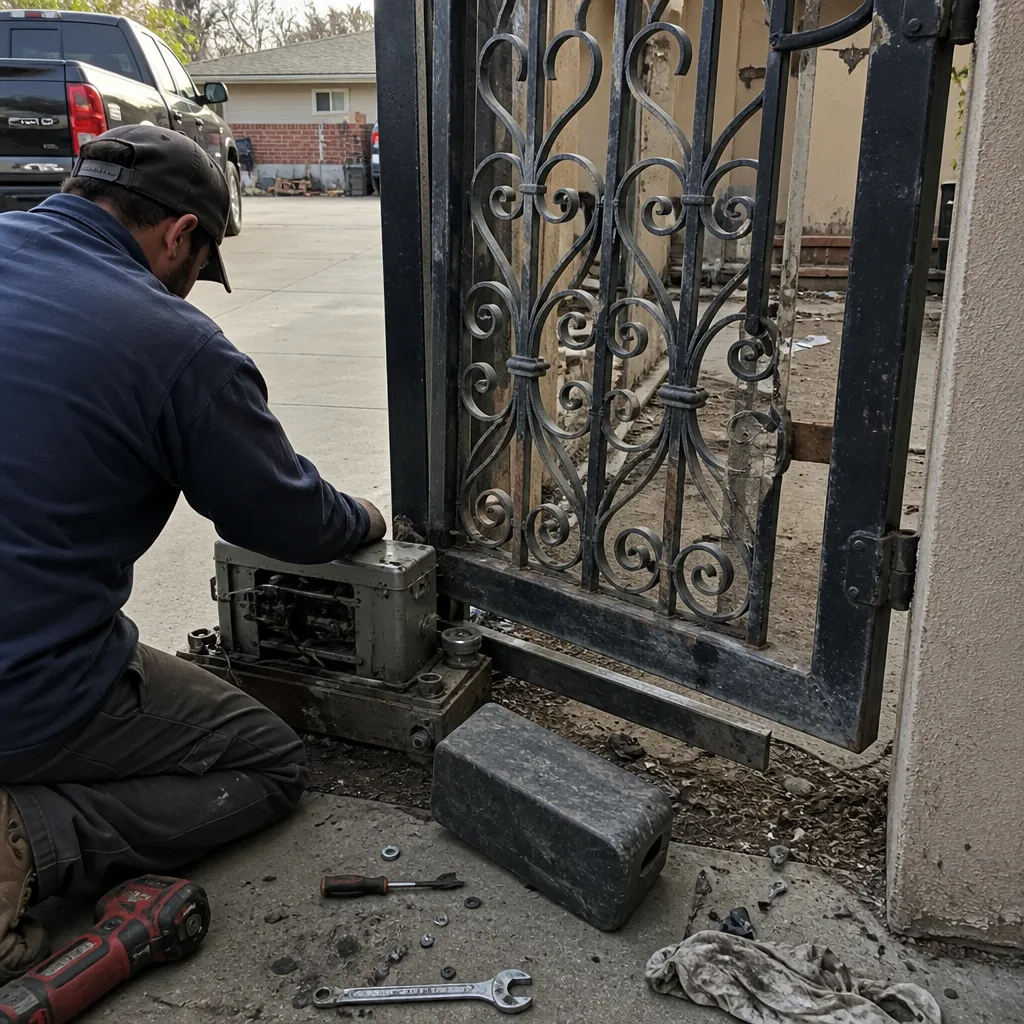 Before
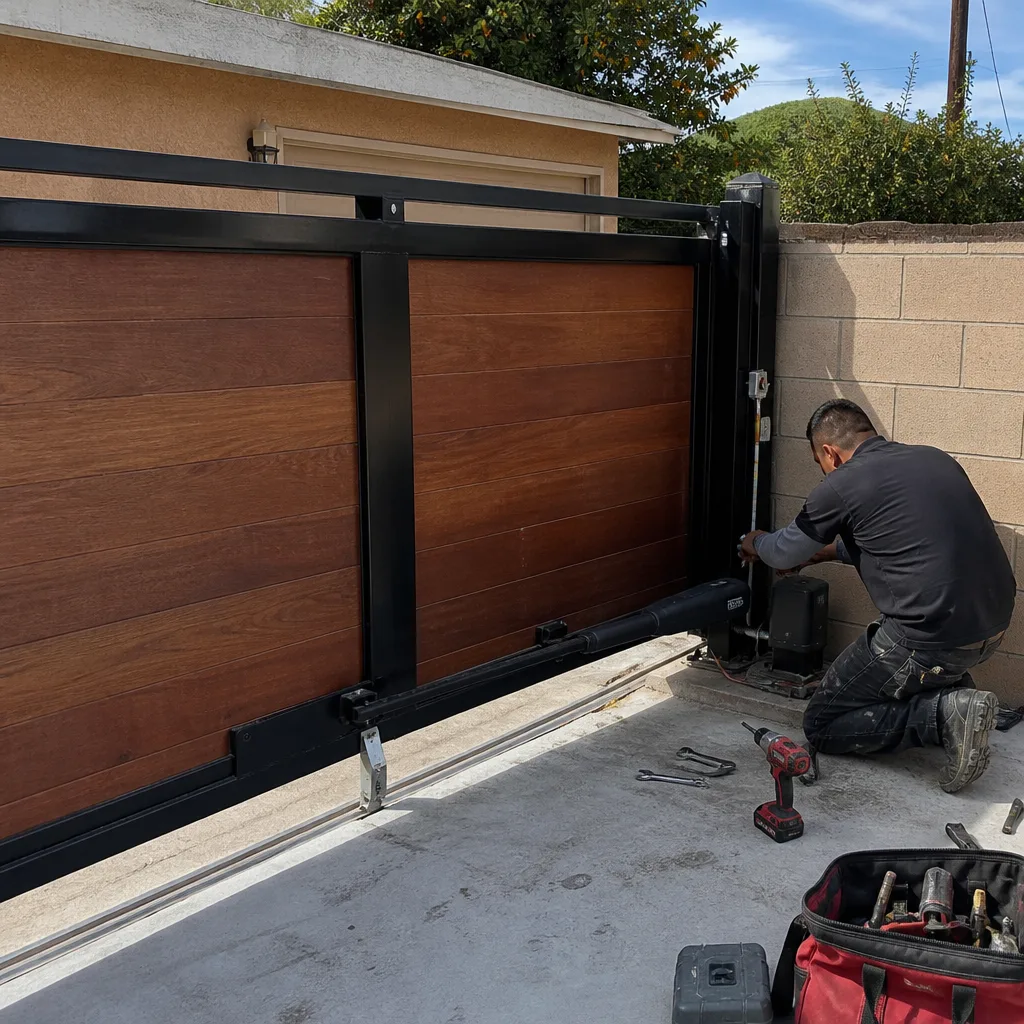 After
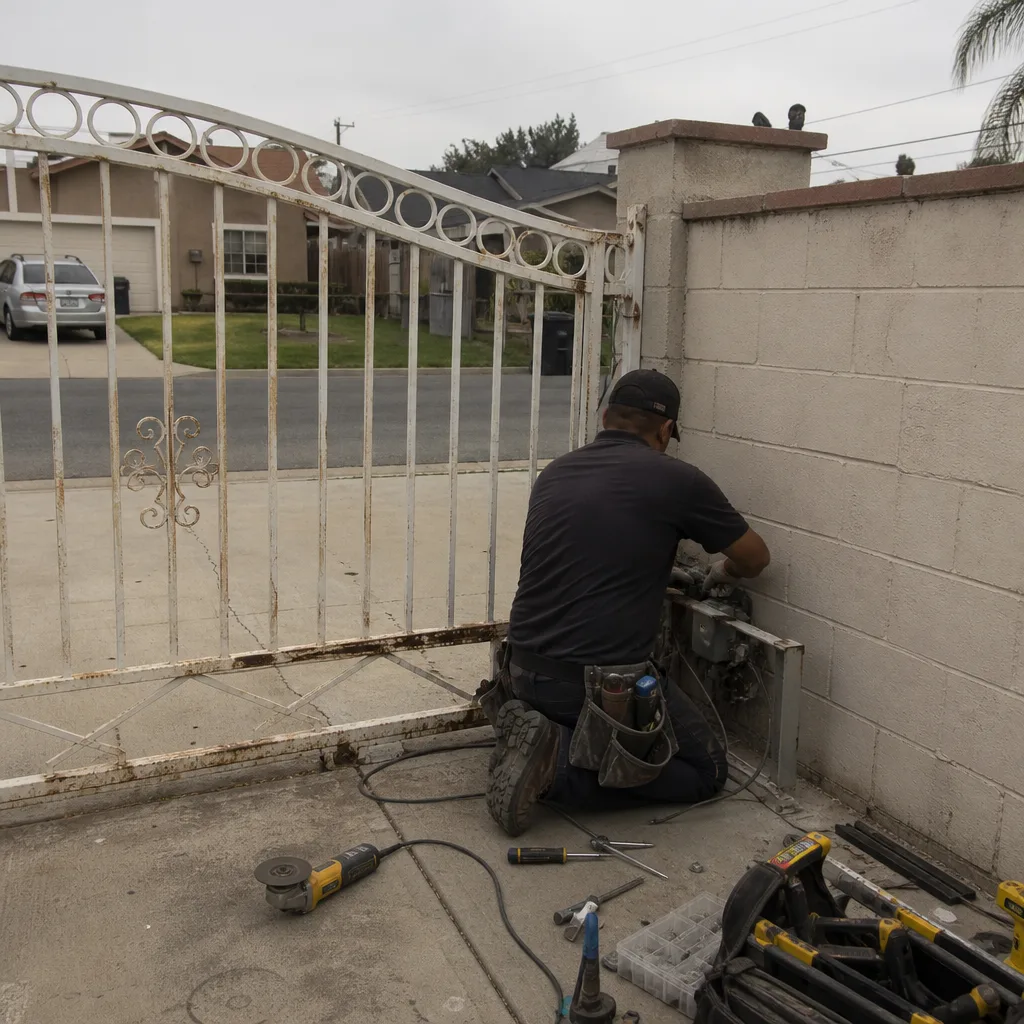 Before
 After
 Before
 After